The main cause of roller brush odor is bacterial growth triggered by wastewater residue and a high-humidity environment. The solution is to manually clean the roller brush after each use, thoroughly empty and scrub the wastewater tank, and disassemble the roller brush to a ventilated place to air dry naturally, rather than relying solely on the machine's automatic drying.
Principles of roller brush odor formation
Even with automatic cleaning functions, the roller brush will still retain organic substances such as skin dander, food residue, and grease. These substances enter the sealed, damp roller brush chamber and will quickly become a breeding ground for bacteria and mold. Especially in humid climates, bacterial metabolic products are the source of the foul odor. If the wastewater tank is not cleaned in time, the fermentation odor will even flow back to the roller brush chamber.
When handling moldy materials, you can follow US Environmental Protection Agency's home mold prevention recommendations(opens in a new window)treatment and note the on-site and material restrictions.
Correct roller brush cleaning steps
You cannot fully rely on the machine's automatic program; manual intervention is the key to maintenance.
- After each use, first empty the wastewater tank and use a little baking soda to scrub the tank walls and pipes.
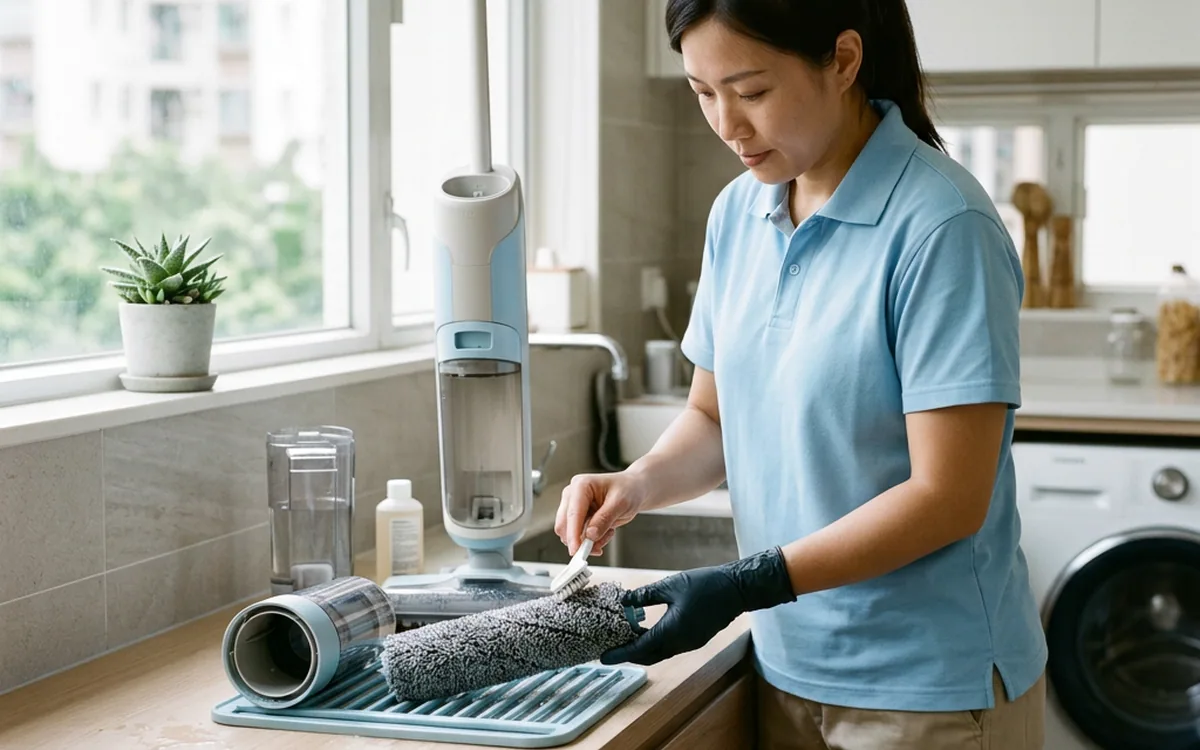
- Disassemble the roller brush and use a mild, neutral detergent to scrub it under running clean water.
- Place the roller brush in a cool, ventilated place to air dry thoroughly; it is strictly prohibited to install a semi-wet roller brush back into the machine body.
- Periodically check the wastewater tank base and air inlet for dirt accumulation, and clean them.
Common misconceptions in daily maintenance
Many users, to save effort, use strong chemical cleaning agents directly, which may damage the roller brush fibers and the machine's plastic components. In addition, excessive exposure to sunlight will also cause the material to age and become brittle. When cleaning, please maintain the principles of using neutral detergent and air drying in a cool, ventilated place.
When to stop DIY and seek professional help
If visible mold spots appear inside the floor cleaner's air ducts or pipelines, or if a mechanical odor is emitted when the machine is running, please stop operation immediately. Do not attempt to forcibly disassemble the machine body yourself or pour in unidentified chemicals, so as not to damage the precision circuits and sensors. This kind of deep pipeline contamination should be handed over to a professional team for disinfection and repair.