
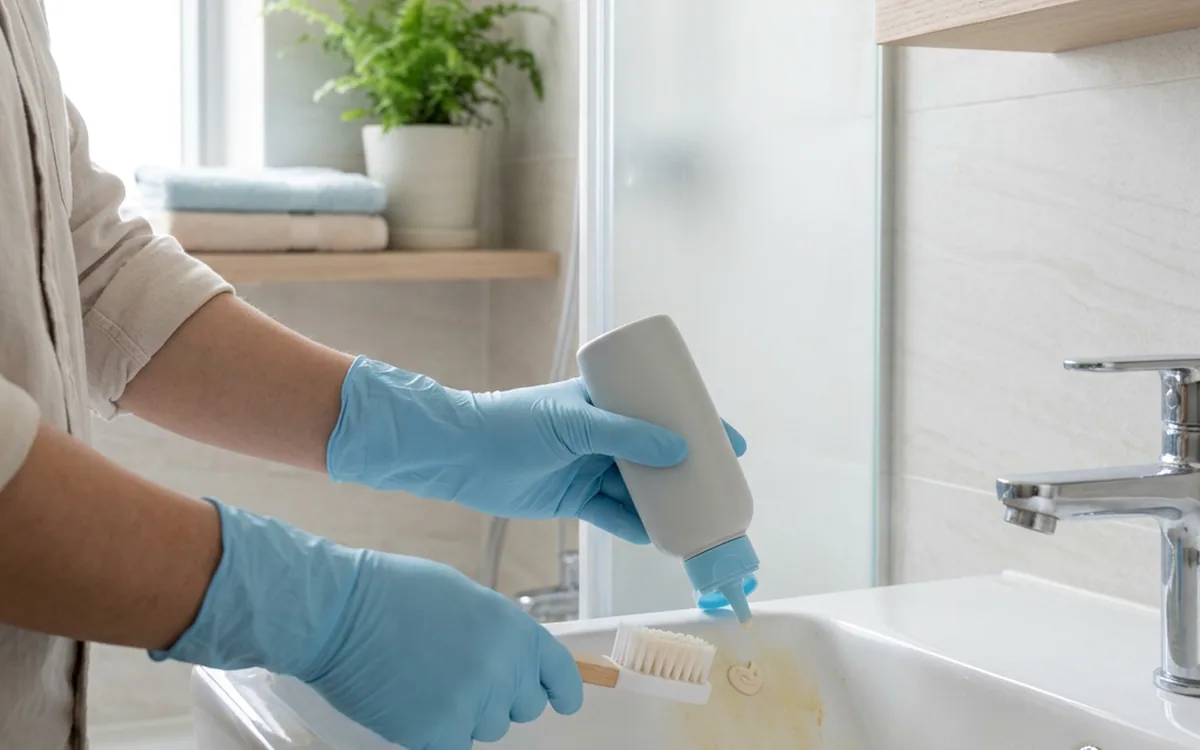
Do not use strong acids, as they will dissolve the ceramic glaze and corrode hardware. The correct method is to use citric acid or a weakly acidic cleaner for a 'paper towel wet compress,' softening urine scale and water scale before gently wiping to remove it, protecting the surface from erosion.
Damage of strong acid to sanitary ware
Strong acids like hydrochloric acid or heavy-duty drain cleaners are highly corrosive. Once in contact, the protective layer of the ceramic glaze will be dissolved, creating microscopic pores. These pores make the surface rougher, easier to absorb grime, and cause yellow stains to return faster the next time they are washed. At the same time, acid vapor will oxidize stainless steel hardware, causing irreparable black spots and rust.
Paper towel wet compress cleaning method
Adopting mild, weakly acidic substances to treat alkaline water scale and urine stains is the safest and most effective strategy.
- Scoop out the water in the toilet trap to ensure the grime location is exposed.
- Dissolve food-grade citric acid in warm water (ratio about 1:10).
- Soak kitchen paper towels in the citric acid water and press them tightly onto the surface of the yellow stains.
- Let stand for thirty minutes to one hour until the grime softens.
- Remove the paper towels and gently wipe away residual stains with an old toothbrush or sponge.
- Rinse repeatedly with plenty of water.
Material restrictions and care reminders
Do not apply citric acid or any acidic substance to natural marble or terrazzo surfaces, as the stone will react with the acid and lose its luster. If yellow stains are in glass glue gaps, it may mean mold has deeply penetrated; in this case, choose a professional mold removal gel rather than descaling acid.
When handling moldy materials, you can follow US Environmental Protection Agency's home mold prevention recommendations(opens in a new window)treatment and note the on-site and material restrictions.
