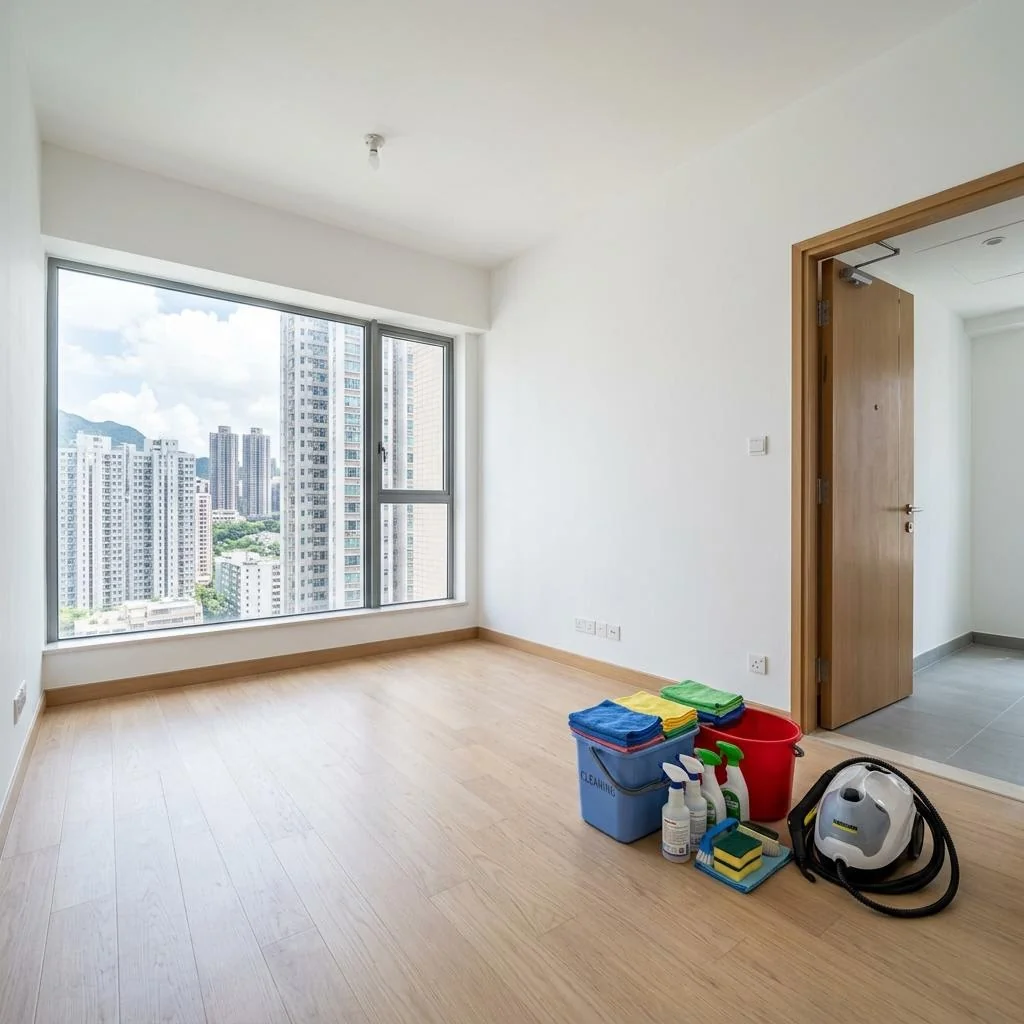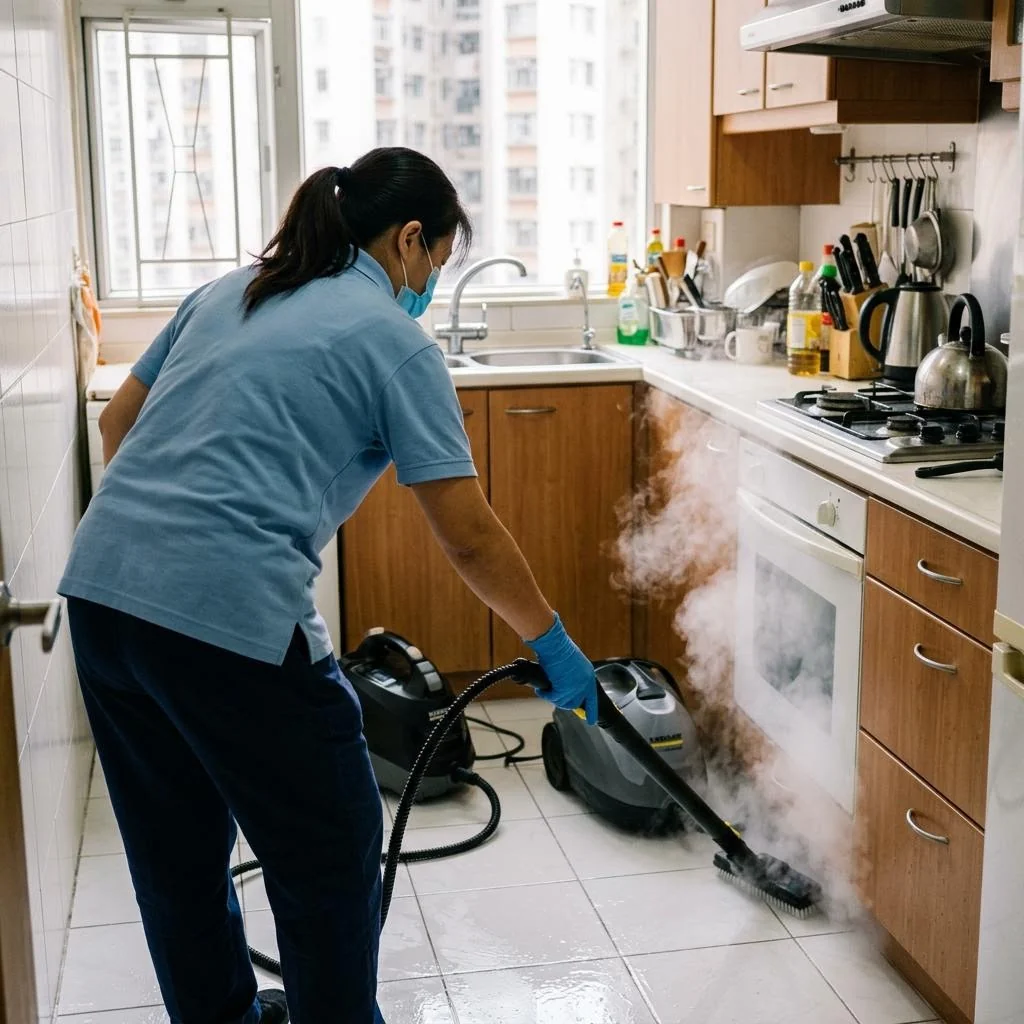
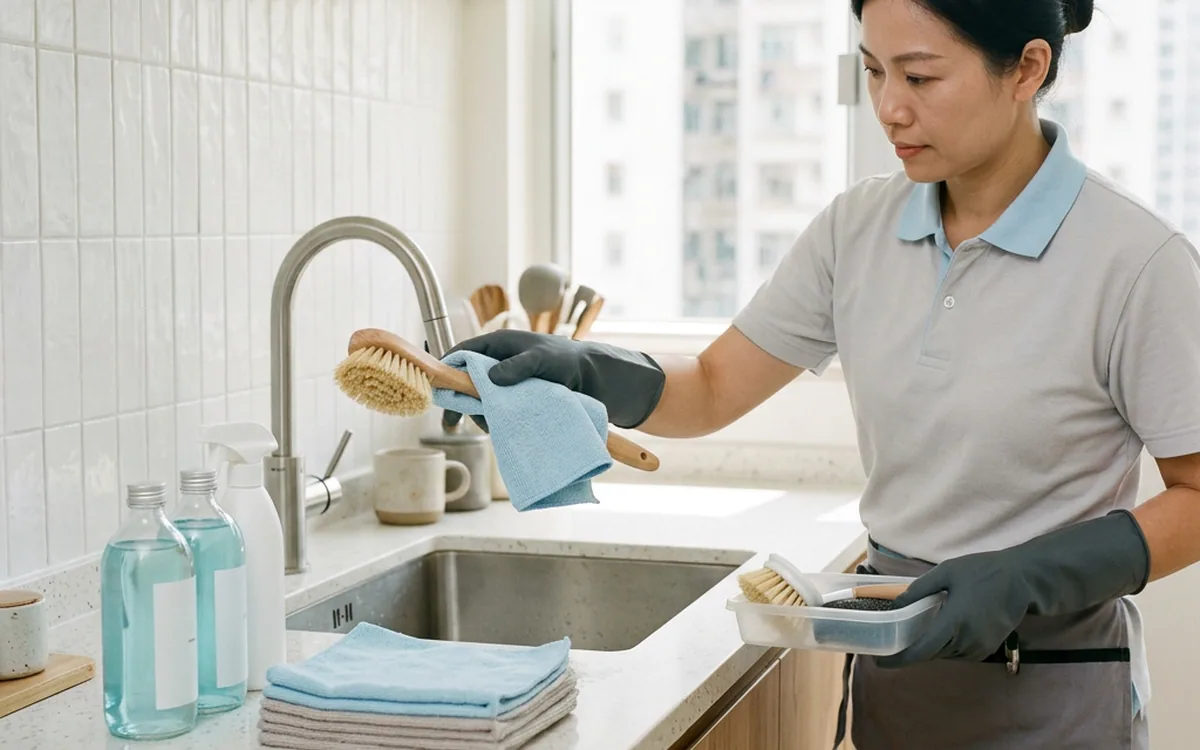
Lease-end and move-in cleaning must be judged according to the current status of the unit. Move-in focus is on clearing renovation dust and performing high-temperature disinfection; lease-end requires handling grease and mold spots for the landlord's inspection. During cleaning, clear surface dirt before disinfecting, strictly prohibit mixing agents, and ensure space ventilation. Service fees are based on the area and complexity of the project; you can check 壹家壹清潔專家's latest price list.
Lease-end cleaning and inspection strategy
Tenants moving out need to restore the unit to the handover standard. Regarding kitchen range hoods and bathroom tile joints, you must conduct deep degreasing and mold removal to avoid having your deposit deducted.
- Kitchen: Focus on cleaning old grease from stoves and inside cabinets.
- Bathroom: Clear glass limescale and mold spots from wall gaps.
- Details: Remove glue marks from wall hooks and sticker marks from window frames.
- Confirm if there are any remaining miscellaneous items inside the unit.
- Assess the extent of wall and floor damage.
- Perform targeted cleaning on high-risk mold spots.
Post-renovation cleaning before moving in
New move-in units often have fine renovation dust clinging to light troughs, cabinet tops, and tracks; it is recommended to use a vacuum cleaner with suitable filtration performance to handle this.
- Inside and on top of cabinets: Thoroughly clear wood chips and paint dust.
- Window tracks: Handle the long-term accumulation of cement dust.
- Disinfection: Perform high-temperature treatment on toilets and kitchen countertops.
- Ensure all electricity in the house is connected and there is a water supply.
- Perform full vacuuming and dust removal first.
- Only wipe surfaces and disinfect last.
Safety operations and material testing
Professional cleaning needs to use suitable detergents according to the material. Bleach is corrosive; do not use it directly on metal, natural stone, or expensive fabrics.
Before using bleach, please first understand Method for using bleach from the Centre for Health Protection(opens in a new window), and operate according to the product label.
- Material testing: Test the cleaning agent reaction in an inconspicuous area first.
- Mixing taboo: Never mix bleach with cleaning agents to avoid generating toxic gas.
- Electrical appliance handling: Electricity must be turned off when cleaning the outer casing of appliances; do not dismantle circuit boards.
- Wear protective gear.
- Clean cleaner areas first, then handle extremely dirty spots.
- Used cloths should be soaked in bleach and rinsed clean.
Professional service assessment and preparation
When hiring a professional team, consider whether the service content includes insurance and transparency in quoting. Cleaning costs depend on the usable area and the cleanliness of the unit; for details, please check 壹家壹清潔專家's latest price list.
- Confirm whether the scope of service includes high-altitude cleaning (such as exterior windows).
- Check whether the company holds workers' compensation and third-party liability insurance.
- Confirm whether the agents are suitable for the materials in the home.
- Prepare a floor plan of the unit for reference for the quote.
- Reserve enough time for the team to perform deep cleaning.
- Inspection procedures after completion.