
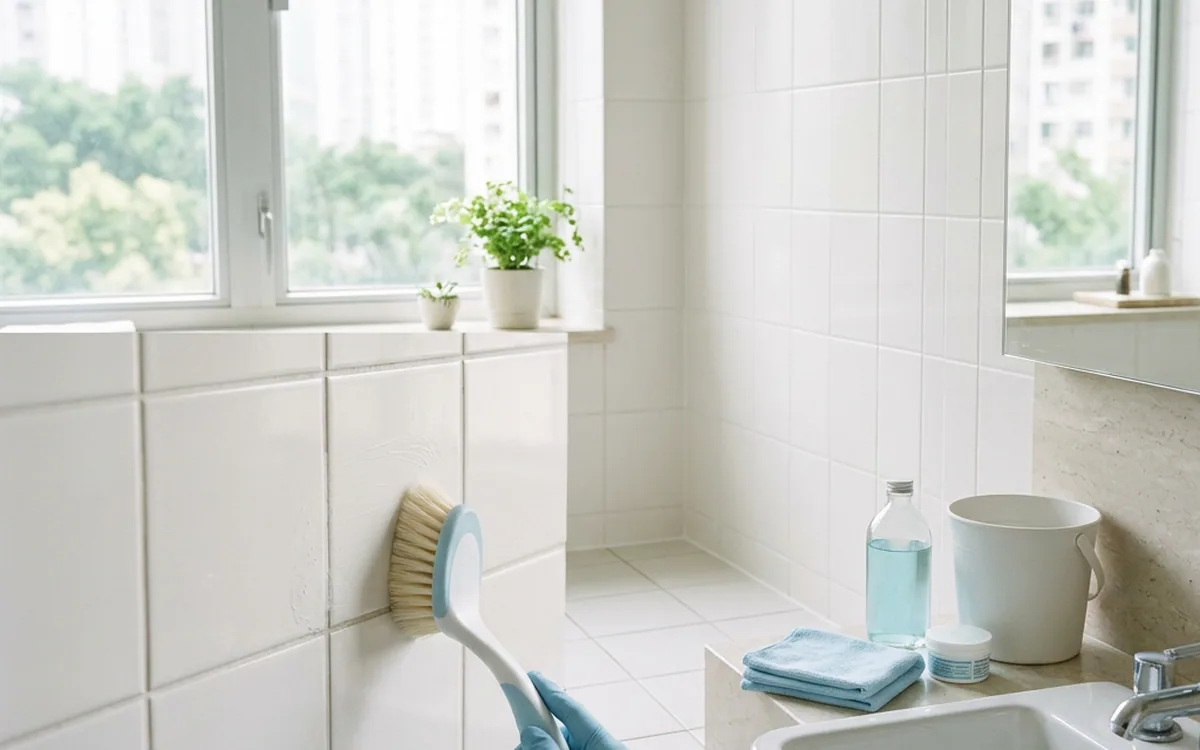
To remove stains from bathroom tiles, you must use acidic cleaners for limescale and alkaline baking soda for soap scum. For mold, ensure the environment is ventilated; after using cleaning agents for thorough cleaning, use mold remover according to the manufacturer's instructions. Never mix bleach with acidic cleaners, and test the material in an inconspicuous area first to avoid damaging the surface.
Bathroom tile stain assessment
Bathrooms are damp for long periods, and common stains on tiles include mineral limescale, sebum soap scum, and mold in cement joints. Assessing the type of stain is the key to cleaning; avoid blind, forceful scrubbing to prevent scratching the glaze layer.
When handling moldy materials, you can follow US Environmental Protection Agency's home mold prevention recommendations(opens in a new window)treatment and note the on-site and material restrictions.
- Limescale: White, hard residues on the surface, suitable for acidic components.
- Soap scum: Viscous oily residue, suitable for alkaline components.
- Black mold: Mainly grows in gaps, requiring deep mold removal.
- Check if the material is acid and alkali resistant.
- Apply a small amount of cleaner in an inconspicuous place to test for discoloration.
Scientific stain removal operation steps
Before using cleaners, be sure to wear gloves and eye protection. It is strictly forbidden to mix bleach with other household cleaners (especially acidic toilet cleaners), or toxic gas will be produced.
Before using bleach, please first understand Method for using bleach from the Centre for Health Protection(opens in a new window), and operate according to the product label.
- Limescale treatment: Spray acidic cleaner or citric acid, wait a few minutes, then wipe clean.
- Soap scum treatment: Use baking soda powder and warm water for scrubbing to break down the oily residue.
- Tool selection: Use a soft-bristled brush or sponge; avoid steel wool.
- First, remove surface dirt with water and cleaner.
- Rinse clean with water.
- Finally, perform disinfection treatment for stubborn mold spots.
Thorough removal of mold in gaps
Cement joints are porous materials; take action quickly for mold problems and keep them thoroughly dry. If mold has penetrated deep into the layers, it may be difficult to remove completely.
- Scrub away surface dirt first.
- Use mold remover spray on the gaps; you can cover them with kitchen paper to increase contact time.
- After letting it sit, scrub lightly with an old toothbrush, then rinse thoroughly with water.
- After rinsing, thoroughly air-dry the surface.
- Check if the mold roots are removed; do not directly apply gap filler or grout before clearing them.
- Keep ventilated to prevent mold from regenerating.
Daily maintenance and when to seek help
Maintaining dryness is the core of mold prevention. If the task involves high-altitude cleaning or disassembly of professional parts, find a professional team to handle it; do not disassemble circuits or perform dangerous high-altitude operations yourself.
- After bathing, use a squeegee to remove water buildup from walls.
- Turn on the exhaust fan to reduce indoor humidity.
- After using cleaning tools, soak them in diluted bleach for 30 minutes to disinfect.
- Regularly check gaps for new mold spots.
- If the stain area is too large or has penetrated deeply, stop DIY and contact professional cleaning services.
