
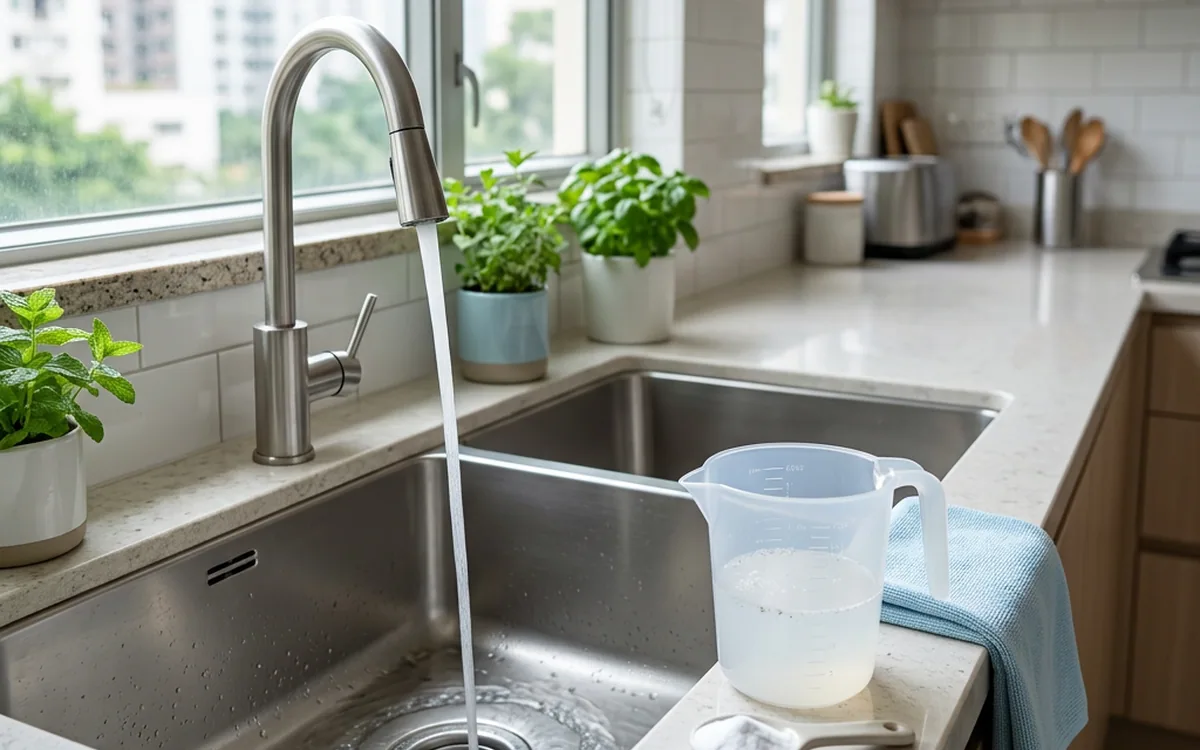
Slow drainage in sinks is often caused by solidified grease on the pipe walls; do not misuse strong alkaline chemicals to avoid damaging PVC pipes. It is recommended to use baking soda and warm water regularly to help dissolve it, and keep the filter net clean to catch residue. If the situation persists, seek a professional team for deep clearing.
Causes of slow drainage
Grease, food residue, and detergent residue that accumulate on the inner walls of kitchen drain pipes solidify into stubborn grease layers in low-temperature environments, narrowing the pipe diameter and significantly reducing drainage efficiency.
Gentle maintenance and cleaning methods
Avoid pouring strong alkaline drain cleaners directly into the pipes to prevent high temperatures from damaging plastic hoses or rubber seals.
- First, pour out loose grease and put an appropriate amount of baking soda into the drain.
- Pour in warm water to create a mild alkaline chemical reaction and physical bubbles to soften the initial grease layer on the pipe walls.
- After use, flush the pipes with plenty of clean water.
Proper daily maintenance habits
Prevention is far more important than clearing; good habits can delay the formation of dirt on pipe walls.
- Wipe away grease from dishes with paper towels before washing to reduce direct inflow into the drain pipes.
- Regularly check and clear residue from the sink filter.
- Every day after cleaning greasy items, take a moment to rinse the drain with warm water for about 30 seconds.
When to seek professional assistance
If drainage remains slow after simple maintenance, it means the grease deep in the pipe wall has hardened and calcified. At this point, stop DIY attempts and avoid using force-clearing springs; it is recommended to have a professional team inspect it.