
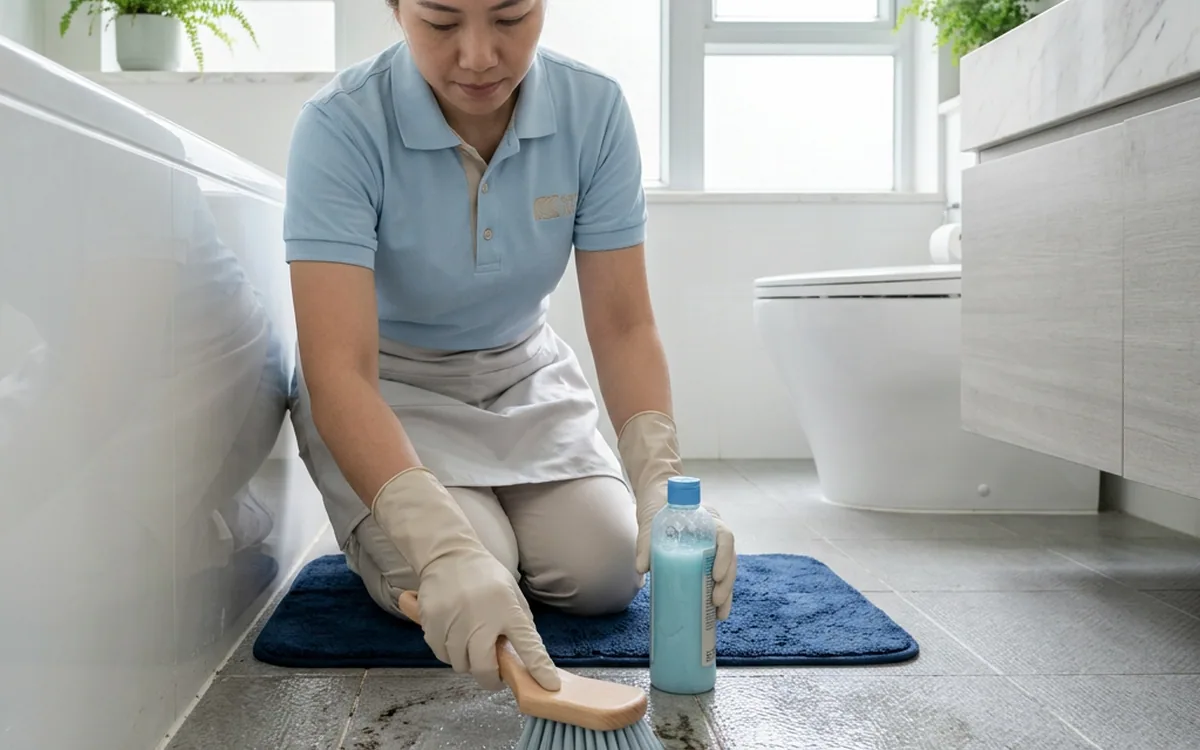
For mold on anti-slip tiles, you should first spray with a mold remover and lay down paper for a twenty-minute wet compress to soften it, then scrub with a soft brush following the texture. After cleaning, be sure to rinse off standing water completely and maintain ventilation to prevent mold from regenerating. Fragile materials or stubborn mold stains should be entrusted to professionals for handling.
Dirt-trapping mechanism of anti-slip textures
The surface of anti-slip tiles is uneven, easily trapping shower gel and sebum, which forms an organic film conducive to mold growth.
When handling moldy materials, you can follow US Environmental Protection Agency's home mold prevention recommendations(opens in a new window)treatment and note the on-site and material restrictions.
Localized wet-compress softening technology
Hard brushes can easily damage the tile glaze. It is recommended to spray on cleaning agent, lay down kitchen paper towels to soak and let stand, allowing the ingredients to penetrate the texture and soften the dirt, which can significantly improve cleaning efficiency.
Correct scrubbing and rinsing procedures
After cleaning, the detergent must be rinsed off thoroughly so that residues do not become a base for a new round of dirt. Finally, you should use a squeegee to remove standing water and keep the environment dry.
- Spray mold removal agent evenly onto the moldy area
- Lay down paper towels for a wet compress for about twenty minutes
- Use a soft-bristled brush to gently scrub in a crisscross pattern
- Rinse with plenty of clear water and use a squeegee to dry the surface
Daily prevention strategies
Washing away residual foam on the ground after showering every day, combined with operating the exhaust fan, is the most economical means of preventing mold. If mold spots have already penetrated tile grout or the material is relatively expensive, it is not advisable to scrub it violently yourself.
壹家壹清潔專家
壹家壹清潔專家 provides professional tile restoration and anti-mold cleaning, using targeted formulas to solve stubborn black mold without damaging the original waterproof layer and building material surface.
