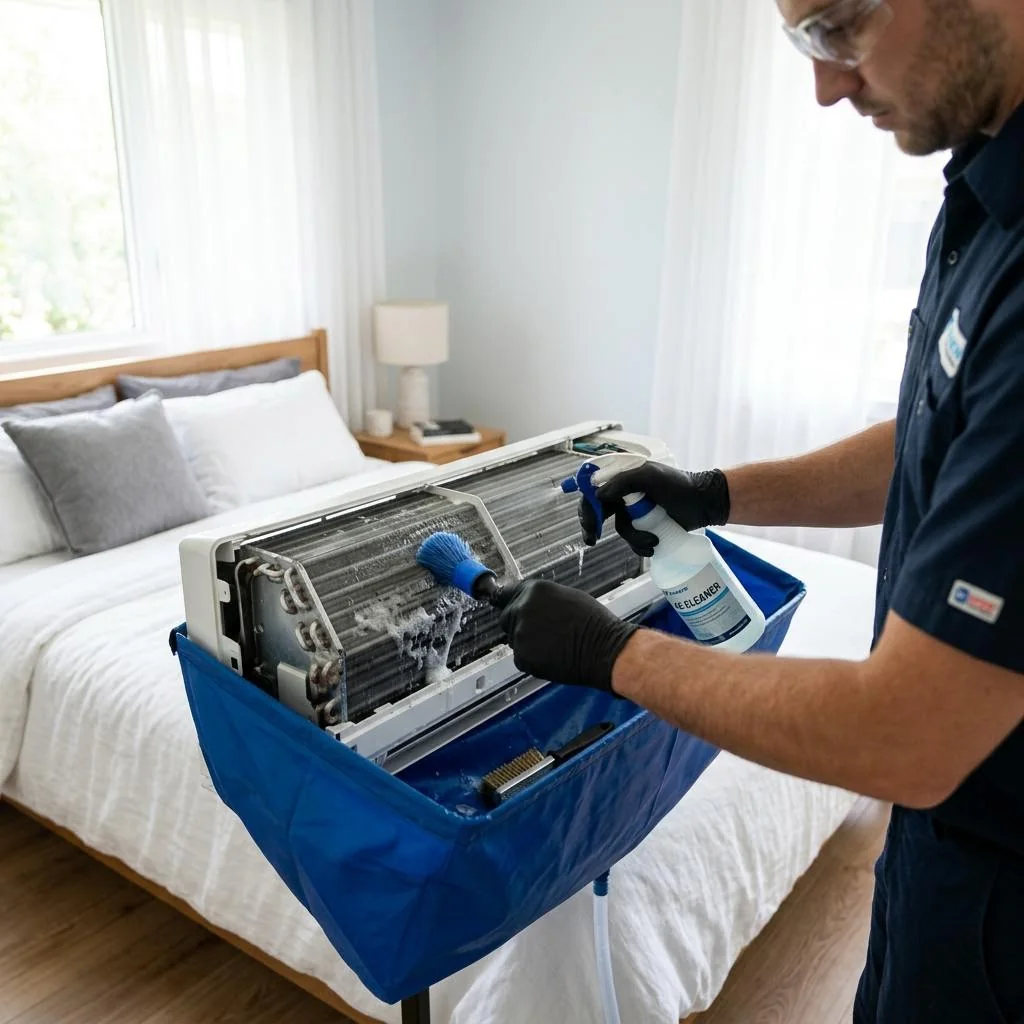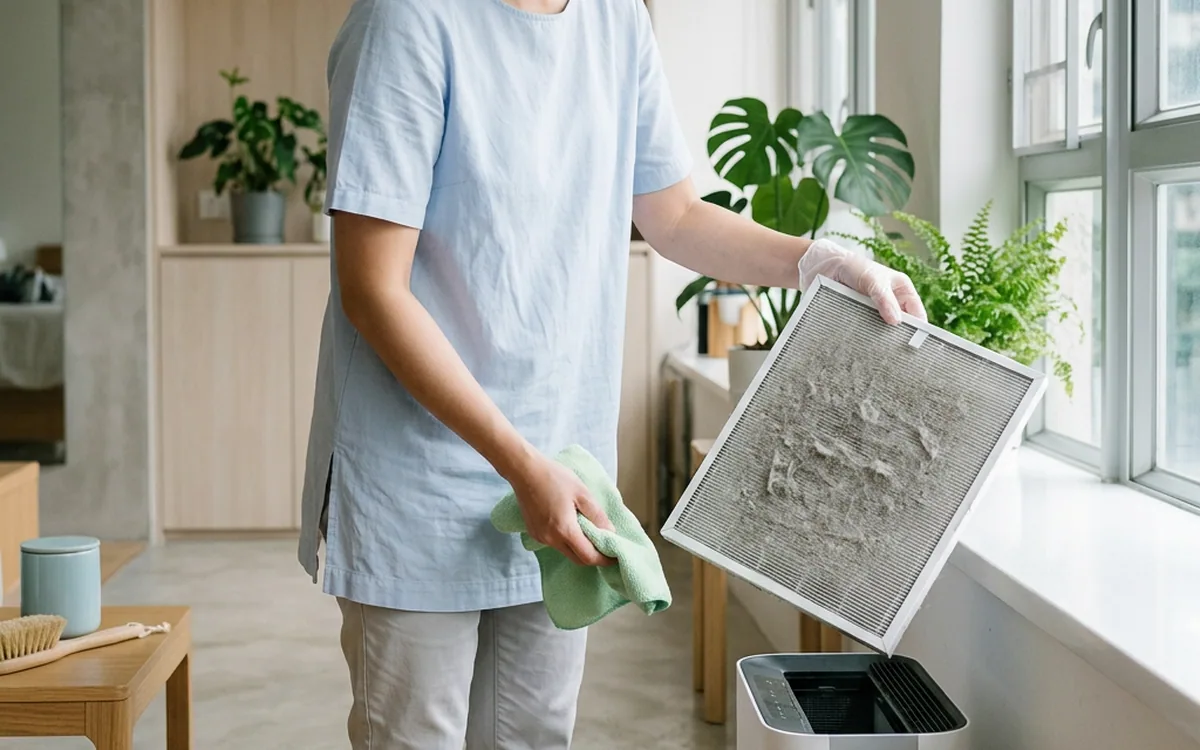
Air purifier performance decreases often because the outer filter screen is completely covered by hair and cotton lint. It is recommended to regularly check the pre-filter; if you discover significant accumulation, you should remove the filter and use a vacuum cleaner to remove hair and fluff from the surface. Do not wash or forcefully brush the filter to avoid damaging the fiber structure. If dust inside the air duct is serious, please contact 壹家壹清潔專家 for processing to ensure motor operation safety.
Blocking problems caused by electrostatic adsorption
Air purifiers generate negative pressure through fans to filter air. When hair, fibers, and fine dust in the air are inhaled, the pre-filter intercepts the particles first. Hair easily generates static electricity under airflow friction, attracting and condensing large amounts of dust to form thick, felt-like blockages that hinder airflow from entering the core filter layer, resulting in a significant decrease in air exchange efficiency.
Daily inspection and maintenance of the pre-filter
Maintaining filtering performance requires regular cleaning of the intake pre-filter. Please first read the original manual to confirm filter material and maintenance methods; it is strictly forbidden to use hard brushes or rough tools that will destroy the filter structure for cleaning.
- Inspection: Observe whether the filter is covered with hair and a dust layer.
- Cleaning: Use a household vacuum cleaner with low suction power to suck debris from the outside of the filter.
- Reset: Ensure the filter is completely dry and correctly installed in place.
When to stop DIY and intervene professionally
If the following situations appear, please stop self-disassembly to avoid damaging sensors or the motor:
- Abnormal odors or friction noises during machine operation.
- Visible dust accumulation or mold spots in the internal fan and deep inside the machine's air duct.
- Traces of moisture or dust intrusion into the motor components discovered after removing the filter.
- Contact 壹家壹清潔專家 for deep cleaning.
- Professional technicians will use anti-static tools and neutral detergents to process the airflow channels.
- Confirm that all electronic components are reassembled and tested in a dry state.