
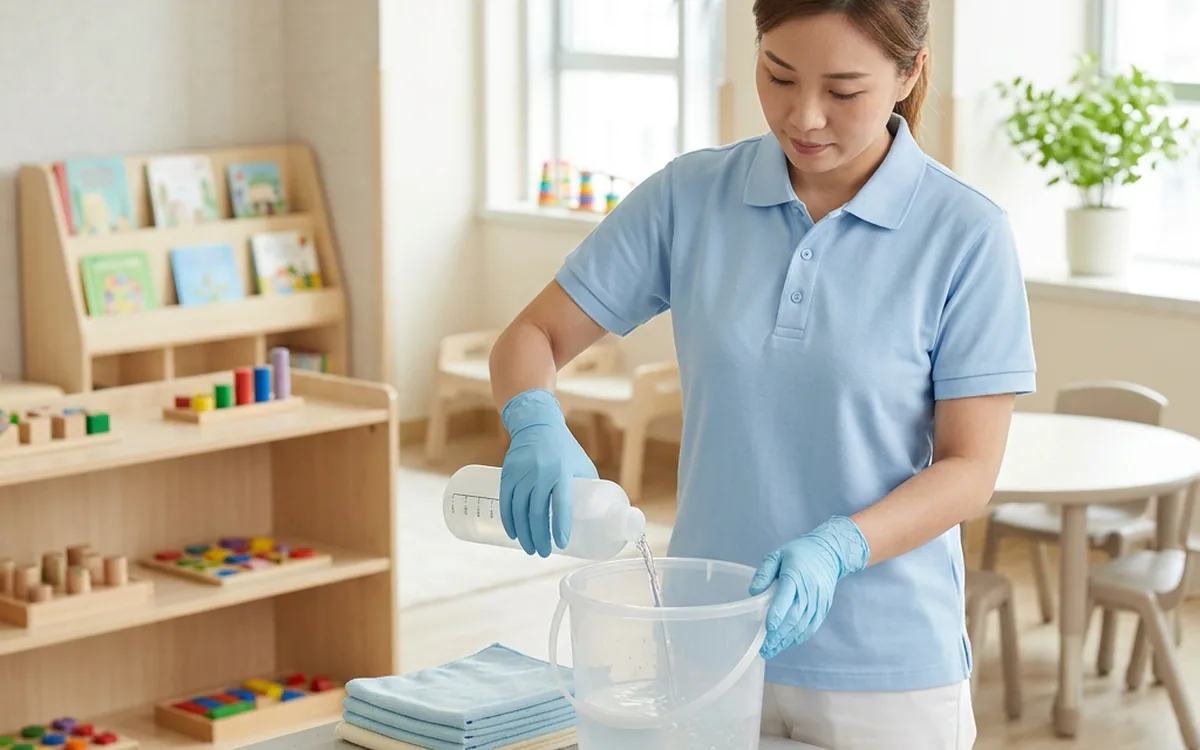
Tuition center cleaning should use professional-grade disinfectants that are low-volatility, colorless, and odorless. Focus cleaning on door handles, teaching aids, and mats that students touch frequently. Avoid peak hours, and ensure good ventilation during cleaning to avoid using irritating chemicals.
Hygiene risks in children's learning spaces
Students in tuition centers often have frequent touching behaviors, such as crawling or handling toys or stationery. High-frequency disinfection is necessary, but chemical residues must be guarded against. Prolonged inhalation of high concentrations of bleach or other volatile chemicals can irritate children's respiratory tracts and even cause allergies.
Before using bleach, please first understand Method for using bleach from the Centre for Health Protection(opens in a new window), and operate according to the product label.
Disinfection strategies and ventilation requirements
Break the myth that "strong smell means clean." Effective sterilization depends on the correct active ingredients and contact time, not an irritating odor. Commercial spaces should prioritize non-toxic disinfection products with environmental safety certifications. If the location is in an office building with limited ventilation, control the disinfectant concentration and coordinate with forced ventilation measures.
Key disinfection areas and material tolerance
Management personnel should establish a self-inspection list, concentrating resources on "high-risk contact points":
Door handles and switches: Clean multiple times daily.
Shared teaching materials: Such as the surfaces of building blocks and books; choose suitable cleaning agents based on the material.
Mat corners: Pay special attention to dirt accumulation and ensure moisture is thoroughly dried to prevent mold.
Professionalism of entrusting a professional team
While DIY cleaning is convenient, it is often difficult to attend to details when facing large-scale deep purification before school starts. 壹家壹清潔專家 provides non-toxic disinfection solutions that meet professional hygiene standards, which can reduce permanent damage (such as discoloration or brittle texture) caused to teaching aids by improper cleaning agents, ensuring the environment is safe for children.
