
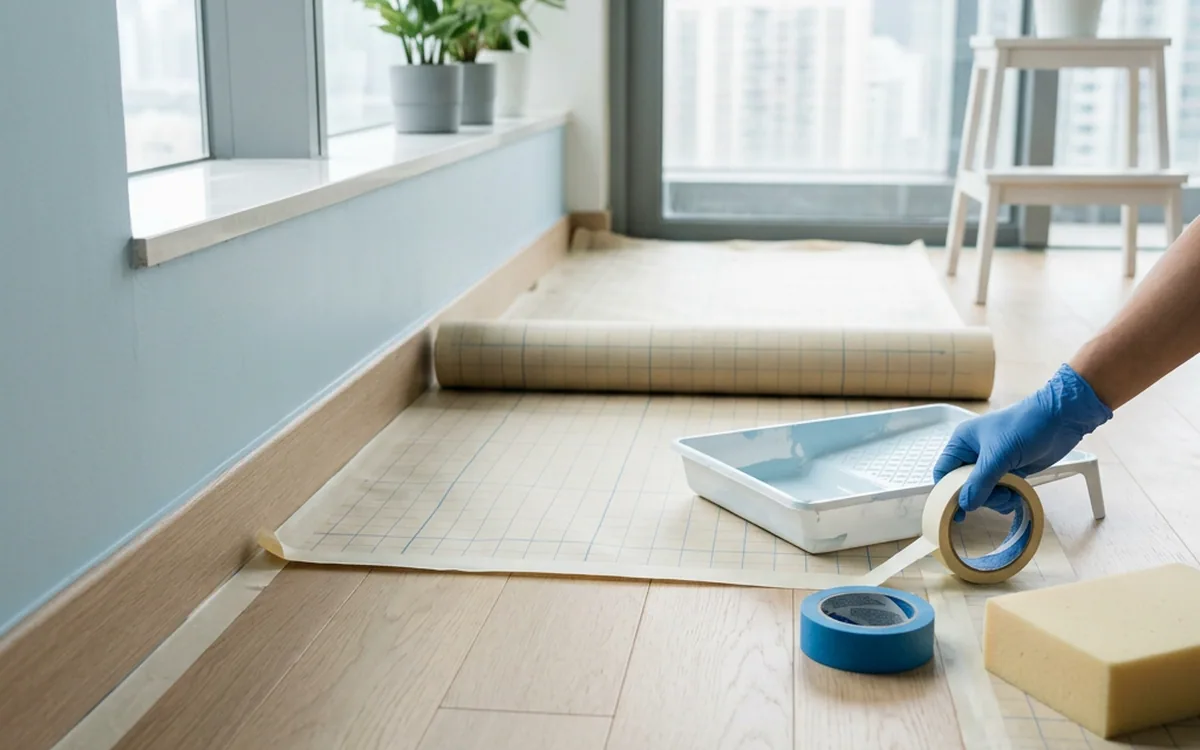
Post-renovation floor cleaning must begin with thorough dust removal, and special cleaning agents should be selected for different materials. Solid wood and composite floors need humidity control; clean with a slightly damp mop and dry immediately; tile joints can be assisted with a soft-bristled brush. Avoid excessive water or corrosive chemicals, ensure ventilation and drying after cleaning, and if stubborn stains are found, test the cleaning agent locally before proceeding.
Preliminary preparation for post-renovation floor cleaning
After renovation, the floor will be full of dust, glue stains, or construction debris. Before starting to clean, the following steps must be completed to ensure safety and results.
- Comprehensive vacuuming: Use a powerful vacuum cleaner with a HEPA filter to remove fine dust from tile joints, wall corners, and baseboard edges.
- Remove large garbage: Clean up all renovation waste first to avoid scratching the floor surface when mopping.
- Local testing: Test the cleaning agent in an inconspicuous area to ensure it will not cause the floor to fade or deform.
- Wear masks and gloves to protect your respiratory tract and skin
- Thoroughly remove large surface debris
- Select suitable neutral cleaning agents for different materials (tile, wood, stone)
Treatment of tile and stone floors
Tiles and stone are durable, but joints easily trap mud and sand. Clean from the inside out to avoid re-contaminating cleaned areas.
- Dilute neutral cleaning agent with warm water
- Use a soft-bristled brush to treat dirt in joints
- Scrape off excess water in time
- Mix neutral cleaning agent into clean water in proportion
- Wipe the floor evenly with a mop
- Use a soft-bristled brush for joints
- Wipe off residual water with a dry mop or cloth
Maintenance of wood and composite floors
Wood floors are extremely sensitive to moisture. If a large amount of dust is left behind after renovation, do not directly mop with a large amount of water, otherwise, it will cause the floor to expand or warp.
- Dedicated wood floor cleaning liquid
- Mop wrung out to the extreme
- Clean, soft cotton cloth
- Use a vacuum cleaner to suck away all fine dust
- Wipe lightly with a slightly damp mop using a dedicated wood floor cleaning agent
- Wipe off residual moisture immediately with a dry cloth
- Keep indoor ventilation to help dry
When to stop DIY and seek professional assessment
If the floor exhibits the following situations, DIY cleaning may not be able to handle it and could even cause secondary damage; it is recommended to seek professional cleaning services:
- Large areas of paint, glue, or resin residues that require industrial solvents to handle.
- Stone surfaces appearing to have lost luster or suspected scratches that require professional polishing.
- Wood floors warped or raised due to dampness during renovation.
- Mold problems caused by improper cleaning.
- Check for residual stains in corners after finishing cleaning
- Observe whether floor joints are flat
- Regularly check for signs of dampness
壹家壹清潔專家
We focus on high-quality cleaning services, solving post-renovation floor troubles through professional technology. You are welcome to inquire about the latest price list and service content via WhatsApp.
- Consult about cleaning service content
- Inform about floor material and renovation situation
- Schedule a professional team for an on-site assessment
