
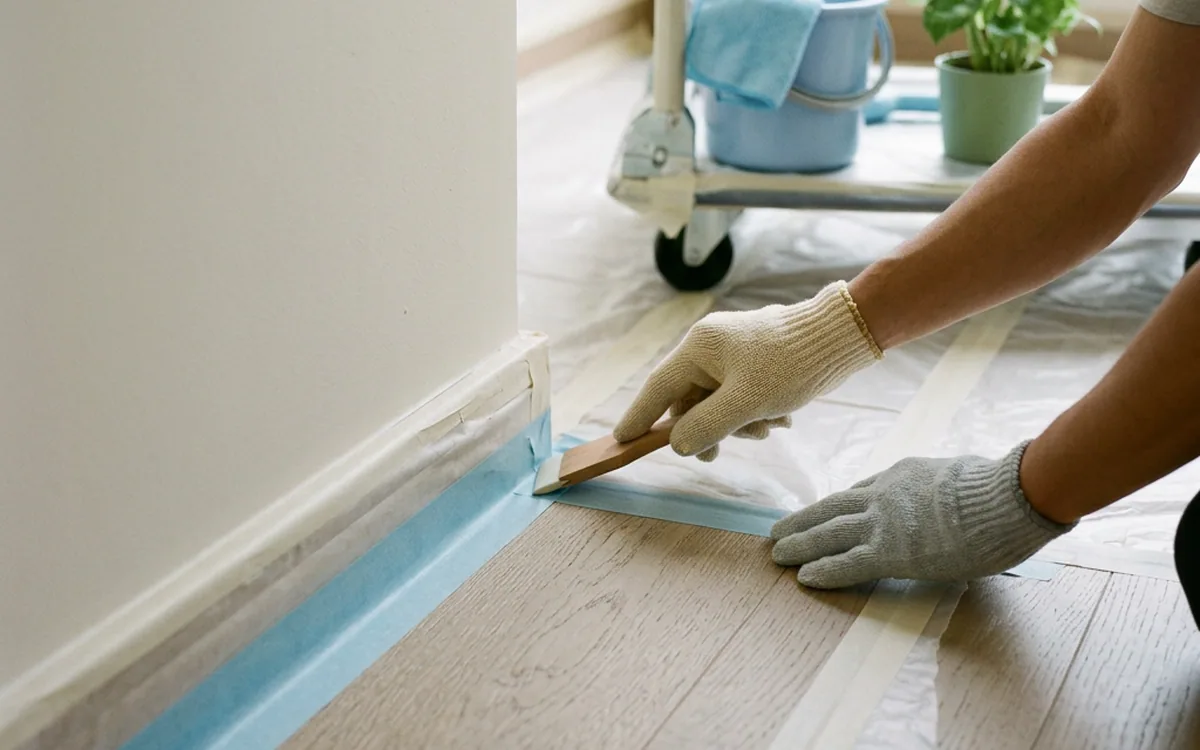
Post-renovation cleaning helps remove construction dust, debris, and stains to improve the indoor living environment. We suggest thorough vacuuming and dusting, followed by material-specific cleaning to enhance home cleanliness.
Why professional post-renovation cleaning is needed
Renovation projects generate large amounts of suspended dust, construction waste, and paint residue. If these residues are not professionally handled, it not only affects indoor air quality but may also cause respiratory sensitivity or skin discomfort. Thorough cleaning can protect newly installed materials, avoiding dirt penetration that leads to permanent damage.
- Remove all remaining construction debris and large garbage first
- Use a high-power vacuum cleaner to clean crevices and ceiling dust
- Choose appropriate cleaning agents to wipe surfaces based on material characteristics
- Check for hidden dust in corners and dead ends after completion
Core steps of post-renovation cleaning
When performing post-renovation cleaning, be sure to follow the top-down principle to avoid secondary dust pollution. Cleaning agents must be tested on an inconspicuous area first to ensure there is no fading or damage before being used on a large area.
- Whole-house dusting: including ceilings, light troughs, air conditioner filter nets, and window tracks
- Cabinet treatment: thoroughly clean the inside and outside of drawers and internal corners
- Floor maintenance: choose special care agents for different materials such as floor tiles and wooden floors
- Remove residues: focus on glue stains, paint spots, and construction dust scale
Formaldehyde and air quality management
Renovation materials often have formaldehyde volatilization problems. Cleaning alone cannot remove formaldehyde in the air; it must be mitigated through forced ventilation and pollution source treatment. If the indoor smell is pungent, it is recommended to entrust professional testing to confirm the concentration; do not treat the fragrance after cleaning as a standard that formaldehyde is qualified.
壹家壹清潔專家 Advice
Stubborn stains after renovation, such as glue and cement marks, can easily damage finishes if not handled properly. 壹家壹清潔專家 is equipped with professional equipment and appropriate cleaning agents and can safely and efficiently complete the cleaning for you. To book a cleaning or inquire about charging standards, please contact us via WhatsApp to view the latest price details.
