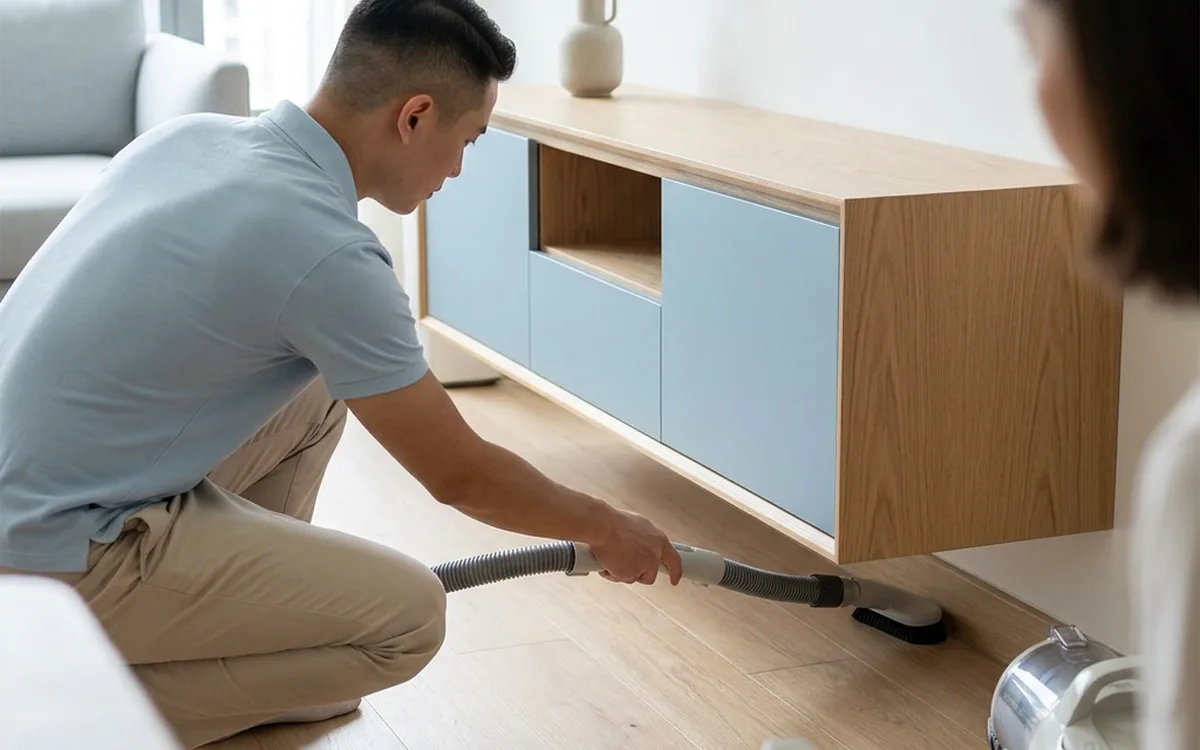
The air flow velocity at the bottom of floating furniture slows down, leading to dust accumulation, and due to height limitations, daily tools are difficult to reach. When cleaning, use a thin, long suction nozzle for physical vacuuming and, depending on the building material (such as wood veneer, lacquer), choose a corresponding anti-static cloth to wipe in the direction of the grain. Never scratch with hard objects to avoid damaging the finish.
Why is the underside of floating furniture prone to dust accumulation
Floating designs break air circulation, causing floating dust and hair to be carried to the bottom of the furniture, where it is blocked by the furniture structure and the flow velocity slows down, eventually settling. Most robot vacuum cleaners or traditional vacuum cleaner heads cannot enter narrow gaps due to the thickness of the machine body, making this place an invisible blind spot in the home.
Correct cleaning procedure
High-end furniture is mostly made of wood veneer or lacquer, which is very easy to scratch. When cleaning, use a specialized flexible nozzle to first remove accumulated fixed dust, and then use a high-density microfiber cloth with an appropriate amount of care agent, gently wiping along the grain direction. This process must ensure that the tool has no sand particles mixed in, to avoid causing physical damage.
When handling moldy materials, you can follow US Environmental Protection Agency's home mold prevention recommendations(opens in a new window)treatment and note the on-site and material restrictions.
- Confirm the building material at the bottom of the furniture and choose a suitable soft suction nozzle.
- Reach deep into gaps to capture dust, avoiding hard friction that could scratch the surface.
- Use a slightly damp cloth with an anti-static care agent to wipe.
- Check for mold; if present, take mold removal measures and ensure complete dryness.
When to stop DIY and seek professional help
When mold stains, thick dust, or the risk of finish peeling appears at the bottom of floating furniture, DIY may lead to irreversible material damage. We are equipped with dust removal and cleaning tools to perform dust removal and daily maintenance for various building materials.