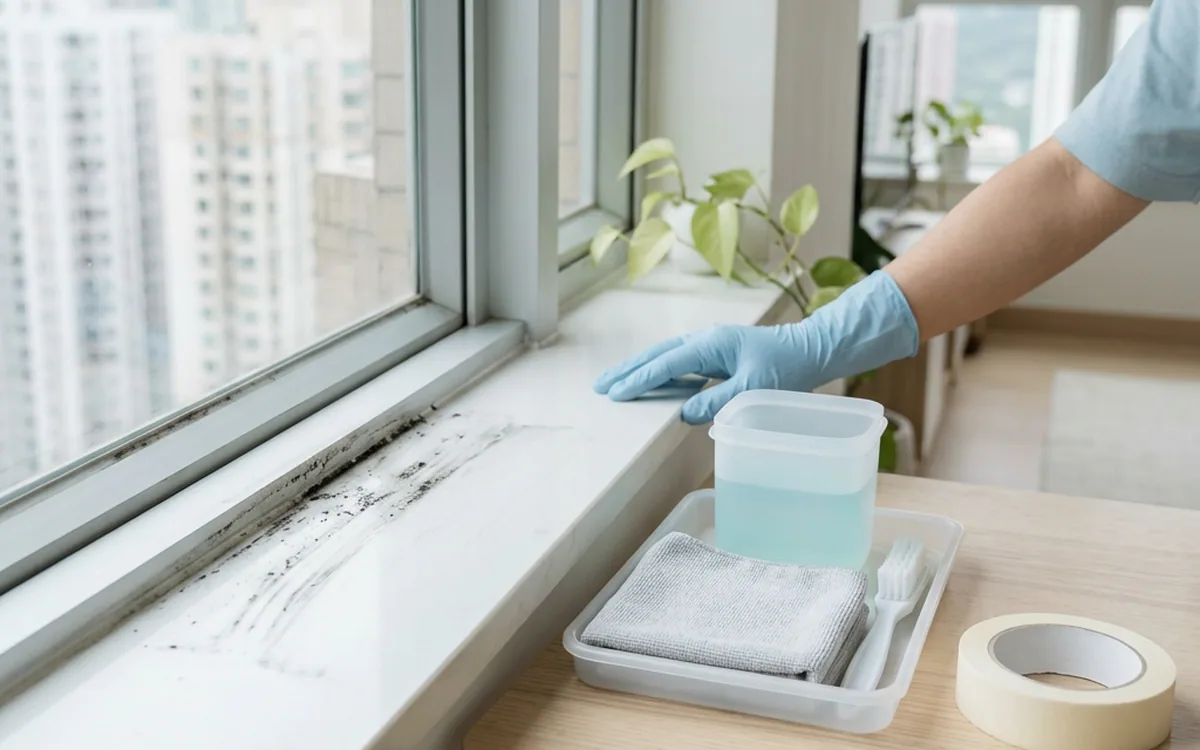
Using bleach or heavy-duty acidic cleaners is strictly prohibited to prevent corrosion of the aluminum alloy and the brittleness of rubber seals. Aluminum is an amphoteric metal, and contact with strong acids or alkalis causes white spots and pitting. Use a vacuum cleaner to remove dust and sand first, then soften the grime with baking soda and white vinegar. If the drain hole is blocked, professional cleaning is required to prevent water leakage. Routine maintenance should be done quarterly, ensuring the drain valve remains clear.
The danger of water leakage caused by black sludge
Window-track sludge can contain dust, water and other dirt; appearance alone cannot identify its composition. Deposits may hinder movement or block drainage. Persistent leaks also require checks of seals, drainage and the window itself, not only cleaning.
When handling moldy materials, you can follow US Environmental Protection Agency's home mold prevention recommendations(opens in a new window)treatment and note the on-site and material restrictions.
- Rail wear makes opening and closing windows difficult
- Drainage hole clogging triggers water seepage in walls
- Black sludge contains mold spores
- Regularly check the dust accumulation level in the rails
- Keep drainage holes clear
- Observe for signs of water leakage during rain
Taboos and restrictions for using chemicals
The aluminum frame surface is anodized; bleach will destroy the coating, and rubber seals will become brittle and leak air once they lose elasticity. Use of strong acidic stain removers and steel wool brushes is prohibited.
Before using bleach, please first understand Method for using bleach from the Centre for Health Protection(opens in a new window), and operate according to the product label.
- Using bleach is strictly prohibited
- Using acidic cleaners is prohibited
- Using steel wool brushes for scrubbing is strictly prohibited
- Prioritize non-corrosive cleaning agents
- Ensure surfaces are dry after use
- Test cleaning agents on hidden areas
Clean window tracks from dry removal to damp wiping
Follow the dry-to-wet processing logic to protect the aluminum frame coating and ensure sludge is not pushed into the drain hole.
- Dry vacuuming check
- Choose a gentle method compatible with the material
- Clean longitudinally with a sponge
- Vacuum up floating dust
- Use a lightly damp cloth with a small amount of compatible neutral cleaner, following the material-care guidance
- Wipe along the track without forcing sludge or cleaning liquid into drainage holes
- Let sit and meticulously absorb the sludge