
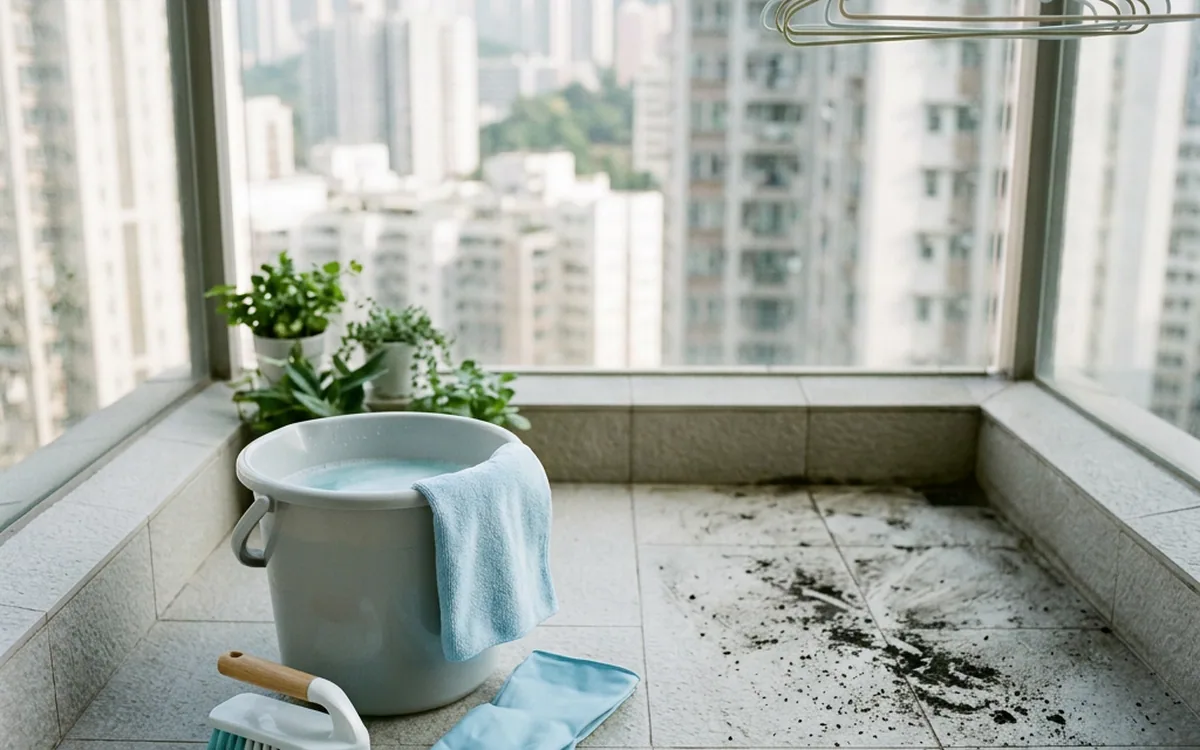
Balcony cleaning must 'control water' and it is prohibited to wash with large amounts of water from a hose. It is recommended to vacuum to remove dry sand first, handle locally with neutral detergent, and absorb wastewater instantly. If you encounter long-term stubborn oily sludge, it is recommended to let a professional cleaning service company perform deep cleaning.
Why rinsing the balcony with a water hose is prohibited
Hong Kong building deeds strictly prohibit dripping water from heights. If balcony railing gaps are handled improperly, large amounts of water will splash to the floor below, causing neighbor complaints and management follow-up. In addition, floor drains are easily blocked by washed-in mud and sand, causing backflow.
- Lay down thick absorbent towels at the base of the railing as a protective barrier.
- Before cleaning, you must remove loose dust and fallen leaves from the floor.
- Ensure that the drainage holes are not blocked by large debris.
Correct cleaning procedure for balcony floors
The grime on the balcony is often a mixture of oily fumes and acid rain; it needs to be cleaned using a combination of physical and chemical methods, rather than forceful rinsing.
- Dry dusting: Use a vacuum cleaner or a hard-bristled broom to remove sand and stones from the floor.
- Gentle decontamination: Use neutral dish soap or baking soda with warm water to scrub greasy areas locally.
- Immediate absorption: Use a sponge mop or absorbent cloth to dry the cleaned stains in sections to prevent water runoff.
Maintenance of drying poles and railings
Clothes drying poles are long-term affected by oily fumes, which can cause secondary pollution to clothing. When cleaning metal surfaces, use appropriate cloths and detergents to avoid scratching the surface.
- Wrap the clothes pole with a slightly damp cloth containing a small amount of neutral detergent and wipe in one direction.
- Ensure that you wipe dry with a dry cloth immediately after wiping to prevent water spots from turning into metal rust spots.
- Regularly check if the screws at the metal joints are rusty.
When professional team intervention is needed
When the balcony space is narrow, involves high-altitude boundary work, or long-term hardened black grime is difficult to handle on your own, blindly using strong acid or alkali agents will only damage the waterproof underlayer. Professional cleaning companies provide appropriate equipment and cleaning formulas that can safely and thoroughly restore the hygiene conditions of your balcony.
