
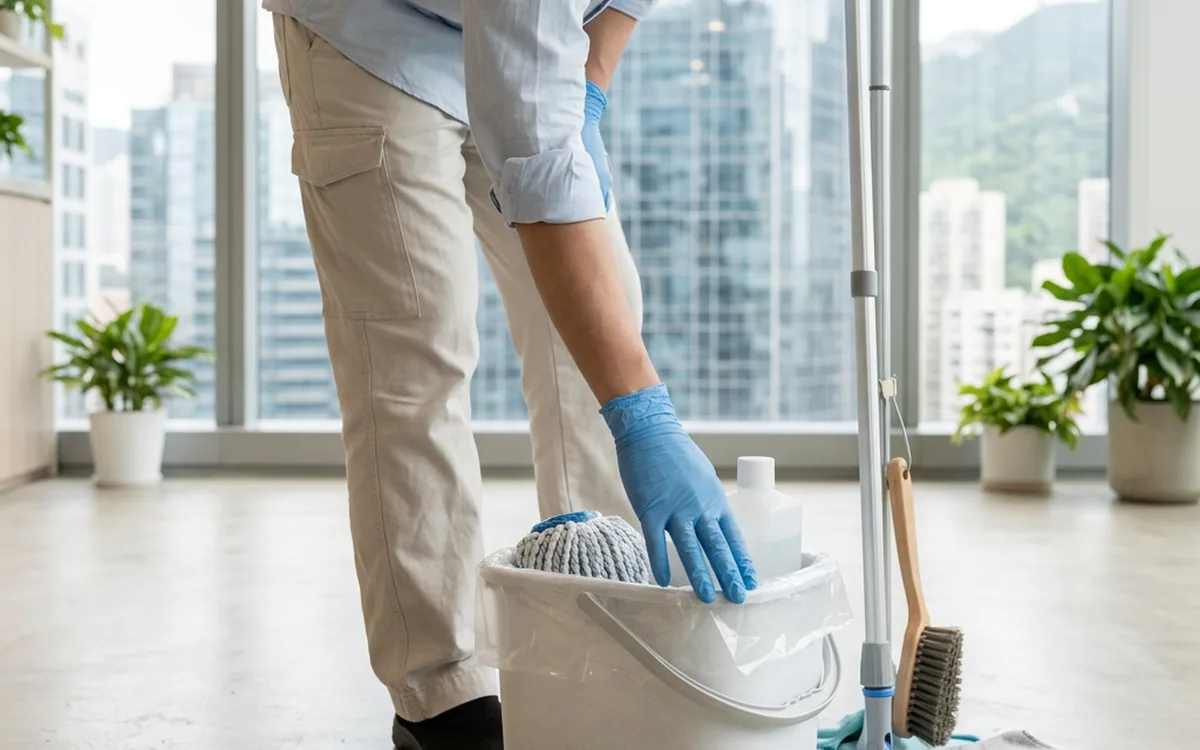
Read the cleaner label and safety information, select gloves and eye protection for the exposure risk, and maintain ventilation. Surgical or carbon masks must not generally be treated as protection against bleach fumes. Specialist respiratory protection requires assessment by someone with relevant knowledge; lack of odour does not establish safety.
Misconceptions about protective gear specifications
Surgical masks are not primarily designed for chemical-gas protection. Layering them or adding carbon does not establish suitability for irritating gases. Glove protection depends on material, thickness, contact time and the chemical used; check product and glove-compatibility information rather than relying only on the labels latex or nitrile.
Deep cleaning safety equipment list
For different cleaning needs, it is recommended to use professional protective gear:
Before using bleach, please first understand Method for using bleach from the Centre for Health Protection(opens in a new window), and operate according to the product label.
- Respiratory protection: do not treat ordinary or carbon masks as protection against bleach fumes. Maintain ventilation and never mix cleaners. Stop work and leave the affected area if eye or nose irritation, breathing discomfort or suspected hazardous gases occur, and seek appropriate assistance.
- Hand protection: select the material and length using the cleaner label and glove manufacturer's chemical-compatibility information. Nitrile, latex and other gloves are not suitable for every chemical; replace damaged, aged or contaminated gloves as instructed.
- Eye protection: When handling drain cleaners, cleaning high places, or spraying detergents, wear sealed goggles to prevent splashing into the eyes.
Equipment maintenance and correct operation
Protective gear also needs proper maintenance to be effective:
- Glove cleaning: Before taking them off, rinse off residual detergent on the outer layer with water and save them after air drying.
- Lens care: Rinse with water; avoid using rough rags to scratch the anti-fog coating.
- Regular inspection: If gloves appear hardened, discolored, or have tiny cracks, replace them immediately; do not force reuse.
When to consider professional cleaning services
Facing large-scale black mold, stubborn old grease, or long-term use of irritating agents, physical exertion is high and risks are great. If you lack professional protective equipment or are worried that chemicals will contaminate your home environment, consider letting a professional team handle it to ensure deep cleaning is completed in a safe environment.
