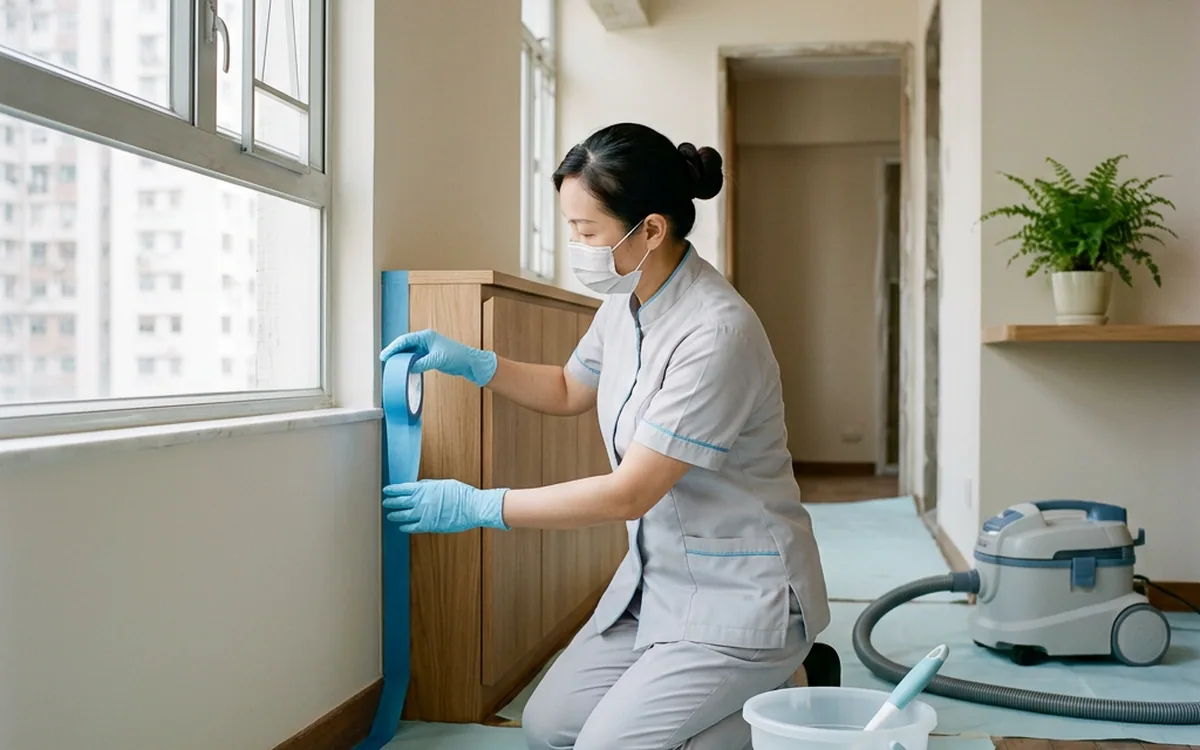
Renovation dust should be treated with vacuum cleaners equipped with high-efficiency particulate air (HEPA) filtration systems and microfiber cloths. Cleaning should be done from top to bottom and from inside out, while avoiding dismantling electrical circuits yourself. For high and hidden areas, it is recommended to commission a professional team to ensure a thorough and safe job.
Characteristics and hazards of renovation dust
Particles of plaster, cement, and wood chips generated from renovations carry static electricity and have very strong adhesion. This dust will scatter to light troughs, tracks, and cabinet crevices. If ordinary household vacuum cleaners lack sufficient filters, it will lead to secondary GRAND JETE of dust, making it difficult to clean thoroughly.
Scientific dust removal procedures
Professional dust removal strategies emphasize the combination of physical dust collection and delicate craftsmanship to protect various building material surfaces.
- First, use equipment with high-efficiency filtration to handle light troughs, walls, and furniture crevices.
- For different materials, use slightly damp high-density microfiber cloths and wipe in the direction of the material grain.
- Use a neutral anti-dust formula to eliminate surface static electricity and absorb tiny residual particles.
Health and safety precautions
Thoroughly removing construction dust can significantly improve indoor air quality and reduce respiratory burden. During the cleaning process, do not attempt to dismantle electrical circuits or handle live components yourself, and high-risk high-altitude work is strictly prohibited.
壹家壹清潔專家 service
壹家壹清潔專家 focuses on providing high-quality cleaning services, assisting clients in restoring the premium visual texture and sanitary state of their renovated homes.