
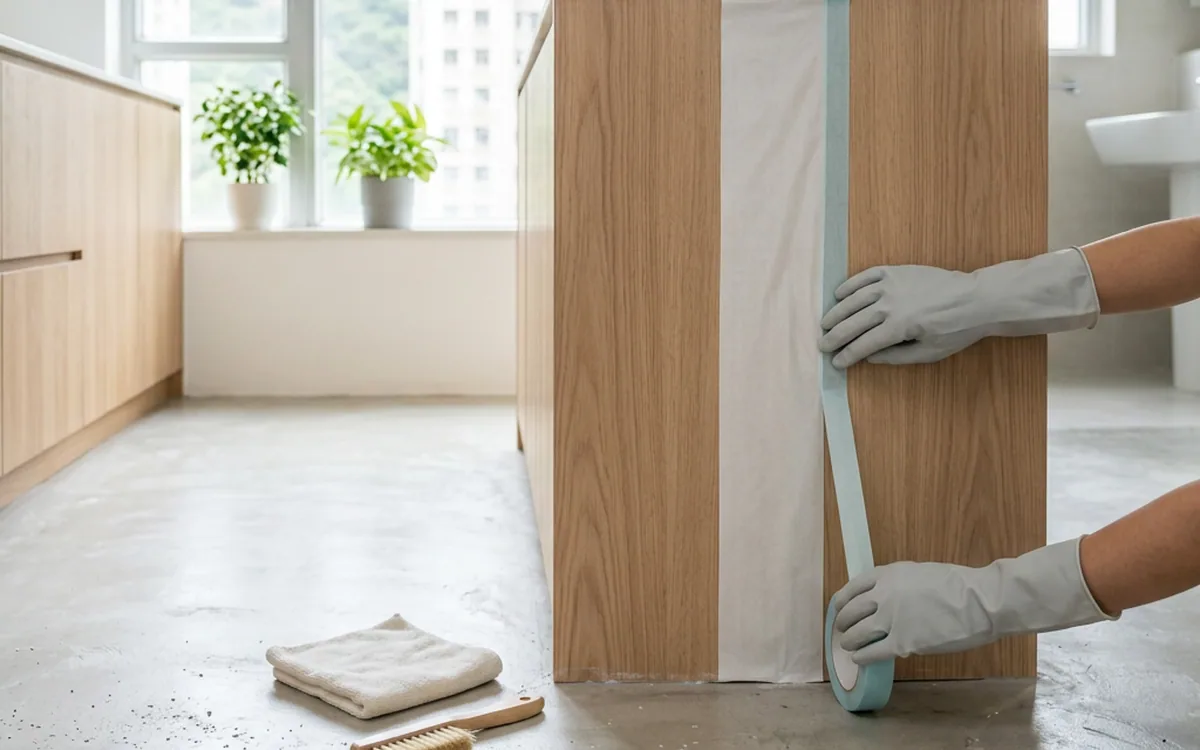
Post-renovation cleaning should follow the principle of "top to bottom, dry before wet" to prevent dust from drifting and damaging surfaces. The focus is on clearing large construction waste first, then using a vacuum cleaner to remove dust, professional cloths to wipe high areas and dead corners, and finally detailed treatment for kitchen grease, window frame glue, and floors. Ensure indoor air circulation to vent volatile substances. If dealing with stubborn glue or large areas of dust, be sure to test cleaners in an inconspicuous area first.
Preparation and Safety Protection
Before cleaning, you must wear an N95 mask, protective gloves, and safety goggles. The renovation site has a large amount of dust; it is strictly forbidden to enter without turning on ventilation equipment. All cleaning agents must be used according to the original manufacturer's instructions. Bleach must never be mixed with any other chemicals to avoid toxic gas [sourceKeys:bleach,hygiene]. For new renovation materials such as wooden floors, tiles, or wall paint, you must test the cleaning agent in an inconspicuous location first to confirm that no fading or deterioration occurs before applying it to large areas.
Before using bleach, please first understand Method for using bleach from the Centre for Health Protection(opens in a new window), and operate according to the product label.
- Wear protective gear
- Keep doors and windows ventilated
- Prepare a vacuum cleaner with a HEPA filter
- Prepare neutral cleaners and specialized glue removers
Systematic Dust Removal Procedures
Follow the "dry before wet" principle, starting from high areas like ceilings, cabinet tops, and light troughs, using a high-efficiency filtered vacuum cleaner to remove dust. Do not wipe high areas with a wet cloth immediately, as this will sweep dust onto the floor. After high-altitude dusting, perform dry wiping on walls, door frames, and cabinet surfaces to ensure all dust is removed.
- High-altitude dusting (ceilings, cabinet tops)
- Dry wiping walls and door frames
- Final vacuuming of the floor
- Slightly damp wiping of surfaces
Deep cleaning for kitchen and bathroom
Kitchen grease should be treated with a degreaser, then wiped multiple times with clean water. If there is mold in the bathroom, treat tile joints with appropriate mold-removing products [sourceKeys:mould]; it is strictly forbidden to blindly use bleach to soak non-resistant materials, and original manufacturer guidelines should be followed. All water stains must be wiped dry after cleaning to ensure the environment is dry and reduce bacterial and mold growth.
When handling moldy materials, you can follow US Environmental Protection Agency's home mold prevention recommendations(opens in a new window)treatment and note the on-site and material restrictions.
- Kitchen: Use a degreaser for stubborn grease and glue marks, and ensure no chemical residue is left after cleaning.
- Bathroom: Focus on tile joints, shower screens, and drains; perform deep cleaning after confirming good ventilation.
- Window frames: Scrape off old glue residue, use specialized glue remover, then wipe away traces with clean water.
Air Quality and Move-in Preparation
Volatile Organic Compounds (VOCs) and formaldehyde after renovation need to be exhausted through continuous natural ventilation. Do not use air fresheners to cover up smells, and do not treat the disappearance of odors as a certificate of compliance for formaldehyde. Maintain proper ventilation; air purifiers cannot replace fresh air, nor can the absence of smell indicate the concentration of indoor pollutants. If formaldehyde concentration testing is needed, please use professional measuring equipment. If the unit's renovation project is complex or paint odors are too strong, stop DIY and consult a professional team for assistance.
- Open all windows in the house for ventilation
- Remove sources of pollution (protective films, waste)
- Use air purification equipment
- Seek formaldehyde treatment plans when necessary
