
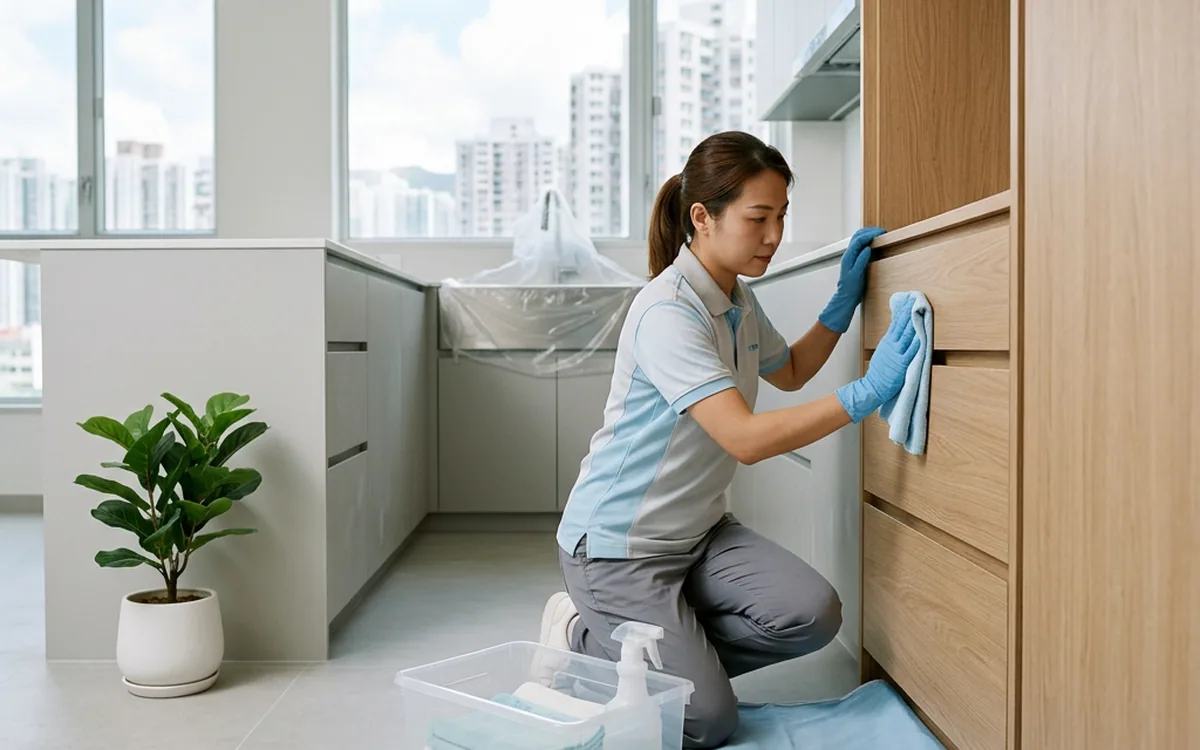
Post-renovation cleaning requires removing large construction waste first, following the principle of cleaning from top to bottom and dry before wet. Focus on cleaning crevices, recessed ceiling lights, and ventilation vents, and use frequent ventilation to dilute odors. Formaldehyde management should focus on detection and source control; never just mask odors.
The potential impact of renovation residues
Newly renovated units often have residual fine construction dust and volatile chemicals. If left uncleaned, the dust will spread with airflow, affecting the respiratory system, which is particularly detrimental to young children or sensitive individuals.
Efficient cleaning planning
To ensure thorough cleaning, a scientific sequence must be used. At the same time, personal protection, such as wearing a mask, is essential.
- Wear masks and gloves for protection.
- Open windows and ventilation equipment to maintain air circulation.
- Follow the "top to bottom, dry to wet" sequence: clean ceilings and walls first, then sweep the floors.
Checklist for critical hard-to-reach areas
Renovation dust is often hidden in details invisible to the naked eye.
- Exhaust fan blades and air conditioner filters.
- Window frame tracks and door hinge crevices.
- Cabinet tops, recessed ceiling lights, and wall grooves.
- Bathroom shower screen rubber seals and drain openings.
Formaldehyde and air quality management
Odors do not represent formaldehyde concentration. Professional instruments should be used for testing to assess air quality. Maintaining ventilation is the most basic and effective method to reduce the concentration of volatile chemical compounds.
