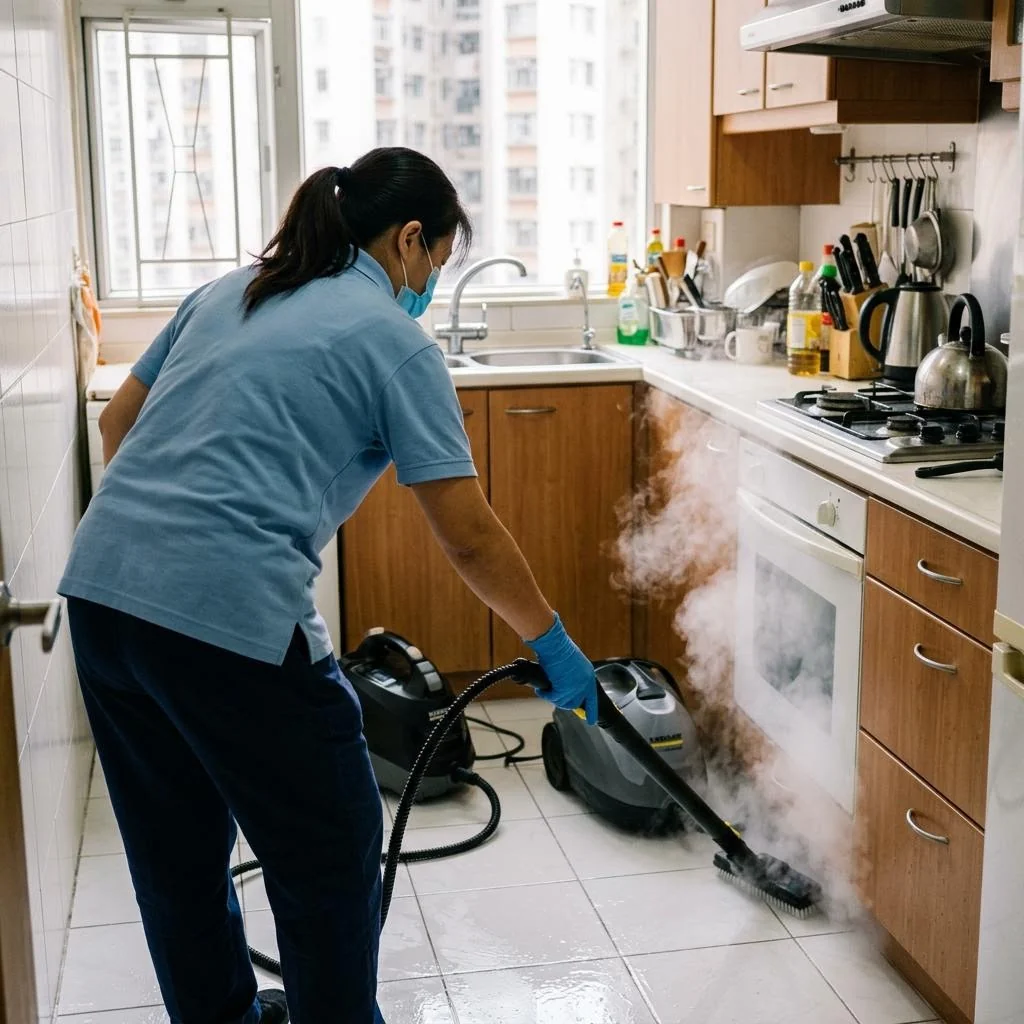
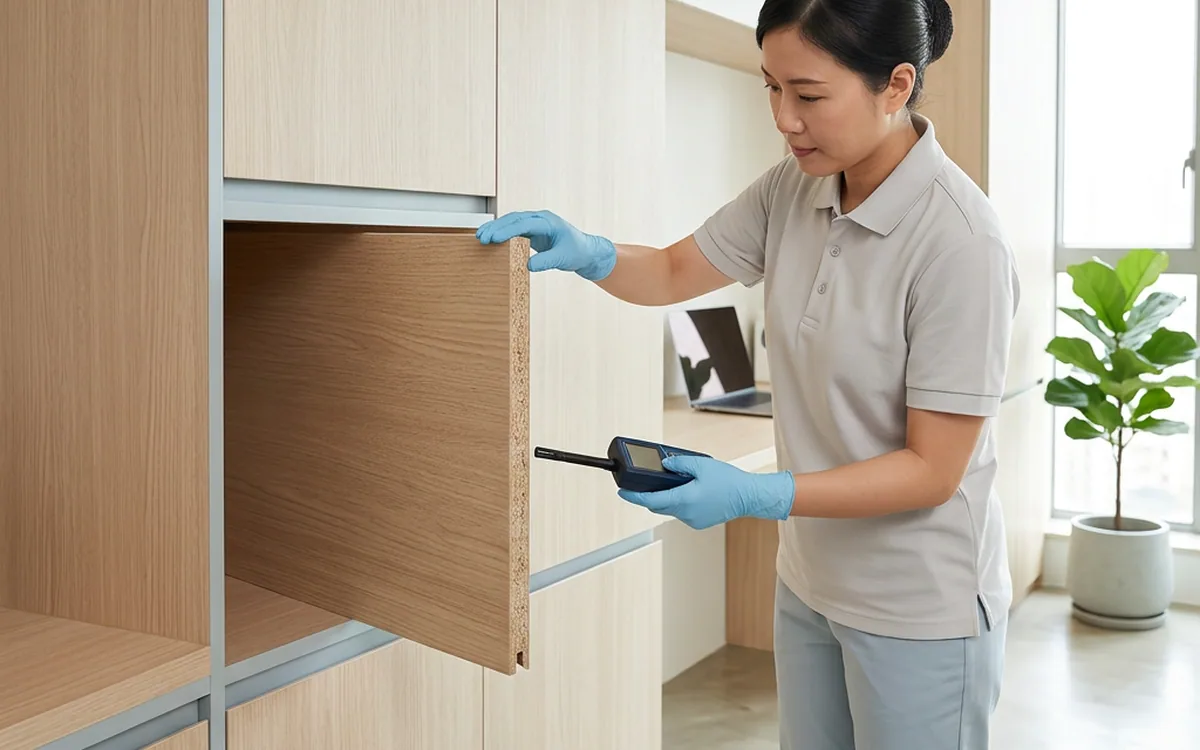
Adhesives in custom furniture boards may contain formaldehyde, with a long release period. The key to handling this is keeping the area ventilated, controlling temperature and humidity, and consulting professional air testing services when necessary.
Principles of Formaldehyde Release
Formaldehyde originates from the chemical decomposition of board glues (such as urea-formaldehyde resin). Its release cycle is divided into three stages: the initial free-release period after installation (1 to 3 months), the volatilization period of surface-adsorbed formaldehyde (3 to 6 months), and the slow-release period from inside the boards (3 to 15 years).
Key Factors Affecting Formaldehyde Volatilization
Formaldehyde concentration is controlled by several environmental parameters:
- Temperature and Humidity: Temperatures above 19°C and high humidity accelerate glue hydrolysis and formaldehyde volatilization.
- Edge-sealing Craft: Quality edge sealing (such as laser or PUR glue) can effectively block internal formaldehyde from escaping.
- Space Loading Ratio: Too much furniture within a unit volume will cause indoor formaldehyde concentrations to exceed limits.
- Ventilation Conditions: Keeping doors and windows closed and the air conditioning on for long periods will hinder formaldehyde dilution.
Common Misconceptions Screening
Don't be misled by smell; many methods have no real effect.
- Fruit Peels and Tea Leaves: Cannot adsorb formaldehyde; they only mask pungent odors with fruit fragrance and increase indoor humidity.
- Green Plants: Absorption efficiency is extremely low and cannot achieve purification in a normal household environment.
- The Hidden Nature of Low Concentrations: Formaldehyde is colorless and odorless at low concentrations; you cannot judge air safety by smell alone.
Scientific Improvement and Prevention Solutions
In addition to keeping indoor air circulating, you can adopt the following scientific methods to control formaldehyde.
- Ventilation Method: Keeping indoor air circulating is the main method for diluting pollutants. Moderately increasing indoor temperature and humidity can promote volatilization, followed by effective ventilation.
- Adsorption: check the product label for carbon capacity and replacement guidance. Do not assume sun-drying restores its adsorption capacity. Such products do not replace source control, ventilation or appropriate air-quality assessment.
- Air purification: Activated carbon filters in air purifiers have limited adsorption capacity for formaldehyde, and HEPA filters cannot filter formaldehyde gas. Do not rely on purifiers as a primary formaldehyde removal method, and they cannot replace ventilation.
壹家壹清潔專家
壹家壹清潔專家 provides professional air testing and treatment services. We assist you in assessing indoor load, solving the formaldehyde problem from the source, and protecting your family's respiratory health.