White fog or stickiness on floors is usually caused by detergent residue. Use appropriate neutral detergents according to the material, strictly dilute according to the ratio, and ensure no water remains after mopping. Strong alkaline agents like bleach will severely damage materials; do not mix them.
Chemical residue and material damage mechanisms.
Excessively concentrated detergent accumulation will lead to clouding of the lacquer surface. Strong alkalis (such as bleach) will destroy the lignin structure, causing solid wood to turn black and crack; strong acids will bite into tile glazes and grouting mortar.
Before using bleach, please first understand Method for using bleach from the Centre for Health Protection(opens in a new window), and operate according to the product label.
Correct cleaning and dilution rules.
For daily cleaning, strictly consult product instructions; general concentrate ratio is 1:100 to 1:150. Implement the 'slightly damp, quick-dry' principle to prevent moisture from seeping into seams.
- Prepare dilution according to the ratio.
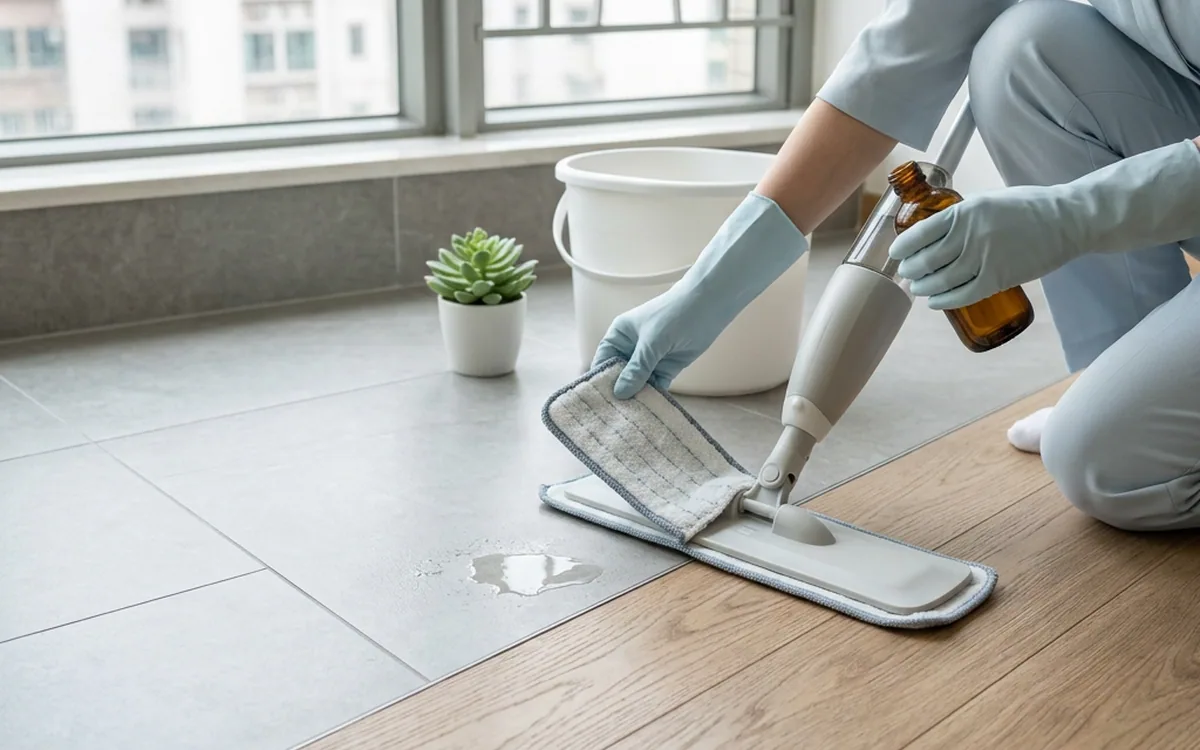
- Wring out until no longer dripping.
- If there are water marks after mopping, absorb them with a dry cloth.
Floor material care list.
Care highlights for different materials:
- Solid wood: Strong alkali strictly prohibited, use neutral wood-specific detergent.
- SPC flooring: Warm water with a tiny amount of neutral detergent, avoid high-temperature steam.
- Polished tiles: 1:100 weakly alkaline or neutral formula, needs rinsing.
- Antique tiles: Clean with a soft brush, dry immediately.
Hazardous operation warning.
Bleach and other agents must not be mixed with other cleaning agents, otherwise toxic gas will be produced. Wear protective gear when handling.
壹家壹清潔專家
For damaged floors, please consult 壹家壹清潔專家. We provide professional equipment and neutral formula care; check our latest price list for details on refurbishment services.