
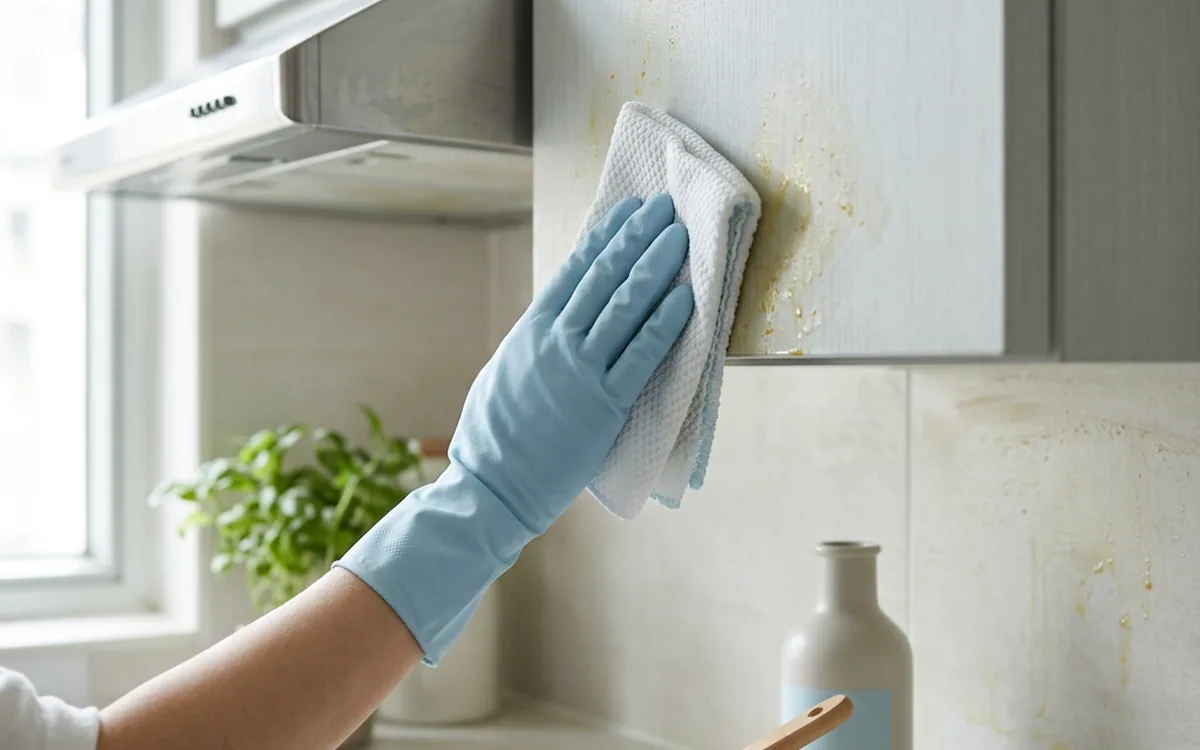
Kitchen grease prevention is centered on insulation and classification. Lay anti-grease film on the top of cabinets and replace it regularly; store seasonings in sealed jars. If grease has hardened, use neutral cleaning agent and warm water to wipe, avoiding damage to the finish. For severe grease accumulation, we recommend delegating it to a professional team for high-temperature steam degreasing.
Root causes and countermeasures for grease accumulation
As grease rises with hot air, it cools and condenses on cabinet surfaces and in gaps. Traditional open-stack storage causes every item to become covered in grease, increasing cleaning labor.
Anti-grease storage strategies
Optimizing kitchen layout can reduce cleaning frequency.
- Cabinet top protection: lay dedicated anti-grease stickers or plastic wrap and replace regularly to avoid cleaning wood surfaces directly.
- Vertical space utilization: use drawer-style partitioned baskets to classify items, and store common containers in sealed boxes.
- Sealed storage: seasonings should be stored in unified sealed jars to prevent bottles from collecting oil and dust.
Cleaning boundaries and inspection
Daily maintenance: wipe cabinet surfaces with diluted neutral cleaner and a microfiber cloth. When to stop DIY: when grease has penetrated cabinet joints, hardware shows rust, or the cabinet finish begins to peel, stop scrubbing. Excessive use of strong alkaline agents will damage fire-resistant boards or lacquer surfaces.
Professional services and consultation
For kitchens that have not had deep cleaning for a long time, the professional cleaning team provides high-temperature steam degreasing services. We handle narrow dead zones with targeted processing to ensure kitchen hygiene. Contact us for inquiries.
