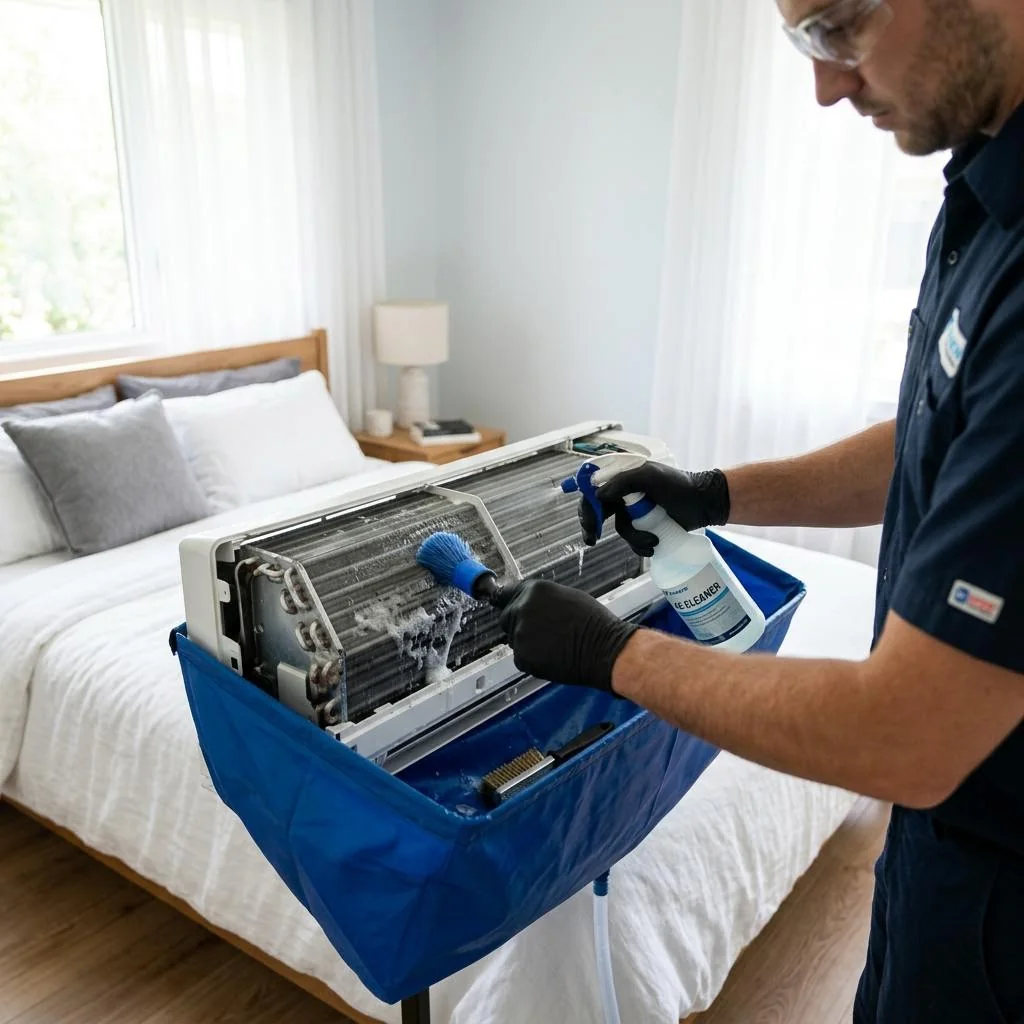

Vacant-property cleaning must involve a "deep dust-sweep" from top to bottom, focusing on hidden spaces usually invisible to the naked eye, such as the top of light fixtures, aluminum window tracks, cabinet tops, and dust accumulated by static electricity on walls. If these are not vacuumed in detail first, dust will drift down with airflow after you move in. Be sure to perform targeted cleaning of ventilation systems to prevent grease residue from breeding bacteria.
High-altitude hidden corners that must be addressed
While the property is vacant, dust in the air settles on ceiling light shades and cabinet tops. If furniture is moved in without cleaning this first, turning on the air conditioner will disperse the dust throughout the house. Clean only the areas you can safely reach; use appropriate extension tools if necessary. Do not stand on unstable furniture or reach out of windows.
- Remove the light shade for cleaning.
- Vacuum dust accumulated on cabinet tops and high shelves.
- Wipe ceiling light fixtures with an electrostatic duster.
Stubborn mud in window frames and tracks
Aluminum window tracks often accumulate mud formed by rainwater and windblown sand, which is a common hygiene blind spot in vacant properties. It is hard to remove with a damp cloth alone; you must use a specialized brush with a vacuum cleaner to first suck away loose sand and stones, then use a thin tool to clean deep into the tracks to prevent dust from blowing back into the house when opening windows.
- First, use the fine nozzle of a vacuum cleaner to suck out sand and stones in the track.
- Use a cleaning brush with a cleaning agent to treat old mud.
- Wipe the tracks and window frame gaskets clean with a damp cloth.
- Finally, wipe dry to prevent aluminum oxidation.
Walls, storage cabinets, and ventilation systems
Wall surfaces easily attract fine plaster dust due to static electricity. If you wipe directly with a damp cloth without prior treatment, it will create secondary stains. Also, old grease accumulated on kitchen and bathroom exhaust fan blades, combined with moisture, is a breeding ground for bacteria. For professional cleaning, fan blades should be removed, soaked thoroughly in a degreaser, and scrubbed to ensure good ventilation performance.
- Walls: Use an electrostatic dusting tool first.
- Cabinetry: Drawers must be removed to clean internal tracks and bottom crevices.
- Ventilation: Clean exhaust fan blades and mesh thoroughly. If grease is heavy, use a specialized degreaser.