
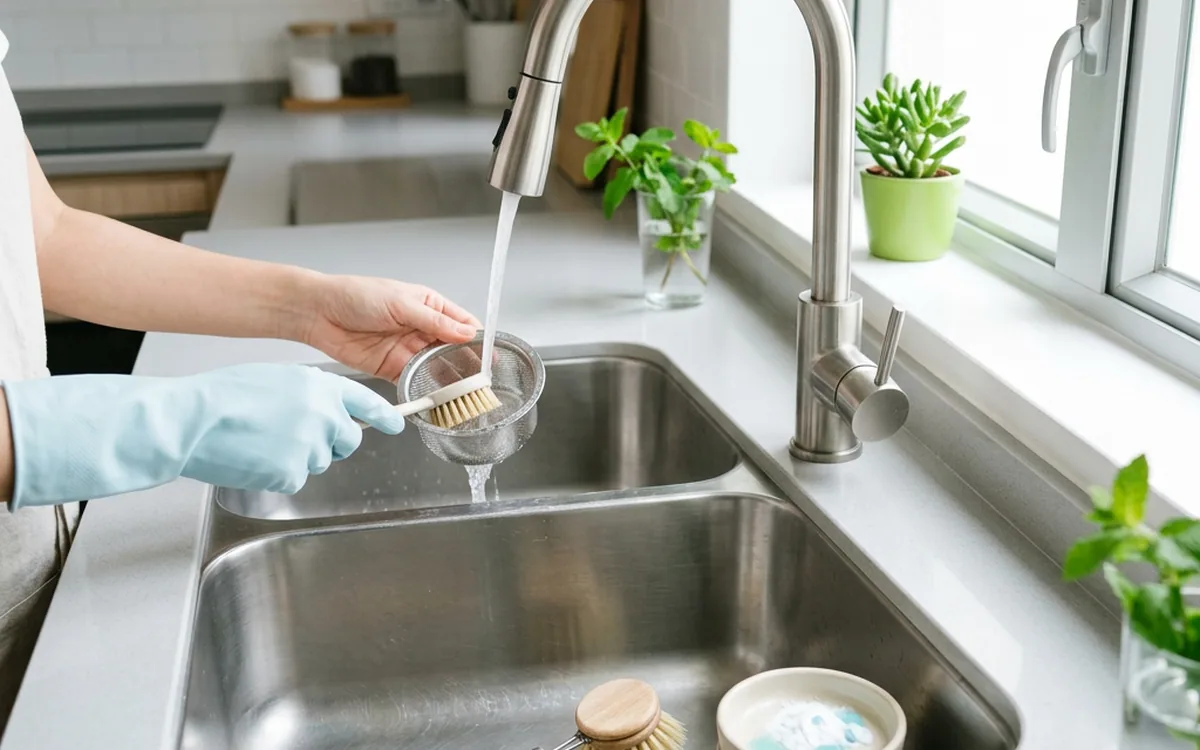
Daily maintenance should involve cleaning with detergent; never use steel wool or strong acid agents to avoid damaging the materials. For deep cleaning, use baking soda with white vinegar, and use lemon to target stubborn limescale. Ensure the surface is dry to prevent bacterial growth; if you encounter serious drainage problems, check the pipes or seek professional help.
Daily maintenance principles for sinks
The key to sink cleaning is preventing the accumulation of grease and bacteria. After every cooking session, you should remove grease with hot water and detergent, and thoroughly wipe the sink surface dry to prevent water stains from accumulating and fostering bacteria.
- Wipe with a soft sponge and mild detergent after each use.
- Rinse away food residue with warm water.
- Wipe the faucet and sink surface dry with a dry cloth.
Deep cleaning and descaling steps
For stubborn stains and limescale, you can choose eco-friendly materials. Note that sinks made of different materials have different cleaning requirements; conduct a material test in an inconspicuous area before use.
- Evenly sprinkle baking soda onto the sink.
- Spray white vinegar and observe the foaming reaction to soften the dirt.
- Wait 5 to 10 minutes, then wipe clean with a damp cloth.
- Wipe the faucet and edges with lemon slices to remove limescale.
Protective taboos and material maintenance
Incorrect cleaning methods can ruin your sink. It is forbidden to use steel wool brushes to avoid scratching the stainless steel protective layer, which could lead to rust. Also, avoid pouring strong acidic or alkaline drain cleaners directly down the drain to protect the pipe structure.
- Prohibit the use of steel wool and abrasive cleaners.
- Avoid pouring strong chemical corrosive agents into the drain.
- It is not recommended to soak the sink in strong acid for extended periods.
When to seek professional assistance
If you encounter serious drain pipe blockages, persistent odors, or oxidative corrosion on the sink surface, we recommend hiring a professional team for an inspection. Professionals can provide deep disinfection and non-damaging stain removal to ensure kitchen hygiene and safety.
- Regularly clean the strainer to prevent waste buildup.
- Check pipe connections for leaks every week.
- If unusual odors appear, please hire a professional team for a deep clean immediately.