
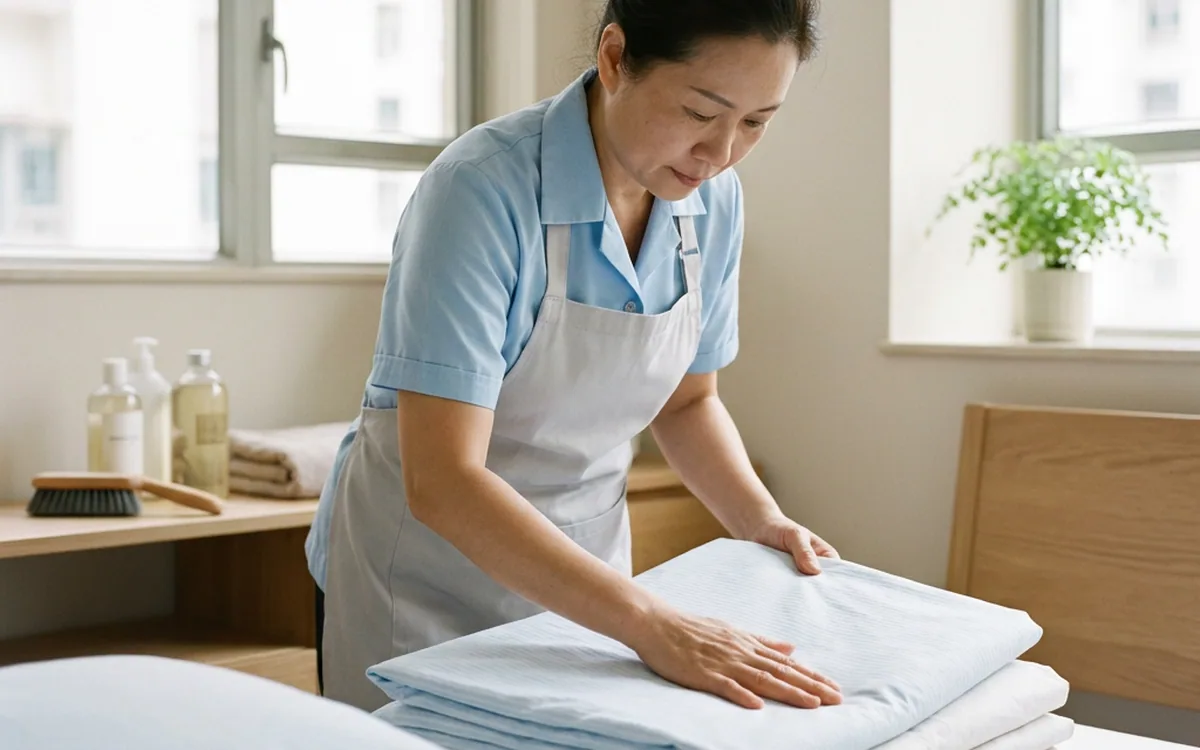
Bed sheets should be washed at least once a week to remove dead skin cells, dust mites, and bacteria. When washing, strictly follow the temperature and material requirements on the product label and avoid mixing different chemicals. For severe stains or deep mattress cleaning, it is recommended to leave it to 壹家壹清潔專家.
Why bed sheets are a breeding ground for bacteria
Bed sheets are the fabric in longest contact with the body every night; sweat and skin flakes generated by body temperature provide the best breeding environment for bacteria and dust mites.
Potential threats: Unwashed bed sheets can accumulate a large amount of dust mite feces, which are the main allergens causing allergic rhinitis, asthma, and skin inflammation.
Correct cleaning and maintenance steps
Cleaning bed sheets is not the hotter the better; you must refer to the temperature suggested on the original label.
Operational steps:
1. First, check the fabric label and test if the cleaning agent will cause the fabric to fade.
2. Ensure the washing machine load is moderate; do not overstuff, which leads to uneven cleaning.
3. After completion, they must be thoroughly air-dried; a humid environment will accelerate mold growth.
4. Regularly wash pillow inserts and mattress protectors, not just the surface bed sheets.
- Check label guidelines
- Perform a small-area fading test
- Wash in a cycle at an appropriate temperature
- Ensure they are completely air-dried
When to seek professional handling
When the bed sheet material is high-end silk, wool, or has severe stains that cannot be handled, DIY cleaning may cause fiber damage. Additionally, if the mattress itself already has a strong musty smell, washing the sheets alone will not solve it; it should be handled by a professional cleaning team for sterilization.
壹家壹清潔專家
We possess professional cleaning equipment, can handle various textile fibers, and provide high-quality hygiene care advice.
Welcome to contact us to get the latest price list and quote information.