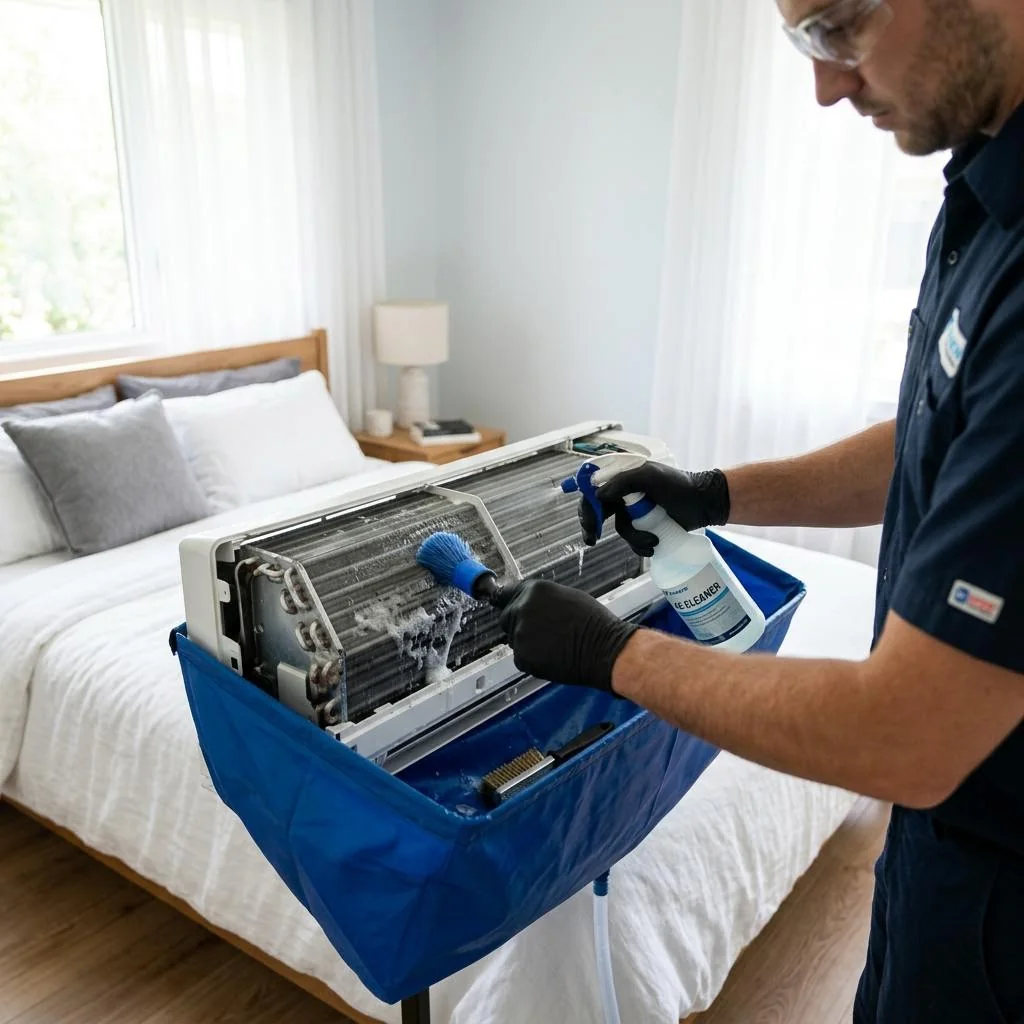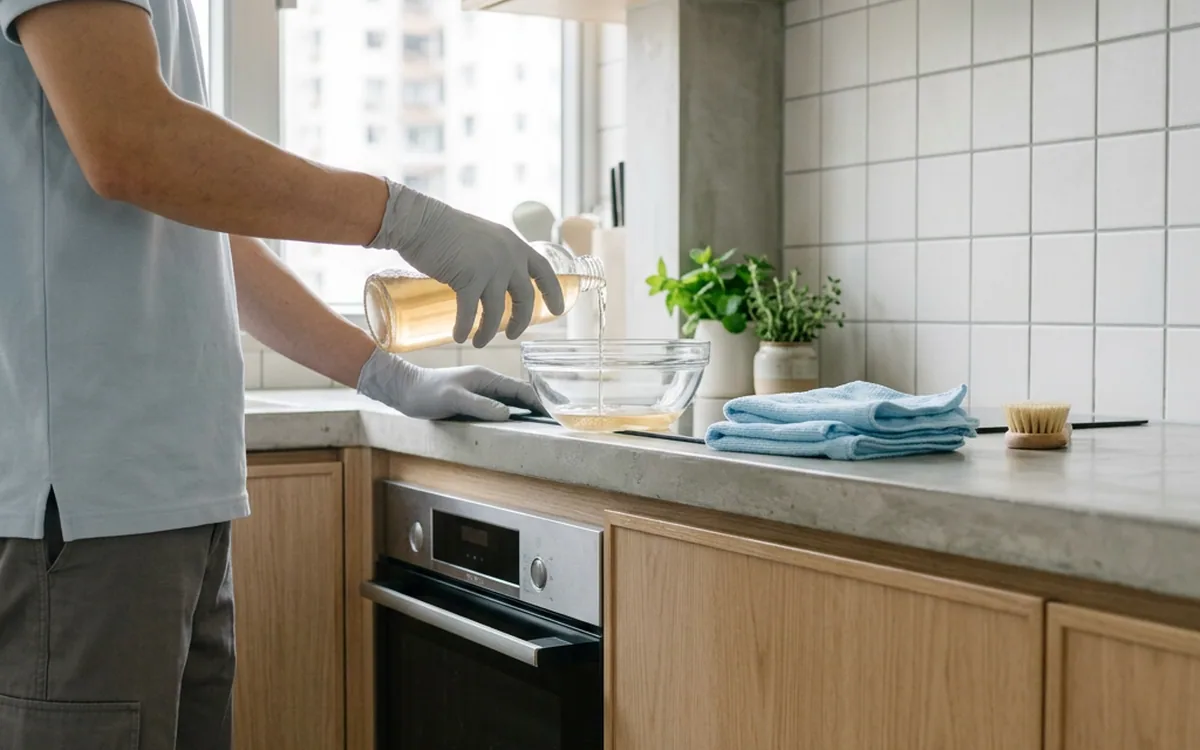
Grease film accumulates due to drifting oil smoke. It is recommended to wipe cabinet doors, the bottom of range hoods, wall tiles, and appliance surfaces weekly using a suitable cleaner. For stubborn grease, spray the cleaner and let it sit, avoiding the use of hard objects to scratch the surface material. If the dirt is severe, it is recommended to book a professional cleaning service for thorough cleaning.
Hidden zones for grease film accumulation
Kitchen grease film is not limited to the area around the stove; oil smoke spreads to the entire space with heat. Common, easily ignored greasy spots include the edges of range hoods, cabinet doors and handles, the joints of wall tiles behind the stove, the outer casings of refrigerators and ovens, as well as the tops of kitchen cabinets and floor baseboards.
- Range hood: Need to clean the grease filter, the gaps at the bottom of the machine, and the button locations.
- Appliance casings: Microwave ovens, rice cookers, and refrigerator door edges need regular wiping.
- High places and cabinet tops: Hanging cabinets and the top of the refrigerator easily accumulate oily dust, which becomes extremely difficult to handle if left ignored for a long time.
- Floor and baseboards: Small oil spots often remain under the stove and the bottom of cabinets, making the floor sticky when mixed with dust.
- Evaluate materials: Confirm if the surface material is resistant to strong alkaline cleaners; tiles and stainless steel have different suitable ranges.
- Regular maintenance: Wipe away oil spots after each cooking session to reduce the chance of oil stains penetrating into tile gaps.
- Ensure ventilation: Ensure the range hood is operating normally during cooking to keep air circulating and reduce the retention of oil smoke.
Cleaning strategies for different materials
Cleaning needs to be flexibly adjusted according to the characteristics of different kitchen surfaces to avoid destroying surface protective layers.
- Stainless steel: Avoid using steel wire brushes; use mild cleaners and a soft cloth for wiping.
- Tile walls: Use degreasers; if gaps change color, strengthen targeted scrubbing.
- Wooden cabinet doors: Just use a slightly damp cloth with diluted dish soap. Be sure to wipe dry after completion to avoid moisture-induced deformation.
- Partial testing: Test the cleaning agent in an inconspicuous area to ensure it does not cause discoloration.
- Soak to dissolve: Spray the cleaner onto the grease, let it sit for a few minutes to decompose before wiping away; avoid scrubbing with force.
Prevention and professional assistance
Through good habits, you can effectively reduce cleaning pressure.
- When greasiness cannot be removed by daily wiping or when there is an unpleasant odor that is hard to handle, it means the dirt has penetrated into the material structure.
- 壹家壹清潔專家 provides professional kitchen deep cleaning services, which can handle unreachable high-level areas and blind spots.
- Check: After cleaning, touch the surface; it should feel dry and not sticky.
- Quotation: Evaluate the cleaning scope and the degree of dirt; for details, check the latest price list.