
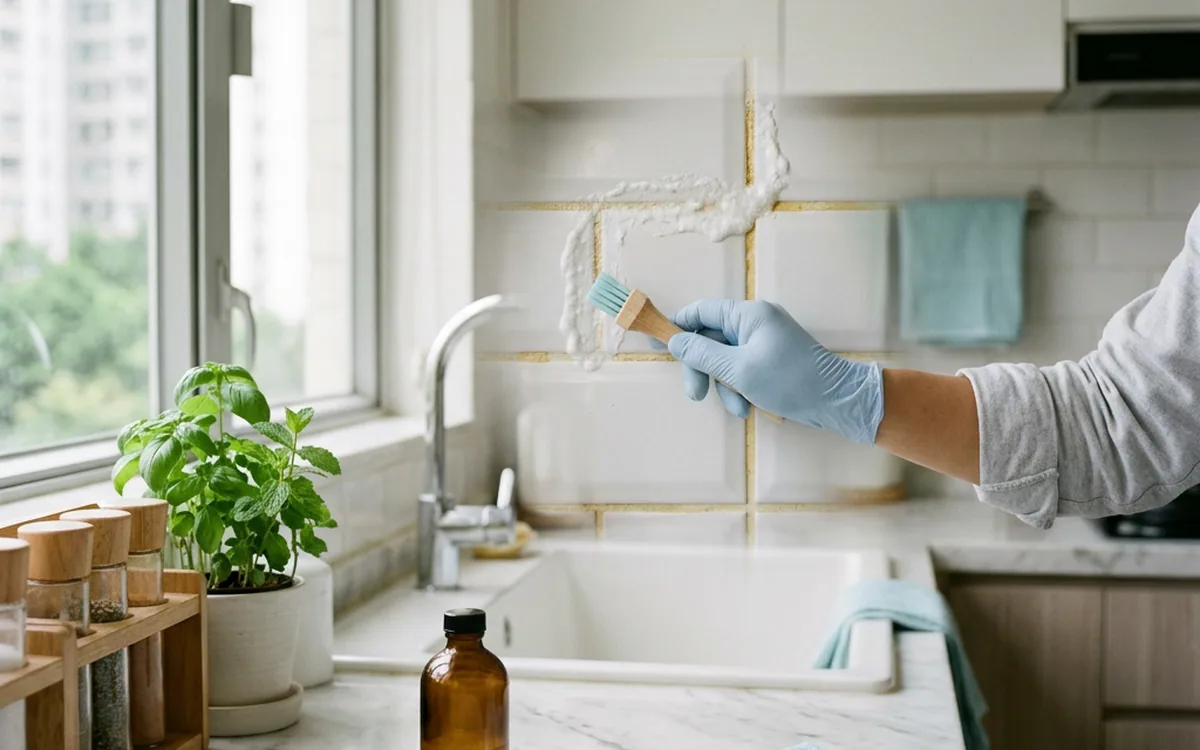
For mild yellowing, you can apply a baking soda paste, leave it for a while, and then gently scrub with a toothbrush. For stubborn stains, choose a suitable cleaning formula. Avoid strong acids or wire brushes, which can damage the tile glaze and grout material.
Analysis of yellowing causes
Yellowing in kitchen gaps is mainly caused by the settling of fine oil particles generated during cooking and dust in the air. These substances enter the microscopic pores of the grout; if not cleaned promptly, they oxidize and turn yellow, making subsequent cleaning more difficult.
Recommendations for localized cleaning steps
Before cleaning, test surface resistance and avoid using overly harsh tools.
- Mix baking soda with warm water to form a thick paste and apply it evenly to the yellowed gaps.
- Let it sit for ten minutes to allow the baking soda to break down the oil stains.
- Use a soft-bristled toothbrush to gently scrub along the lines of the gaps; do not force or scratch aggressively.
- Wipe away residue with a damp cloth, and finally wipe dry to prevent moisture from seeping in again.
Routine maintenance and professional cleaning
To reduce future oil accumulation, ensure gaps remain dry after cleaning. If necessary, consult professional advice on using grout sealants. If stains have already penetrated to the base layer causing blackening, or if you are concerned about damaging the edges of the tiles, 壹家壹清潔專家 can provide targeted deep cleaning solutions to ensure your tile materials are restored to a clean state without damage.
