
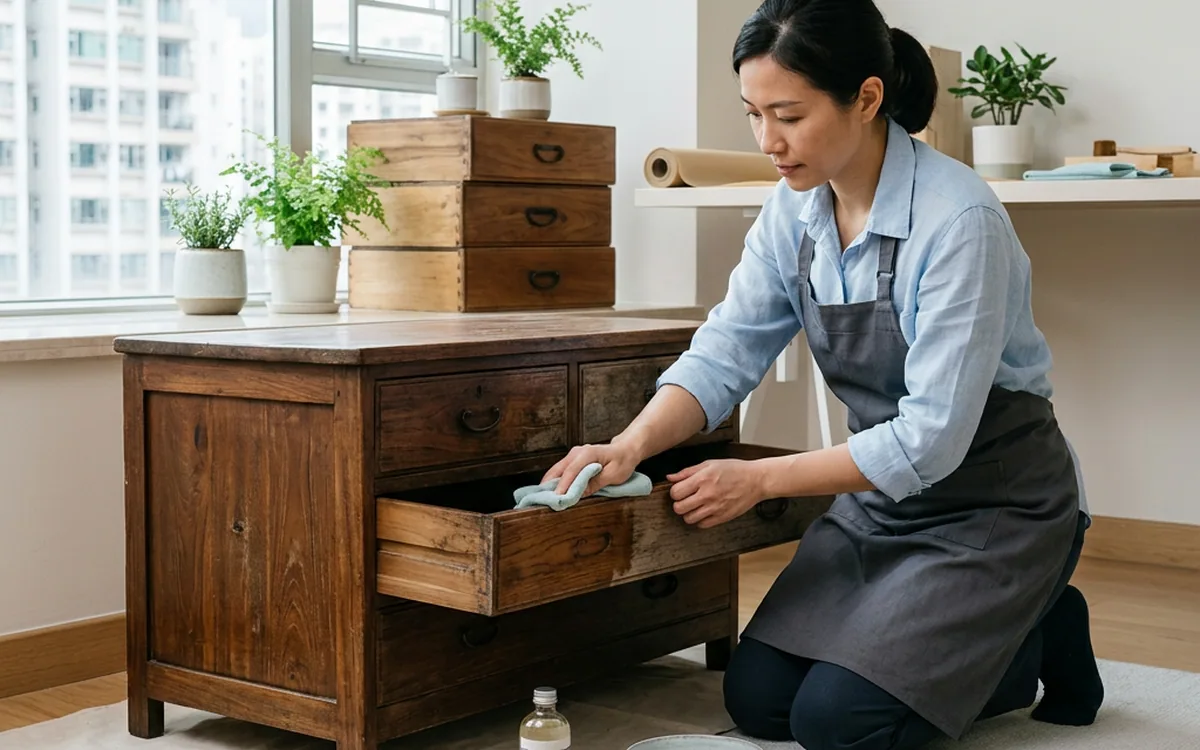
Through professional deep cleaning techniques, oil, dirt, and stubborn stains on the surface of old furniture can be removed, restoring the original touch and luster of the material. For different materials (such as fabric extraction cleaning, leather nourishment, and wood polishing), professional care can extend the service life of furniture, with results comparable to new products.
The value of rejuvenating old furniture
Furniture looks old usually just because of accumulated surface dirt, grease, and dust from long-term use, rather than structural damage. Through professional cleaning and care, you can not only save on replacement costs and reduce household waste, but also make high-quality furniture structures shine again.
Professional cleaning solutions for different materials
Different materials require different treatment methods; the wrong method may cause irreversible damage. Professional cleaning will adopt targeted care procedures based on the condition of the material.
- Fabric: High-pressure extraction machine to remove deep fiber stains and dust mites
- Leather: Professional cleaning and nourishment care to prevent cracking and replenish oils
- Solid wood: After moderate dirt removal, polishing or wood wax oil treatment to restore the texture
- Metal/Glass: Targeted rust removal or streak-free cleaning to restore brightness
Judgment and inspection before cleaning
Before cleaning, professional technicians will assess the condition of the furniture. If the structure is loose or the material is severely corroded, it is not suitable for forced cleaning. For all cleaning agents, a material compatibility test must first be conducted on a hidden part of the furniture to ensure it does not affect the surface color or texture.
When to stop DIY cleaning
If you encounter stubborn, deep-seated stains that cannot be removed, do not use overly strong cleaning agents to scrub repeatedly, otherwise the fabric fibers will be damaged. If the furniture is moldy, it should not be treated before the source of the mold is cleared; please seek professional advice to avoid the spread of spores.
When handling moldy materials, you can follow US Environmental Protection Agency's home mold prevention recommendations(opens in a new window)treatment and note the on-site and material restrictions.