
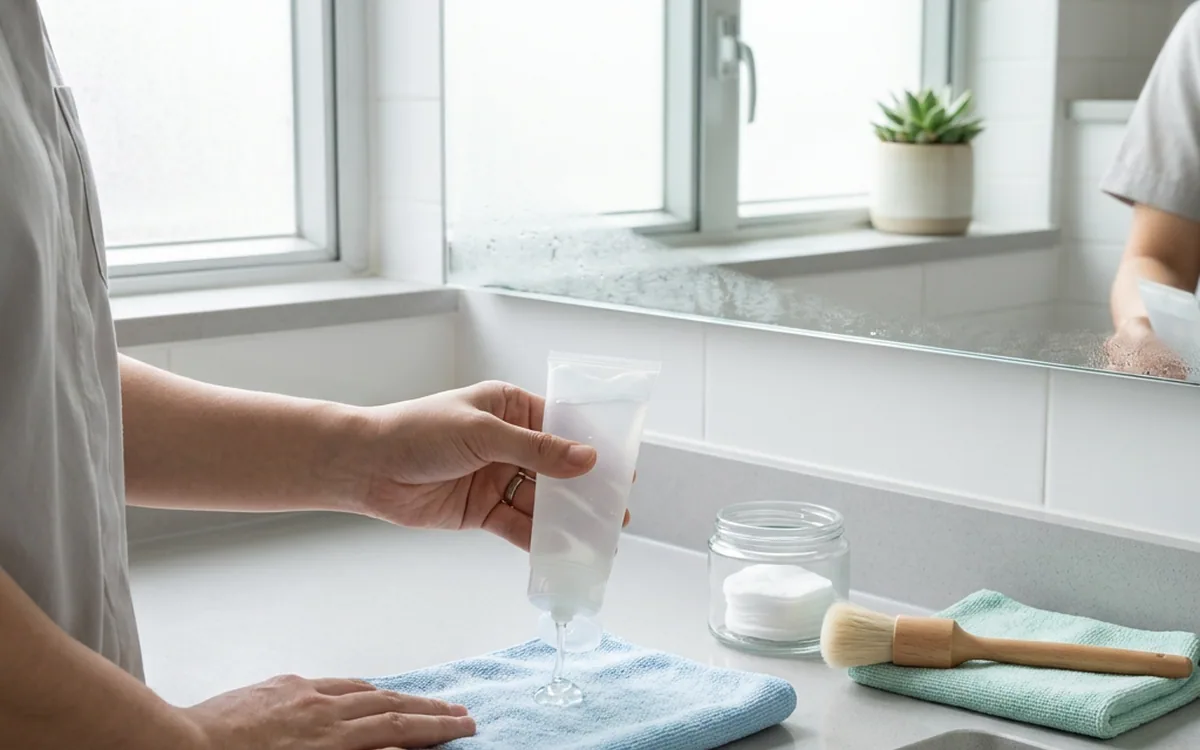
Fogging is caused by water vapor condensing upon meeting a cold surface; you can apply an appropriate amount of dish soap to the surface to form a hydrophilic anti-fog film. For limescale and black edges, clean regularly and keep the bathroom well-ventilated to slow down aging.
Scientific principles of fog and limescale formation
Water vapor generated by hot showers condenses into tiny water droplets on the icy mirror surface, resulting in light diffuse reflection and forming "white fog". After the water evaporates, calcium and magnesium ions in the tap water crystallize and remain on the mirror, combining with sebum to form hard-to-remove limescale.
Daily cleaning error analysis
Wiping directly with a dry towel leaves fibers and fine dust, causing fine scratches on the mirror; using an old towel containing impurities will spread oil evenly, making the mirror even blurrier. In addition, undiluted strong acidic or alkaline cleaners will destroy the coating.
Natural anti-fog and cleaning procedures
For minor limescale and fogging, treatments can be carried out as needed. Always ensure material testing is done before using over a large area.
- Dish soap method: Use a damp soft cloth with an extremely small amount of dish soap, wipe the mirror surface evenly, and let air dry; it can form a hydrophilic film to stop fog condensation.
- White vinegar cleaning method: Use white vinegar diluted with water to wipe away soap scum residue, which helps restore luster.
Long-term maintenance and prevention suggestions
The key to reducing fogging and water spots lies in controlling humidity. After every shower, you should use a glass scraper to remove water droplets from the mirror surface, and keep the exhaust fan running for at least 15 to 30 minutes to maintain air circulation in the bathroom.
Seek professional support
If black edges (silver loss) appear at the edge of the mirror, this is oxidation of the metal reflection layer and is a wear-and-tear issue that cannot be fixed by cleaning. If stains are stubborn or involve large-scale cleaning after renovation, it is recommended to seek 壹家壹清潔專家, avoiding blind use of chemicals that could cause further damage.