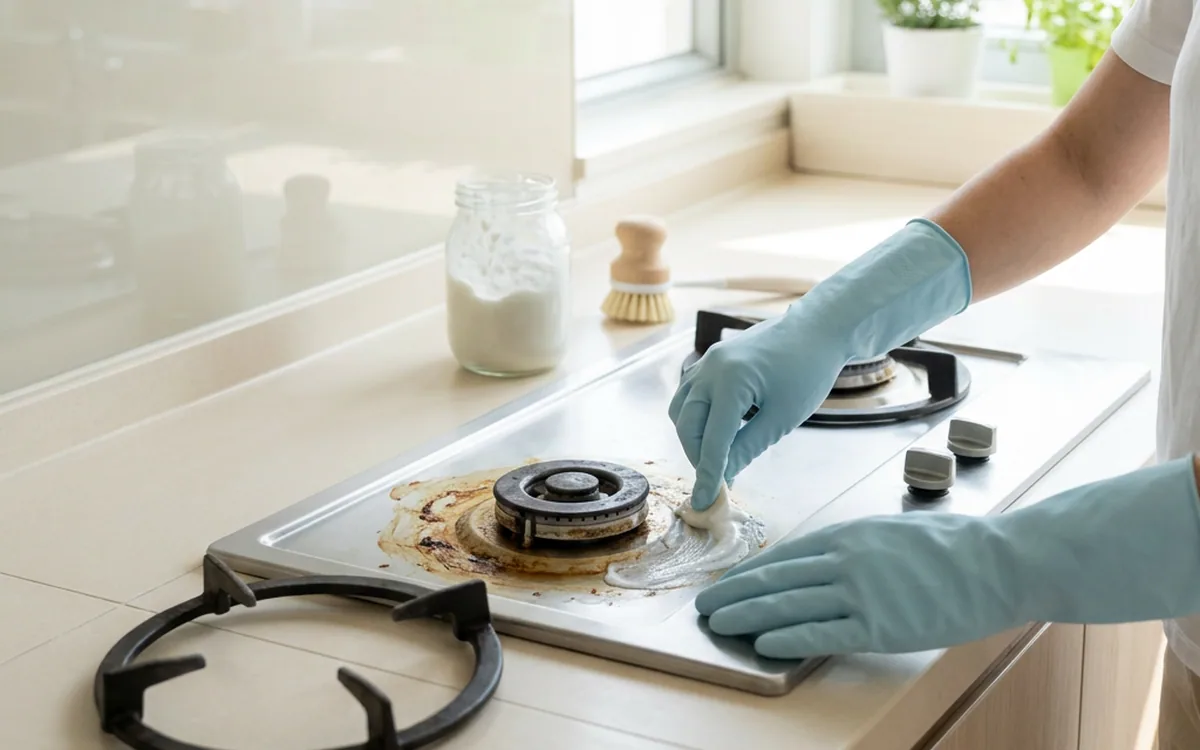
Stove cleaning should start by ensuring the equipment has completely cooled down and is disconnected from the power supply. Select suitable detergents for different materials and use non-corrosive tools to remove oil stains, avoiding letting liquid penetrate into appliance components, and finally, be sure to wipe dry to prevent rust.
Daily cleaning and care
After daily cooking, oil stains remaining on the stove surface should be wiped off immediately with a mild cleaner. Avoid letting oil stains accumulate for a long time, which reduces the difficulty of deep cleaning in the future.
- Wait for the burner to cool completely.
- Wipe the surface with a soft cloth.
- Confirm that no water is left on the burner position.
Deep cleaning steps
For stubborn stains that have accumulated over time, detachable parts should be removed for separate cleaning, but do not force open appliance components that cannot be removed.
- Removal: Take off stove racks and burner components.
- Testing: Test whether the cleaner is suitable on an inconspicuous part of the stove.
- Wiping: Clean with a sponge and the concentration of detergent recommended by the manufacturer.
- Thorough drying: All parts must be completely dry before reassembly.
- Clean up residual crumbs on the burner.
- Treat surface grease with professional cleaning products.
- Check if there are any clogged gas ports.
Cautions and material contraindications
Bleach is corrosive and strictly prohibited from being used on stainless steel or coated stove surfaces. Absolutely do not mix bleach with strong acidic cleaners to avoid danger.
Before using bleach, please first understand Method for using bleach from the Centre for Health Protection(opens in a new window), and operate according to the product label.
- Test material first: Test any agent on a small area first.
- Do not over-wet: During cleaning, liquid must not flow into the gas lines or circuit system.
- Inspection: Test if the burner ignites normally after completion.
When to stop DIY
If you notice poor burner ignition, abnormal flame color, or unusual odors, this may involve damage to internal gas lines; you should stop DIY immediately and contact the manufacturer or a qualified technician for inspection.
- Observe the flame color.
- Check if the igniter is damp.
- Contact professional for inspection immediately if there is an abnormality.