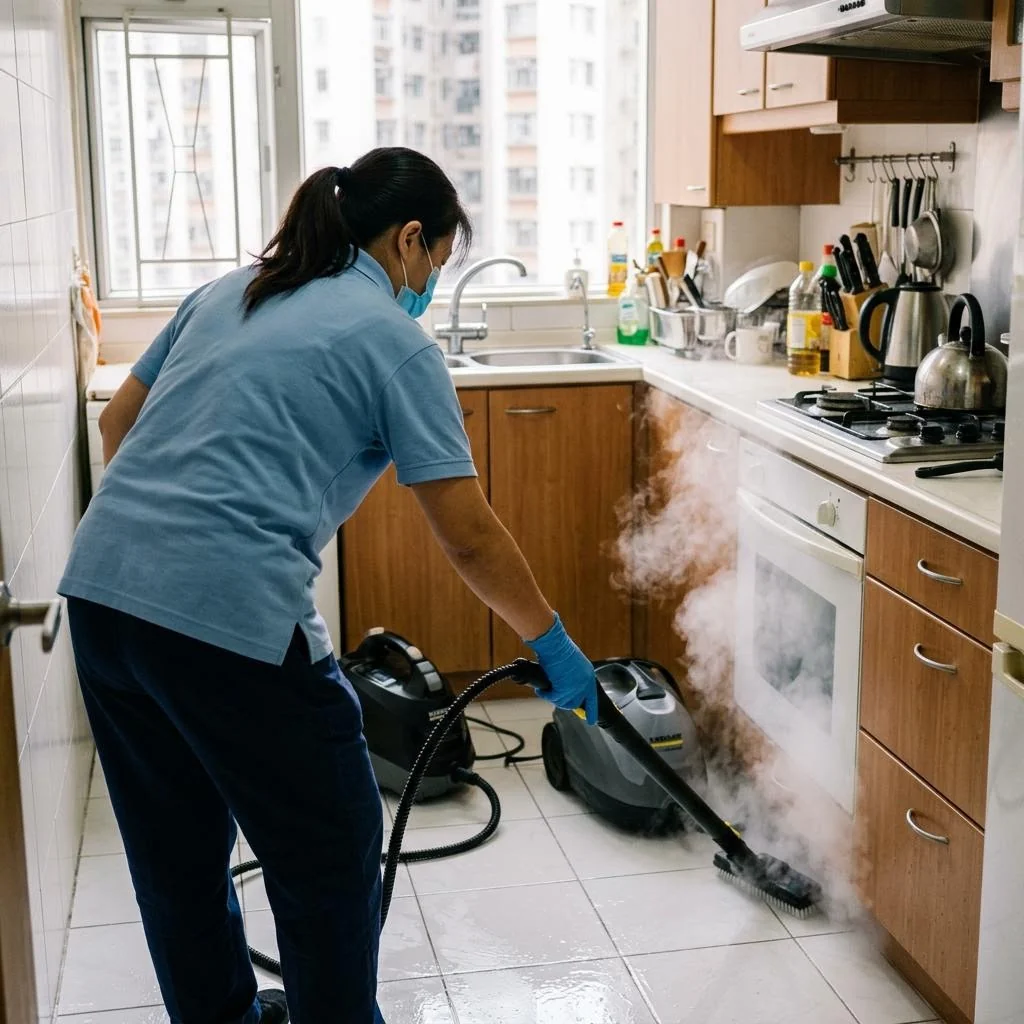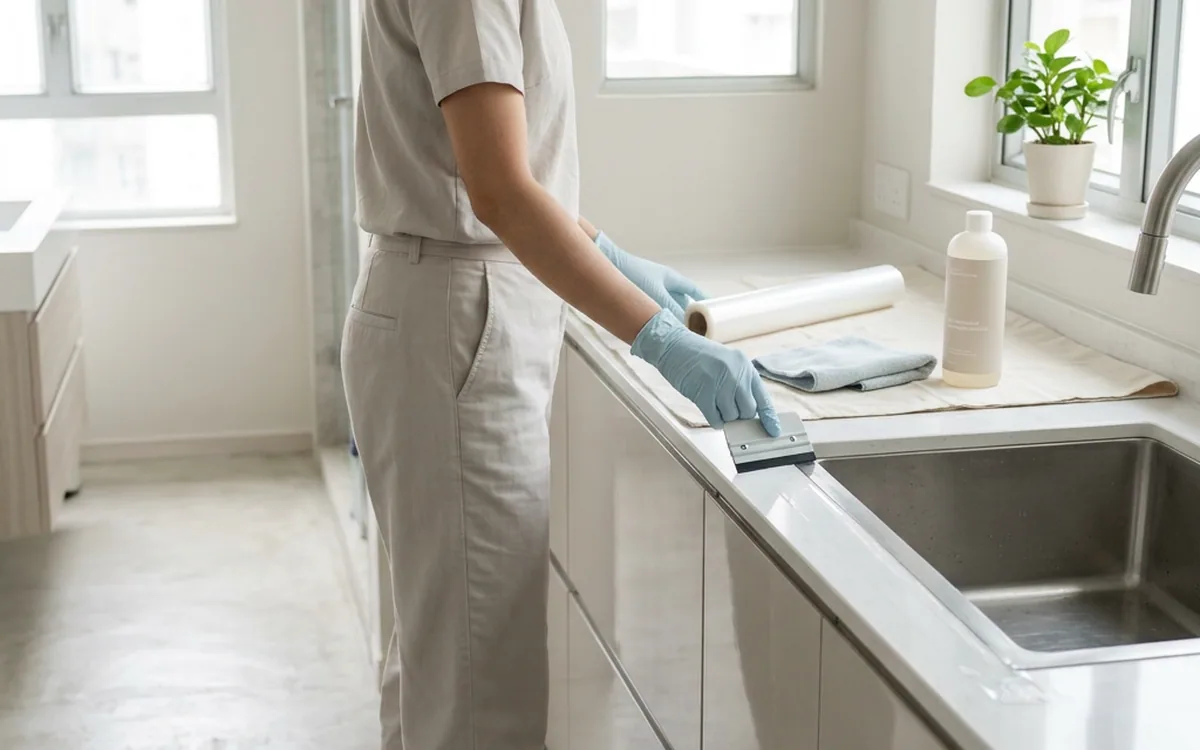
Post-renovation cleaning must follow the principle of "dry before wet, top to bottom." It is strictly forbidden to wet-wipe dust directly, as this will cause it to clump, and professional vacuum cleaners must be used to handle fine dust to prevent damaging home appliances.
The Golden Rule of Cleaning Sequence
Renovation dust is extremely fine; incorrect operation will cause dirt to spread.
- Use appropriate vacuuming tools to handle walls, lighting, and floors that can be safely reached; high or hard-to-reach areas should be arranged safely.
- The cleaning sequence is from top to bottom, moving from the inside towards the main entrance.
- Only wet-wipe with a suitable cleaner after dry dusting.
Guidelines for Handling Stubborn Stains
Cleaning for different materials must be handled separately to avoid damage from strong acids or alkalis.
- Glue tape residue: Use glue remover, let it soften, then remove with a plastic scraper; do not use steel wool to scrape.
- Paint spots: Treat by softening with warm water; do not use solvents unless necessary to avoid damaging the floor.
- Cement stains: Use physical methods combined with scrubbing; do not use strong acid to avoid damaging metal and stone.
Professional Cleaning vs. DIY Risks
Post-renovation cleaning involves a lot of heavy lifting and chemical knowledge. 壹家壹清潔專家 is equipped with professional equipment (such as floor scrubbers and high-temperature steam cleaners) that can effectively treat renovation residue embedded in tile grout. Regarding formaldehyde, it is recommended to keep the indoor area ventilated and conduct professional testing; do not judge based solely on smell.
壹家壹清潔專家
When booking a new home cleaning, please provide the area size, site photos, and required work scope so we can confirm the quote.