
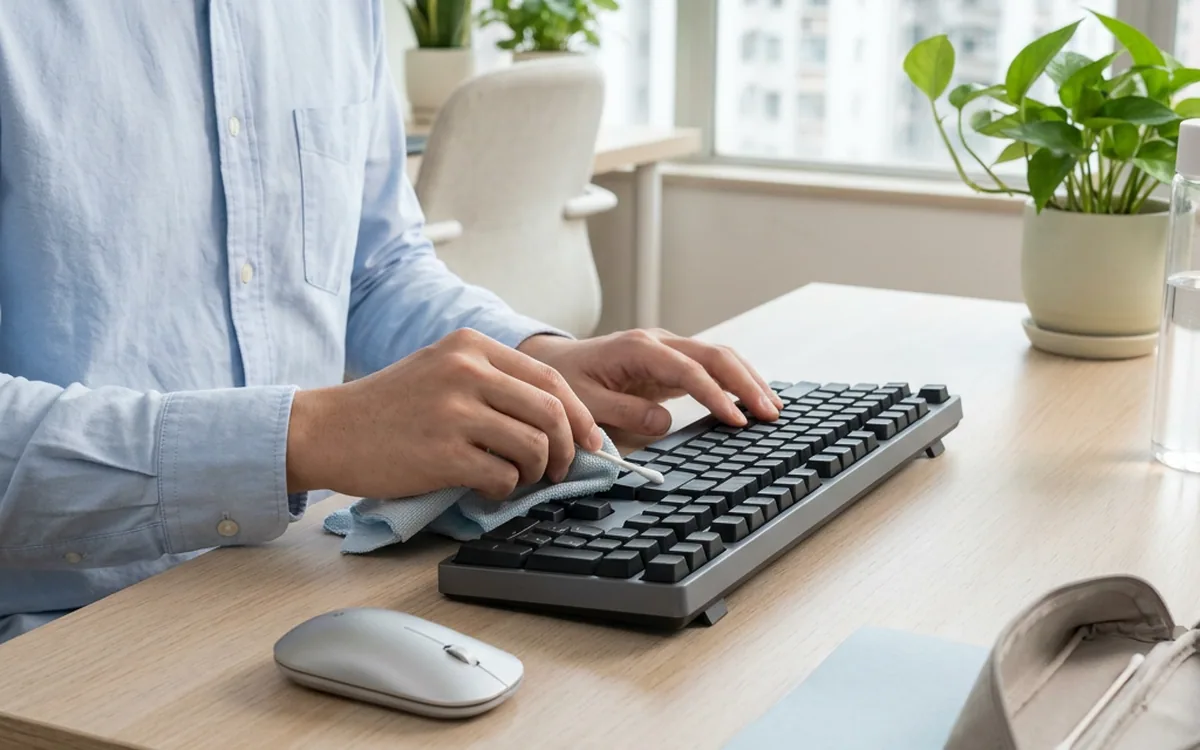
Electronic equipment cleaning must strictly forbid direct spraying of liquid to prevent short circuits. It is recommended to use an air duster to blow out dust in crevices, and cooperate with anti-static cleaning fluid suitable for electronic components for gentle wiping. Mice, telephone handsets, and public panels should be chosen with long-acting anti-bacterial coating products to avoid cross-infection.
Electronic equipment water prohibition principle
Keyboards, mice, and office communication equipment have precise structures. When cleaning, strictly forbid the use of large amounts of water or direct spraying of cleaning agents, as liquid penetrating the inside will lead to circuit short circuits and electrical failures. Use an air gun to blow away dander and bread crumbs in crevices, then use a specialized slightly damp cleaning cloth to treat the surface.
- Turn off power and keep away from the power source.
- Use an air gun to blow out dust.
- Avoid direct spraying of liquid.
Bacterial reproduction and prevention
The warm environment of keyboard crevices is a hotbed for bacteria. If employees are accustomed to eating in front of the computer, food scraps will further exacerbate bacterial growth. Beyond regular cleaning of equipment surfaces, replacing keyboard dust covers or maintaining personal hand hygiene can effectively reduce the risk of illness.
- Avoid eating in front of the computer.
- Regularly check equipment hygiene.
- Correct use of anti-bacterial products.
Public area sterilization
Office chairs, photocopier touch screens, and microwave buttons are high-frequency points contacted by many people. For fabric office chairs, consider using a steam cleaner to deeply kill hidden dust mites. For all types of panels and telephone handsets, it is recommended to use disinfection coating technology suitable for the material to improve hygiene levels.
- Clean fabric chair surfaces.
- Disinfect high-frequency touch panels.
- Entrust a professional team to perform atomization sterilization.
