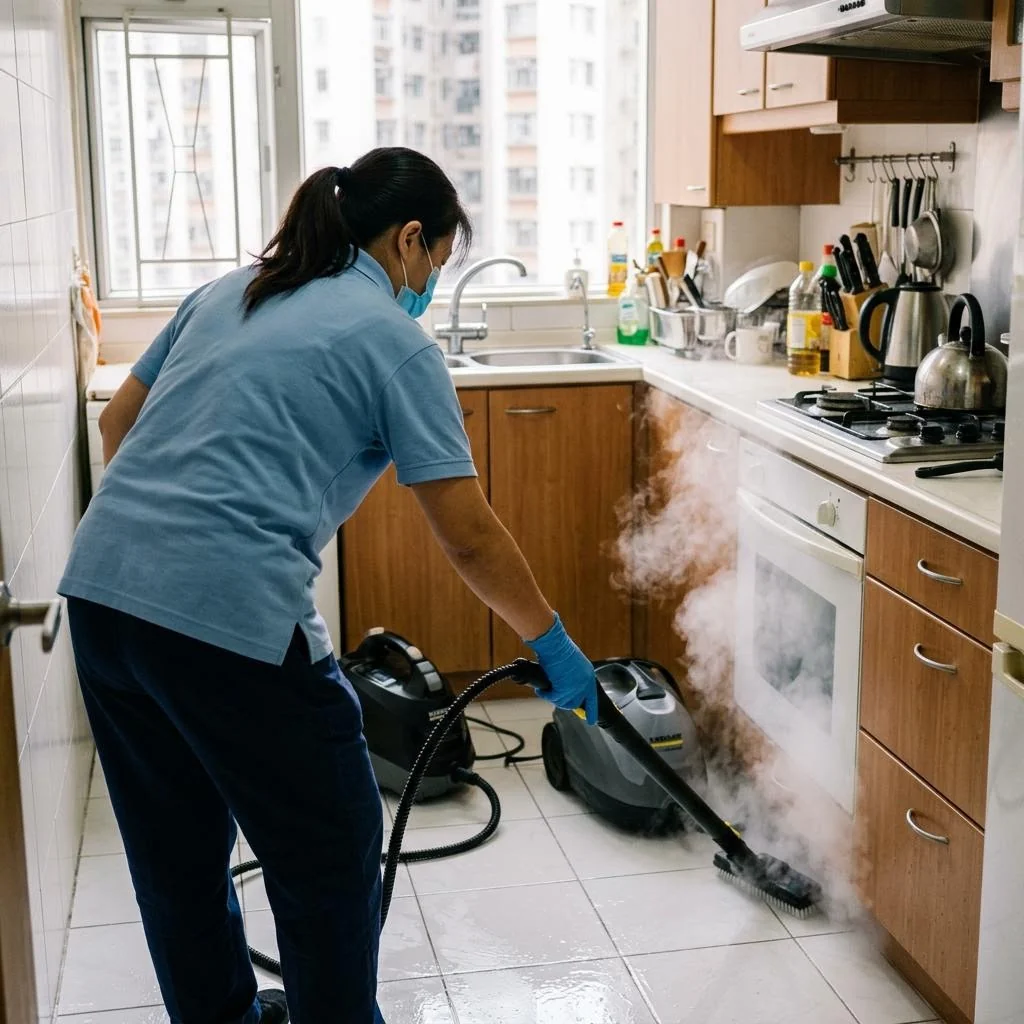
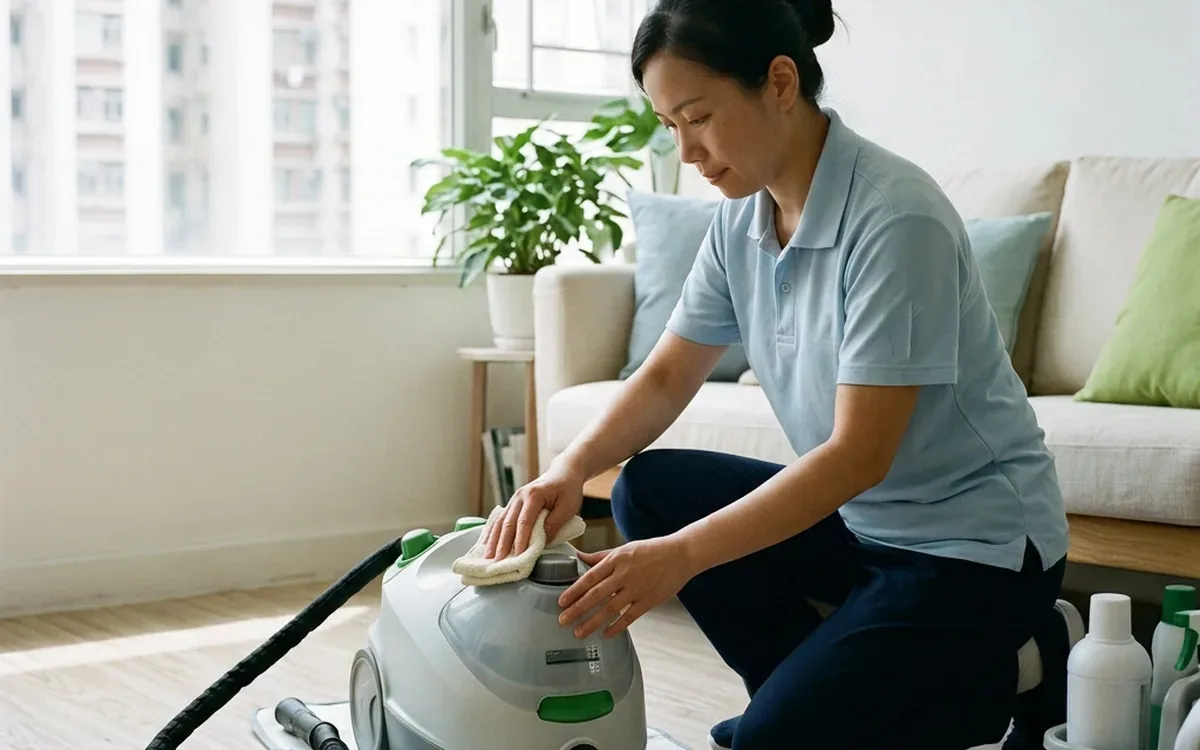
High-temperature steam can effectively soften heavy kitchen oil stains and tile joint grime, and physically reduce reliance on chemical cleaners. This method is suitable for stubborn dirt areas, but it is not applicable to all materials, such as some solid wood floors or leather. The team assesses the materials before operation to ensure that cleaning effects are achieved without damaging home surfaces.
Core advantages of steam cleaning
High-temperature steam can not only break down stubborn grease but also handle tiny, hard-to-reach gaps. For families with pets or young children, this is an ideal way to reduce chemical residue.
- Effectively softens heavy grease on kitchen stoves and walls.
- Deep cleans tile joint grime and bathroom corners.
- Uses high-temperature characteristics to treat fabric surfaces and mattresses.
Strict material assessment and operating restrictions
Steam is not a cure-all. 壹家壹清潔專家 must assess home materials before work: if materials may deform or deteriorate when heated, other gentle options will be selected. Common restrictions include: wood floor coatings may be damaged by high temperatures, leather products are absolutely not suitable for heat to avoid drying or deformation; special paint surfaces must be tested for material reaction to prevent paint peeling.
- Wood floors: Must confirm whether the surface coating can withstand high temperatures.
- Leather: Absolutely not suitable for direct heat to avoid drying or deformation.
- Special paint surfaces: Must test material reaction to avoid damage or peeling.
- Perform small-area spot tests to determine heat resistance of the material.
- Adjust suitable steam pressure and temperature.
- Use with microfiber cloths for simultaneous dirt removal and wiping dry.
Physical cleaning and mold prevention
For high-humidity environments like bathrooms, regular steam cleaning helps soften accumulated dirt, making daily cleaning more thorough. For mold problems, in addition to steam cleaning, be sure to keep the area dry and ventilated, which is consistent with the principle of preventing mold regeneration. If severe mold is involved, it should first be removed with cleaning agents and then treated with subsequent drying procedures.
When handling moldy materials, you can follow US Environmental Protection Agency's home mold prevention recommendations(opens in a new window)treatment and note the on-site and material restrictions.
- Increasing ventilation (opening windows or fans) and more frequent cleaning helps prevent bathroom mold regeneration.
- Moldy hard surfaces can be washed with detergent and water and dried thoroughly.
- Keep the environment thoroughly dry.
- Severe mold areas should be cleaned of dirt first.
- After completion, thoroughly remove moisture by air-drying.