Bathroom hard scale needs to be distinguished as water scale, soap scum or etching marks; if black spots involve porous silicone, it may not be possible to restore them by cleaning alone. Prioritize improving ventilation and stopping leaks before cleaning, strictly follow material instructions when using chemicals, and strictly forbid mixing bleach with acidic cleaners to avoid generating poisonous chemical gases.
What is the difference between water scale, mold spots and etching marks?
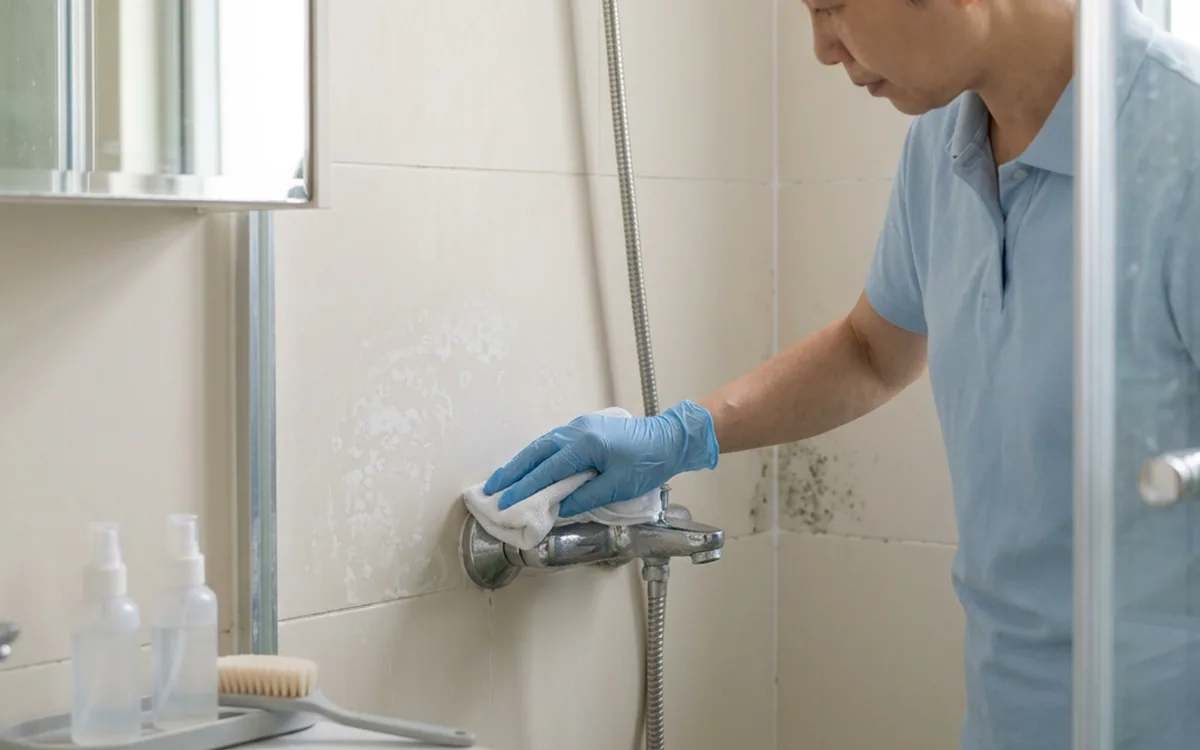
Water scale is common in areas where water droplets dry repeatedly, while soap scum may be mixed with skin oils and cleaning product residue. If glass is cloudy for a long time or stone loses its luster, it may also be surface damage.
| Observation | Possible situation | Handling direction |
|---|---|---|
| White or off-white hard scale | Water scale or soap scum | Test on a small area after confirming substrate |
| Black spots in corners | Surface mold or discoloration deep into the material | Find damp source and assess material first |
| Cloudy white after wiping | Residue or surface etching marks | Stop strengthening friction and find professional judgment |
| Wall repeatedly damp | Insufficient ventilation or leakage | Improve water sources first |
How should bathroom cleaning be divided by zones?
After clearing personal items, handle high areas, walls and shower screens, then clean basins and toilets, and finally the floor. Cloths for toilets and for washbasins or other surfaces should be kept separate.
- Keep ventilated and protect eyes and skin
- Identify glass, metal, stone and caulking materials
- Test on a small area with a single suitable product
- Complete wiping or rinsing according to label
- Wipe surfaces dry and clean tools
- Check if stagnant water and leakage still exist
Can water scale products be used on marble?
Do not directly use general acidic water scale products on natural stone, some metals and surfaces with special coatings. Even if dirt is removed, the surface may be etched.
If you are unsure about the shower screen coating or countertop material, inquire with the supplier and avoid using rough scouring pads or blades to scrape.
Why can't blackening of silicone be washed away?
Mold spots or pigments may have penetrated deep into silicone and other porous materials. The US EPA points out that some porous materials may not be thoroughly cleaned after being affected by mold and need to be removed or replaced; this does not mean every black spot must be replaced.
If silicone is damaged, leaking or repeatedly molding, assess waterproofing and maintenance simultaneously; do not judge that the problem is solved just by the surface bleaching effect.
When handling moldy materials, you can follow US Environmental Protection Agency's home mold prevention recommendations(opens in a new window)treatment and note the on-site and material restrictions.
How to reduce mold recurrence soon after cleaning?
Repair leaks, reduce standing water, use ventilation or open windows after bathing according to safe environmental conditions, and keep accessible surfaces dry. Surface cleaning cannot replace handling seepage behind walls.
For large-area, recurrent mold problems, suspected mold hidden in walls, or issues involving sewage contamination, find appropriate professional personnel to assess. Cleaning personnel should not diagnose respiratory or other health problems.