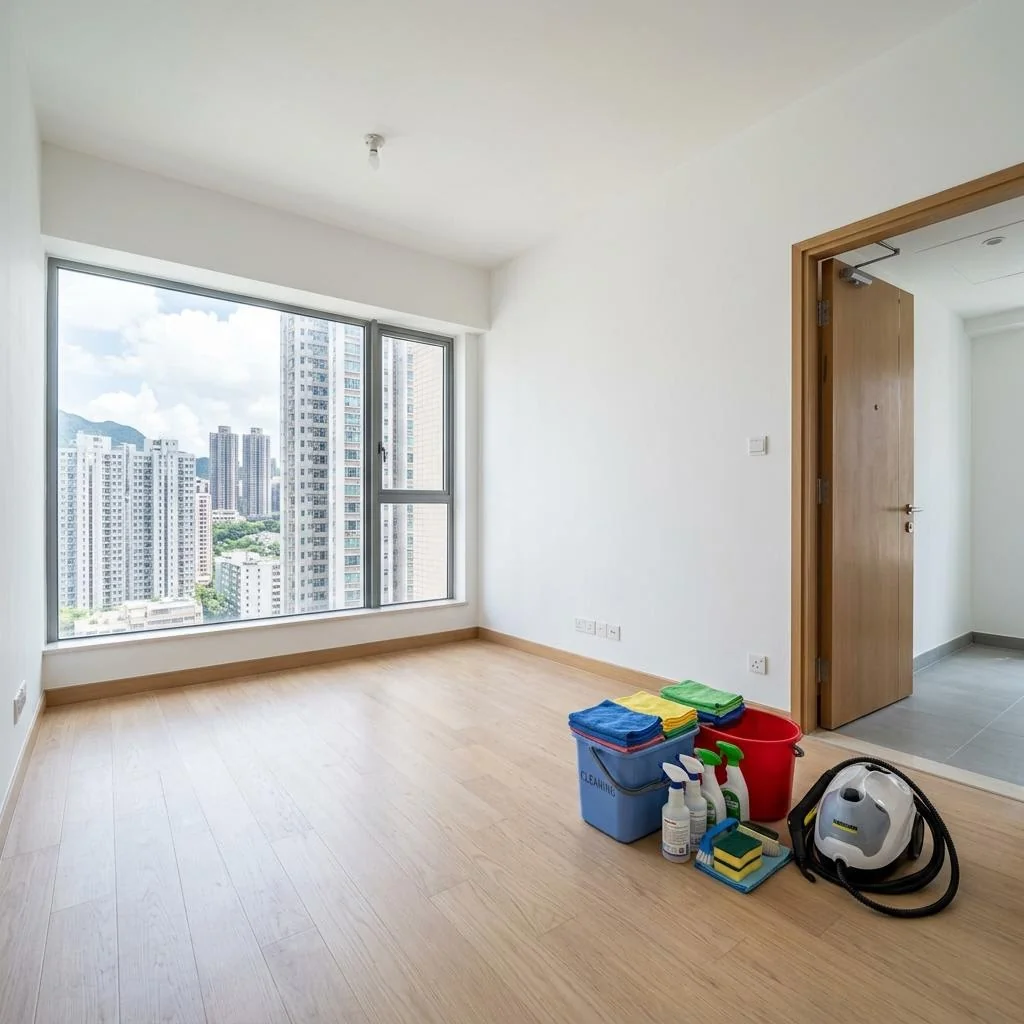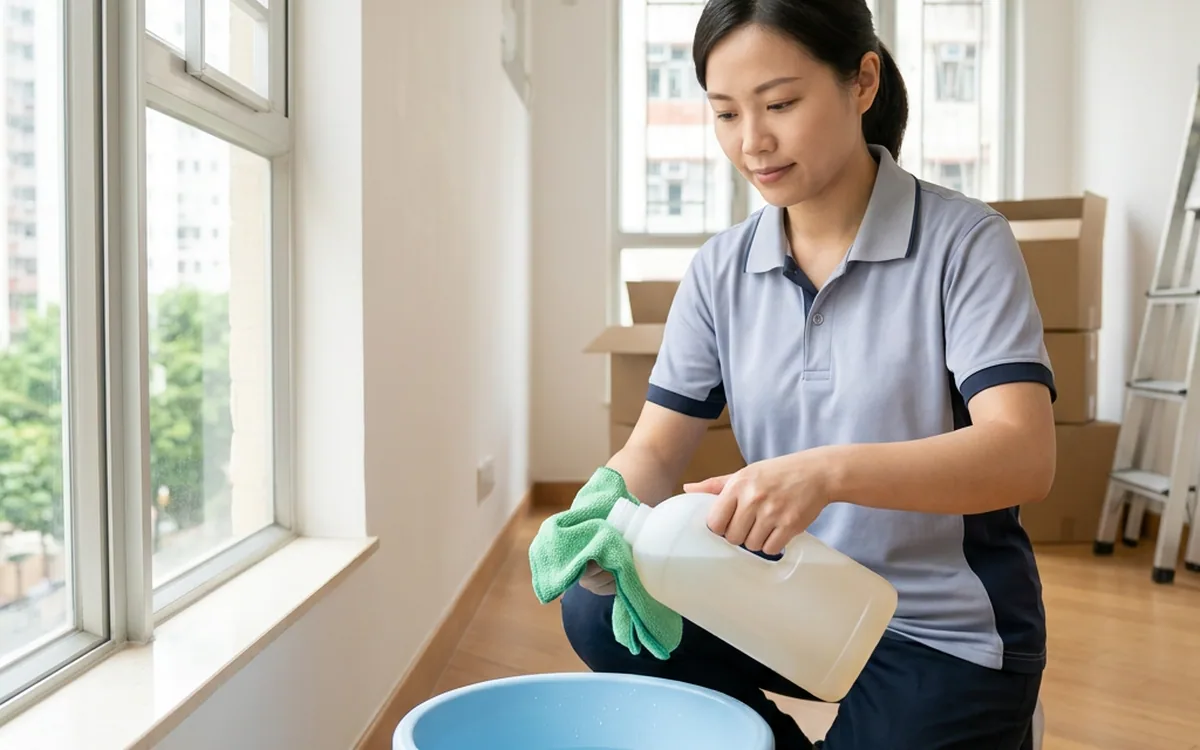
Move-in cleaning should be scheduled after property inspection and finishing work are completed, and before furniture is moved in. When cleaning, proceed in order from high to low, handling cabinet interiors, window tracks, kitchens/bathrooms, and floors. During acceptance, focus on checking for dust on shelves inside cabinets, door frames, skirting boards, and window tracks, not just looking at the floor.
When should move-in cleaning be scheduled?
After taking over a new property in Hong Kong, there may still be finishing work, and second-hand properties may also need painting or equipment replacement. As long as there is drilling, sanding, and debris transport, dust may be generated again; these processes should be completed before arranging the final round of deep cleaning.
If furniture has been delivered, inform the cleaning company which items can and cannot be moved, and confirm whether the back and bottom of the furniture can be accessed, to avoid treating inaccessible places as having been cleaned.
- Inspect the property and record locations needing finishing
- Complete finishing and remove construction debris
- Arrange deep cleaning and specified appliance cleaning
- Check cleaning effect and floor dryness
- Move in furniture and perform daily maintenance
What information and facilities need to be prepared before starting work?
The cleaning company needs to know the unit size, degree of renovation, and contamination status; relying on the number of rooms alone is not enough to judge the workload. When querying, you can send panoramic photos first, then supplementary close-ups of window tracks, inside cabinets, and stains.
- Confirm tap water, electricity, and usable toilets
- Confirm goods transport, visitor registration, and working hours with the management office
- Remove cash, documents, jewelry, and fragile ornaments
- Specify materials requiring special treatment such as glass coatings, natural stone, and wooden floors
- Retain arrangements for key handover and contact persons for completion
How to arrange the cleaning order from high to low?
Handle high-altitude areas and dry dust that can be safely accessed first, then handle cabinet interiors, window frames, and kitchens/bathrooms, and finally mop the floor. The cleaning process should involve changing dirty cloths and water to avoid just moving dust from one place to another.
Cleaning high places does not mean climbing out of the window or standing on unstable furniture yourself. For external windows, external walls, and high-altitude work, confirm the scope of service and safety arrangements first.
| Location | Contents that should be checked |
|---|---|
| High points and door frames | Dust on reachable locations, door tops, and cabinet tops |
| Cabinet interiors and window tracks | Underside of shelves, tracks, corners, and drainage holes |
| Kitchen and bathroom | Grease, water scale, sink edges, and drain surface |
| Floors and skirting boards | Dust white marks, corners, and residual moisture |
Which locations are most easily missed?
The fact that drawers can be opened does not mean the tracks and backboards have been cleaned. During acceptance, check each spot within the actual reachable range, rather than judging by fragrance or a single room.
- Window track corners and inner sides of window frames
- Bottom of kitchen cabinet shelves and drawer tracks
- Hinges, door tops, and switch surface
- Reachable positions behind the washbasin and shower screen tracks
- Top of skirting boards and behind bedroom doors
Must I disinfect or remove formaldehyde for move-in cleaning?
Deep cleaning, disinfection, and formaldehyde removal are different jobs. Cleaning mainly removes dust and grime; disinfection should be evaluated separately if needed. You cannot assume that because there are young children or the elderly at home, disinfection services must be purchased.
The smell of new furniture cannot be used to judge formaldehyde concentration. You should ventilate first and understand the source of pollution; if you need to evaluate indoor air, use appropriate testing methods and understand their limitations; do not treat "no smell" as proof of compliance.
How to conduct acceptance in a practical way?
Look at the panorama under normal light first, then use a clean cloth to gently wipe parts of the window tracks and cabinet interiors to check for obvious dust accumulation. Existing scratches, corrosion, or discoloration should be recorded separately from removable stains.
Do not rush to lay carpets or move in cardboard boxes when the floor is not dry. If there are controversial locations, take photos from similar angles before and after work; it will be clearer than comparing based on memory.