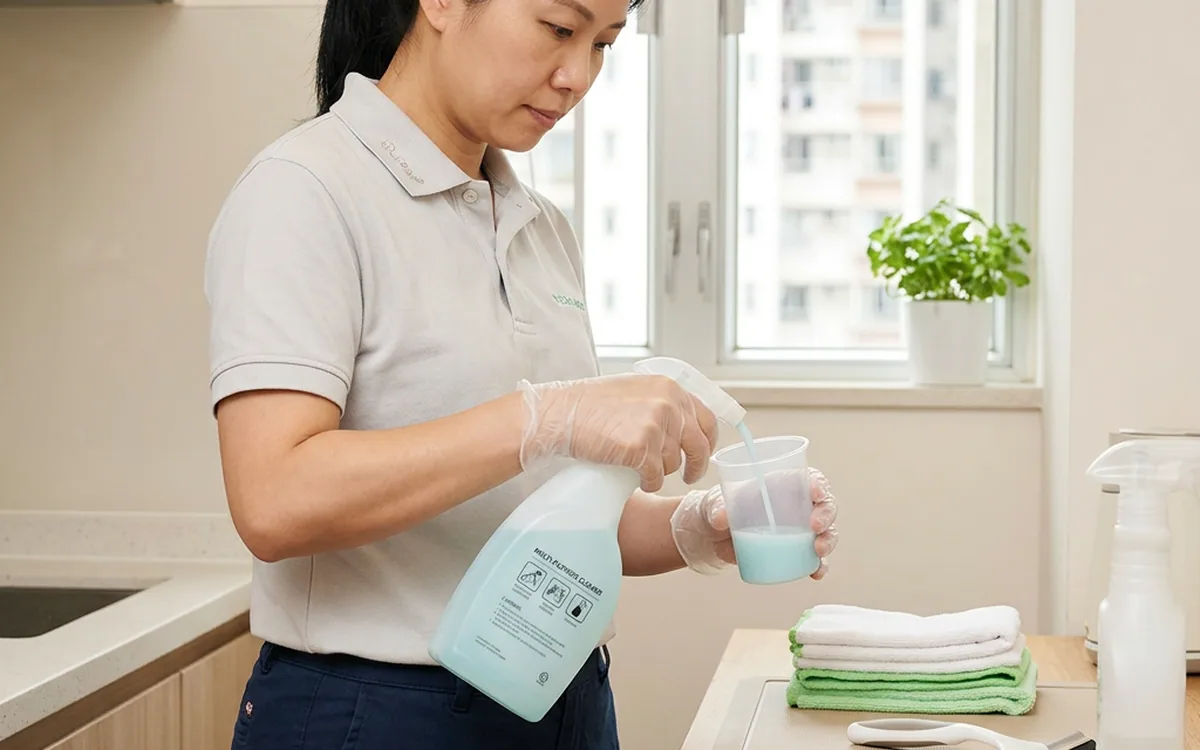
Cleaning is used to remove surface dirt, while disinfecting is a treatment targeting pathogens. Their functions are different and cannot be swapped. Before use, always refer to the product label for dilution ratios, contact time, and applicable materials, and never mix bleach with acidic cleaners.
Is full-house disinfection necessary after cleaning?
Full-house disinfection should not be arranged simply because the surface looks clean or there are young children at home. First, look at the actual situation, product purpose, and the areas needing treatment; requirements for daily maintenance differ from infection contamination scenarios.
If infectious diseases, vomit, excrement, or other contamination are involved, refer to applicable health guidelines or professional advice, and do not use general household cleaning articles as the standard for all situations.
When arranging cleaning and disinfection, you can refer to The Centre for Health Protection's environmental hygiene guidelines(opens in a new window)treatment and note the on-site and material restrictions.
Why must dirt be removed first?
Dirt and organic matter may affect the action of disinfectant products, so surfaces with visible dirt should be cleaned first. Scents or reflective surfaces are not proof of disinfection.
- Identify dirt and base materials
- Use appropriate cleaning methods to remove visible dirt
- Remove residues according to product requirements
- Use applicable disinfectant products only when necessary
- Follow the label to maintain contact time and complete the required fresh water wipe-down
- Maintain ventilation and properly store supplies
What should be checked on cleaning agent labels?
Active ingredient concentration, applicable surfaces, dilution requirements, contact time, and whether rinsing is required may all vary. Do not apply the ratio of one product to another.
- Applicable uses and unsuitable materials
- Whether dilution is required and measurement methods
- Ventilation and personal protection requirements
- Whether fresh water rinsing is required after use
- Storage methods and expiration date
Which products cannot be mixed?
The Centre for Health Protection reminds not to mix bleach with other household cleaning agents; mixing with acidic products can generate dangerous gases. Do not treat 'adding two types will be more effective' as a usage method.
Before switching products, follow the label to remove residues from the previous one; do not spray continuously in enclosed spaces. If irritation or discomfort occurs, leave the affected area and seek help.
Before using bleach, please first understand Method for using bleach from the Centre for Health Protection(opens in a new window), and operate according to the product label.
What should be paid attention to if there are children or pets at home?
During work, keep children and pets away from the treatment area, keep products in their original labeled containers and store them where they cannot be reached; do not put them into beverage bottles.
Follow the label for treating food contact surfaces, toys, and items that may be put into the mouth. Complete dryness does not necessarily mean no rinsing is required; refer to product usage requirements.