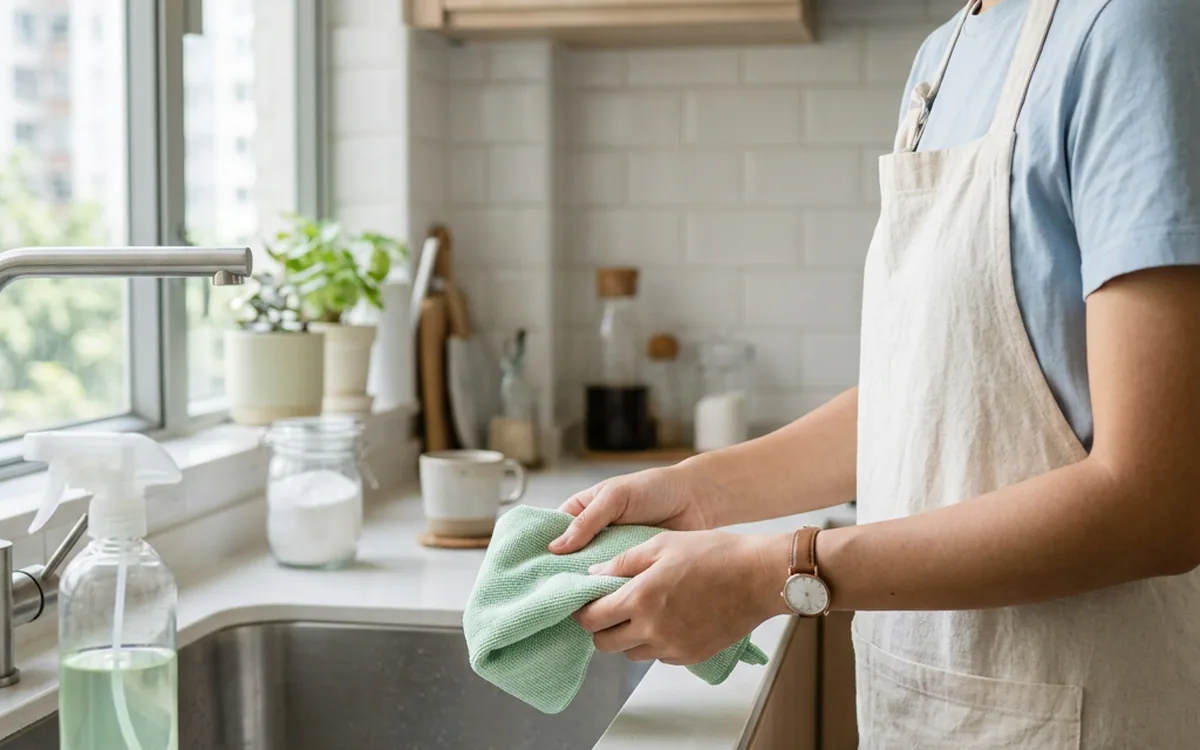
Household cleaning should adopt a strategy of "immediate small handling, periodic major maintenance." Handle spills and cooking residues daily, perform maintenance on floors and frequently used areas weekly, and handle deep cleaning such as inside electrical appliances as needed. This method avoids over-cleaning and ensures that materials are properly maintained.
What tasks are most worth doing first every day?
Handle food residues, spills, and standing water that will spread or be difficult to delay first, keeping frequently used paths safe. Immediate small-scale treatment is usually easier to control than vigorous scrubbing after dirt has dried and hardened.
- Clear away residue after cooking
- Wipe away water and oil that are easy to slip on
- Properly dispose of trash and food
- Keep washbasins and countertops tidy
How to distribute weekly cleaning room by room?
Set priorities based on actual usage; there is no need to force all rooms to be finished at the same time. Places with pet hair, frequent cooking, or shared use by many people may require more frequent maintenance.
| Area | Maintenance focus |
|---|---|
| Living/dining rooms and bedrooms | Touchable dust, floors, and door handles |
| Kitchen | Stove surface, grease, and sink |
| Bathroom | Water stains, basins, and dry floors |
| Upholstery | Vacuum and check for stains according to care requirements |
How to avoid cleaning tools getting dirtier the more they are used?
Keep kitchen and bathroom tools separate, and replace cloths and water as they become dirty. Do not use a cloth that has cleaned a toilet seat to wipe other surfaces, and do not store wet cloths sealed for long periods.
Keep cleaning products in their original labels and store them according to their intended use; do not divide them into beverage bottles, and do not mix multiple products to save time.
How to set priorities before asking for hourly cleaning?
Write down the most important tasks clearly, and tidy up scattered items and valuables first, so that the booked time is concentrated on cleaning rather than finding places to put items.
- List essential areas
- Note special materials or stains
- Remove items that hinder access
- Confirm supplies and tool arrangements
- Handle minor items according to remaining time
When is a deeper clean needed?
If thick grease accumulates, dust builds up inside cabinets, or you are preparing to move house, a separate deep cleaning list can be made. Daily maintenance does not automatically include internal dismantling of electrical appliances and high-altitude work.
If dampness, moldy odors, or drainage problems persist after cleaning, find the source and repair it; do not just increase the number of cleaning sessions.