
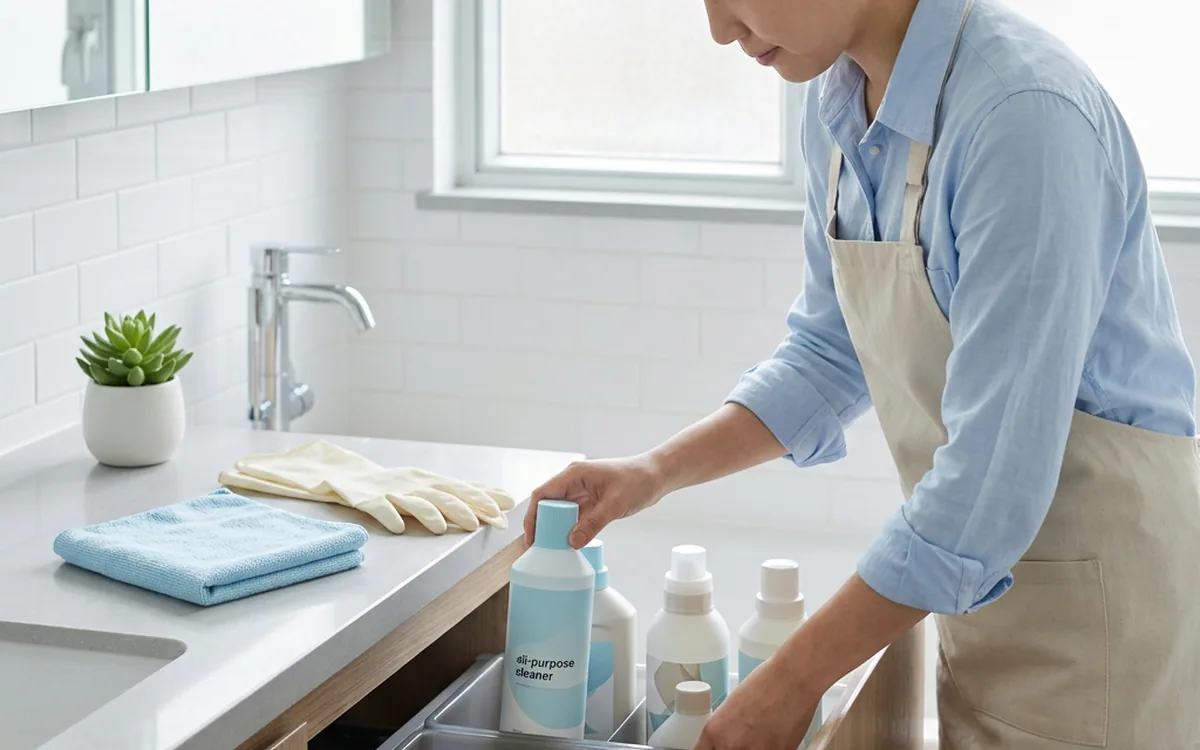
Bleach must never be mixed with acidic toilet cleaners, alcohol, or other cleaning agents; otherwise, it will release chlorine gas or other harmful fumes, which can severely damage the respiratory tract. When cleaning, adopt a 'single-use' principle and keep the indoor air ventilated.
Potential crises of household chemicals
Cleaning formulas commonly used in modern homes contain highly concentrated chemicals. In the narrow and poorly ventilated bathroom environment in Hong Kong, once detergents of different properties are mixed, molecules react violently in seconds. Such reactions not only reduce cleaning efficiency but also release volatile toxic gases; inhaling them can burn the respiratory tract, and in severe cases, trigger acute pulmonary edema.
Three deadly traps of mixing chemicals
Common dangerous household chemical reactions primarily involve bleach (sodium hypochlorite):
Before using bleach, please first understand Method for using bleach from the Centre for Health Protection(opens in a new window), and operate according to the product label.
- Bleach + acidic toilet cleaner: Produces highly toxic chlorine gas, irritating the respiratory tract.
- Bleach + disinfecting alcohol: May produce chloroform.
- Bleach + ammonia-based cleaner: Releases chloramine gas, irritating the eyes and throat.
Professional cleaning safety guidelines
Safety should be prioritized over cleaning results; please strictly follow these steps:
- Read the label before use: Ensure you fully understand the ingredients and warnings.
- Adopt a single-use principle: Use only one cleaning agent at a time.
- Phased cleaning: After cleaning with one chemical, rinse thoroughly with water, open windows to ventilate, and ensure the smell has dissipated before proceeding to the next step.
- Wear equipment: You must wear rubber gloves and a protective mask during operation, and turn on the bathroom exhaust fan.
Self-rescue strategies in case of accidents
If you smell a pungent, choking odor during operation, immediately perform these self-rescue steps:
- Evacuate the area: Hold your breath, leave the bathroom immediately, and close the door to prevent toxic gas from spreading.
- Ventilation: Go to a balcony or window to breathe fresh air.
- Clean the contamination: If skin or eyes are contaminated, flush with plenty of running water for at least 15 minutes.
- Seek medical help immediately: If persistent shortness of breath, chest pressure, or severe coughing occurs, seek medical attention immediately; do not attempt to self-medicate.
