
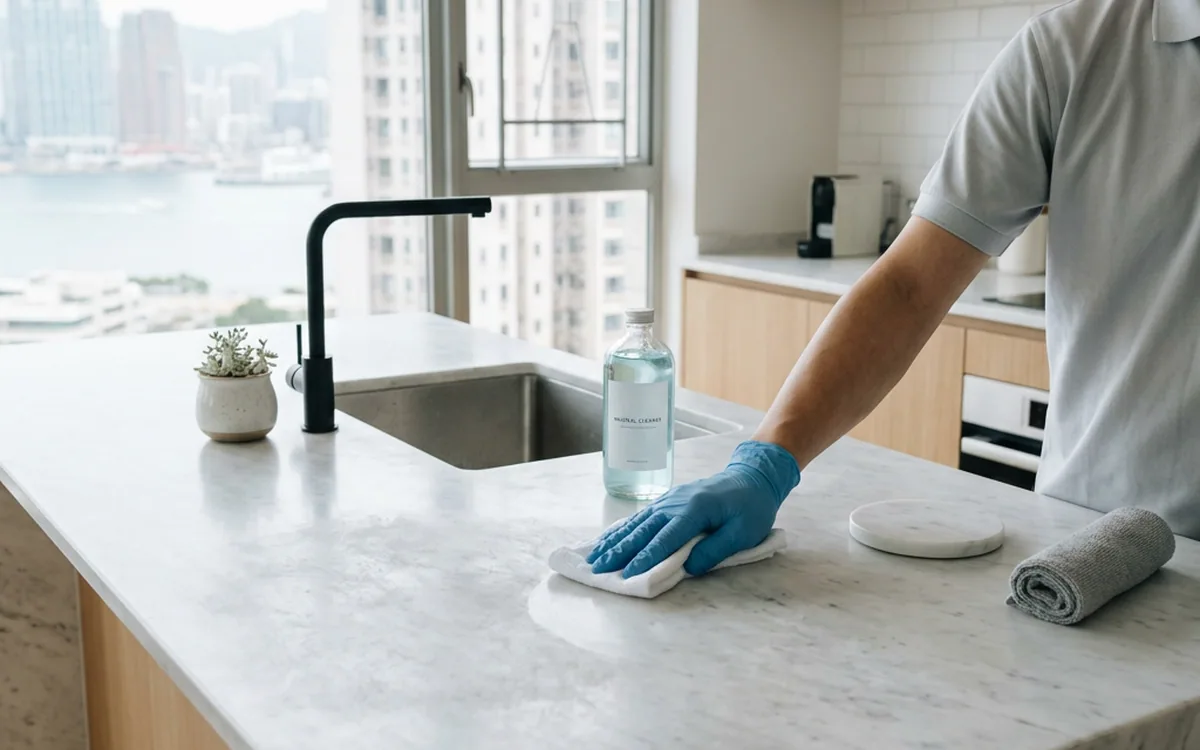
Marble is mainly composed of calcium carbonate and is extremely easily corroded by acidic substances. Daily use should involve neutral dish soap mixed with water; avoid using vinegar, lemon juice, or acidic cleaners. Be sure to use a soft fiber cloth when cleaning, avoid rough scouring pads, and wipe away splashed acid or alkaline juices promptly. If the surface is already severely damaged, it is recommended to entrust a professional team for polishing and restoration.
Causes of marble luster loss
Marble's main chemical component is calcium carbonate, a material extremely sensitive to acidic substances. Commonly used acidic cleaners, or even vinegar and lemon juice in the kitchen, will produce a rapid chemical reaction upon contact with the surface, directly corroding the polishing layer and causing hazy white spots and loss of luster.
Correct daily cleaning rules
Maintaining stone brightness must follow the neutral principle. Daily, just use water mixed with mild neutral dish soap to remove surface dust and light grease. Never use strongly alkaline or high-performance cleaners to avoid long-term effects on the density of the stone surface.
Avoiding physical damage
Marble has limited hardness, and the surface easily develops fine scratches invisible to the naked eye. Selecting daily cleaning tools is crucial; you must exclude scouring pads, steel wool, and other rough materials, and switch to soft microfiber cloths, wiping with a gentle circular motion.
Dealing with common kitchen stains
Kitchen countertops often encounter acidic or alkaline seasonings like soy sauce, vinegar, and tomato sauce; if spilled, wipe them clean immediately with a clean soft cloth to avoid the juice lingering. If you find large-area etching marks, stop sanding or applying unknown care agents yourself; it is suggested to assess entrusting a professional team for professional crystallization restoration.