
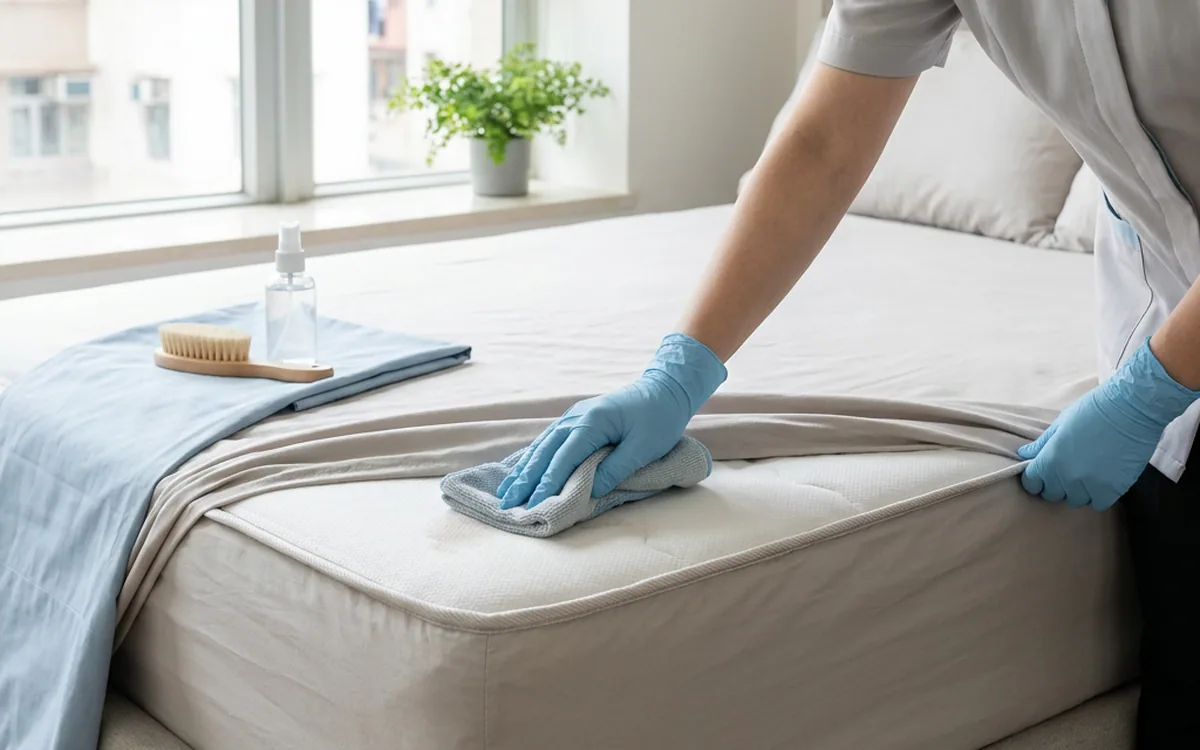
Bed sheets should be changed weekly, while mattresses should be cleaned using professional vacuuming equipment every season. You must decide on detergent according to the labels. It is strictly forbidden to disassemble the mattress circuit system yourself, and be sure to air dry thoroughly after cleaning to prevent mold growth. It is recommended to seek assistance from 壹家壹清潔專家 when stains penetrate deep layers.
Bed sheet maintenance and cleaning regulations
Bed sheets are skin-contact items, and cleaning must be rigorous:
When handling moldy materials, you can follow US Environmental Protection Agency's home mold prevention recommendations(opens in a new window)treatment and note the on-site and material restrictions.
- Frequency: It is recommended to change and wash them every 5-7 days; if you have pets or sweat a lot, do it more frequently.
- Material confirmation: Check the washing label to distinguish between cotton, silk, or fiber, and choose the appropriate water temperature.
- Classified washing: Avoid washing with towels or jackets to prevent cross-contamination of fibers.
- Thorough drying: Bed sheets must be fully exposed to the sun or thoroughly dried in a tumble dryer to prevent dampness from triggering mold.
- Sort by color depth
- Add mild laundry detergent
- Wash at the temperature suggested by the label
Daily and periodic mattress management
Mattress structures are complex; DIY cleaning is limited to the surface:
- Vacuuming: Use a professional-grade vacuum cleaner to regularly clean dander and dust on the mattress surface and in gaps.
- Moisture control: Keep the room ventilated and regularly flip the mattress to balance the load.
- Local stain treatment: Only use a slightly damp soft cloth with a small amount of detergent; never let liquid penetrate into the mattress core.
- Remove all bedding
- Use a vacuum cleaner to suck away dander
- Check corners for dirt
Safety boundaries for home cleaning
Do not perform cleaning behaviors beyond your personal capability:
- Strictly forbidden to disassemble mattresses: Never remove the mattress surface fabric or internal structure to avoid damaging the protective layer.
- Prohibited strong chemicals: You must not use strong stain removers or large amounts of bleach on the mattress to avoid damaging the material and causing skin irritation.
- Stop DIY situations: If the mattress shows large-area liquid penetration, unknown odors, or signs of mold, stop handling it yourself to avoid the spread of mold spores.
- Ventilate immediately if mold is found
- Cut off power in the vicinity
- Contact professional cleaning
The role of professional cleaning teams
For deep hygiene problems, 壹家壹清潔專家 possesses more comprehensive treatment plans:
- Dust mite cleaning: Use suitable equipment to deep-treat dust mite accumulation areas that are hard to reach.
- Material safety protection: Adopt corresponding maintenance techniques based on different mattress characteristics (such as latex, springs, memory foam).
- Professional drying treatment: Ensure no moisture remains after cleaning to maintain the stability of the mattress internal structure.
- Assess mattress condition
- Consult suitable cleaning frequency
- Arrange appointment for professional cleaning
