
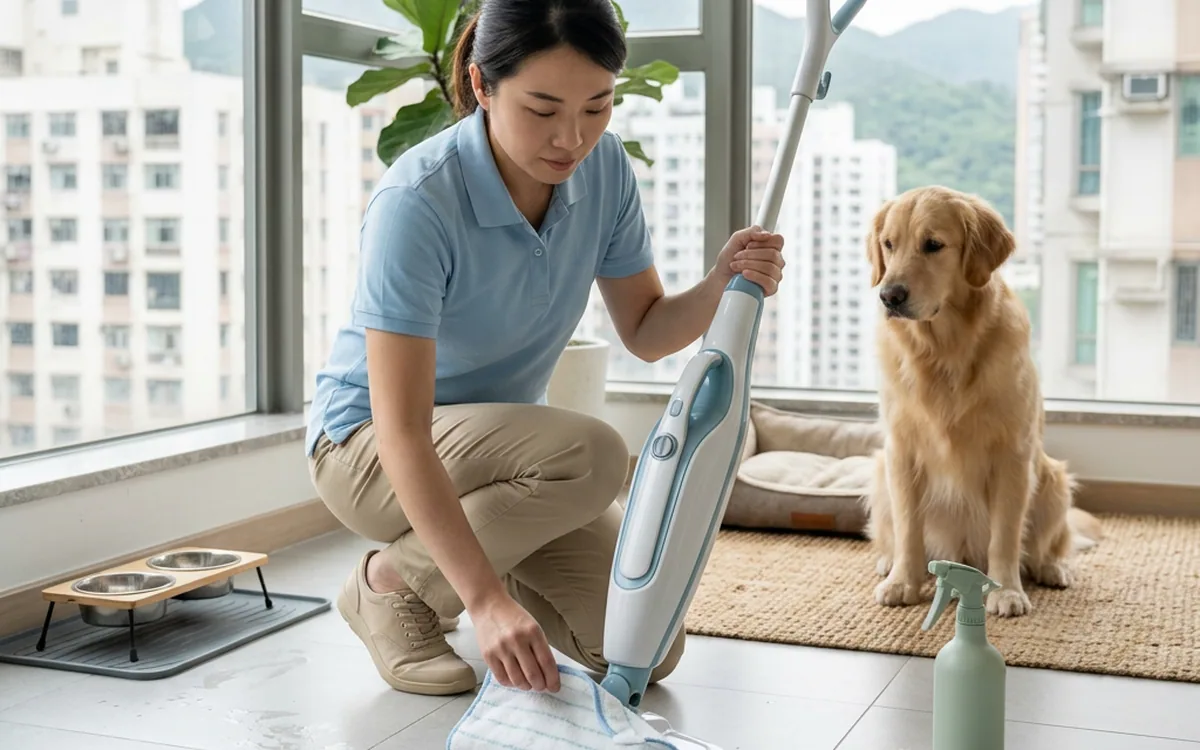
The core of cleaning in a pet-friendly home lies in ventilation and allergy prevention. Daily tasks include frequently grooming pet hair and using specialized vacuum equipment. Cleaning agents must be of a non-harmful formula, and chemical substances toxic to pets are prohibited. Cleaning large amounts of excrement or mold requires professional assistance; do not attempt excessive cleaning on your own.
Pet Hair and Dust Management
Hair is a major allergen, and management must start at the source:
- Regular grooming: Reduce hair shedding on furniture or carpets at the source.
- High-efficiency vacuuming: Use a vacuum with a HEPA filter and regularly clean hairballs accumulated in corners.
- Fixed-area cleaning: Increase the frequency of cleaning in areas where pets are most active.
- Static electricity removal: Use a specialized hair roller to clean fabric sofas.
- Grooming pet's body
- Vacuuming all furniture in the house
- Cleaning filters to maintain suction
Safety and Choice of Cleaning Agents
Pets are more sensitive than humans, so the choice of cleaning agent is crucial:
- Ingredient check: Avoid cleaning supplies containing phenols, bleach, or high concentrations of alcohol, as these are toxic to a pet's liver and kidneys.
- Safe space: Isolate pets during cleaning and ensure the floor is completely dry before allowing them back.
- Natural choice: Choose cleaners certified safe for pets or use water for daily maintenance.
- Checking cleaning agent labels
- Confirming no harmful fragrances
- Thoroughly rinsing away residues
Hygiene for Pet-Specific Items
Cleaning standards for feeding bowls, bedding, and litter boxes:
- Feeding bowls: Wash and thoroughly disinfect daily to prevent bacterial growth.
- Bedding: Regularly change and wash, exposing them to sunlight. Replace if damaged or if odors are difficult to remove.
- Litter boxes: Regularly clean and change sand, keeping it ventilated to reduce odor buildup.
- Cleaning debris inside the box
- Wiping with diluted mild detergent
- Thoroughly rinsing and air drying
When professional team intervention is needed
In the following situations, entrust it to 壹家壹清潔專家 immediately:
- Urine has seeped into wooden floors or furniture, and the odor cannot be removed independently.
- A decline in indoor air quality caused by large accumulations of hair.
- When comprehensive indoor disinfection is needed using pet-friendly technology.
- Facing cleaning tasks for complex materials, avoid using chemicals that could damage furniture.
- Evaluating the range of odors
- Confirming if there is chemical penetration
- Arranging professional cleaning services
