
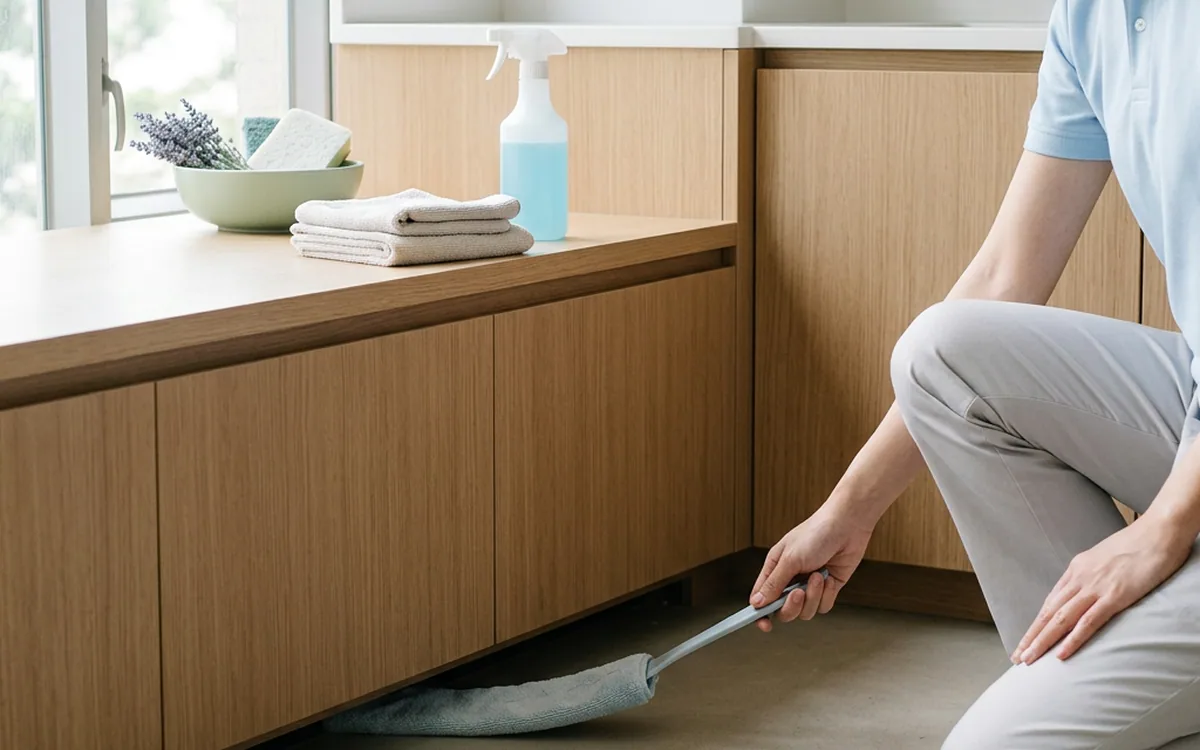
Before cleaning cabinet gaps, confirm if there is power supply for appliances, and ensure safety before moving them. Cleaning should follow the 'high to low' principle, clean walls first, then cabinet gaps, and finally mop the floor. If it involves damp mold or thick oil, choose a mild cleaner suitable for the material (such as wood or marble), and dry thoroughly to avoid swelling.
Hygiene crisis in hidden areas
Cabinet bottoms, cabinet backs, and wall corner gaps are easily accumulated with hair, dust, and tiny food scraps due to poor ventilation and difficulty in reaching them. In Hong Kong's humid climate, if these dirt accumulations are not dealt with in time, they combine with moisture and evolve into breeding grounds for mold, or even attract pests and cause indoor odors.
When handling moldy materials, you can follow US Environmental Protection Agency's home mold prevention recommendations(opens in a new window)treatment and note the on-site and material restrictions.
Safe operation steps and material attention
Before cleaning the bottom of cabinets, be sure to confirm that no electrical wires are passing through nearby. It is not recommended to move large or fully loaded furniture forcefully to avoid damaging the furniture or causing injury. When cleaning wood floors or marble cabinet bottoms, use cleaners specific to the material and avoid getting them too wet, as wood easily swells and deforms after absorbing water.
- Check electrical wires and furniture stability, and only move within a small range after ensuring safety.
- Clean high-altitude dust around furniture first to prevent dirt from falling.
- Use a thin vacuum nozzle to reach deep into gaps and vacuum away dust.
- For stained areas, use a damp cloth and a cleaner corresponding to the material to wipe.
- Dry gaps thoroughly to prevent moisture from lingering.
Importance of professional descaling
If gaps have developed mold spots or oil mixed with dust has become sticky, it is recommended to seek help from a professional team. Professional teams are equipped with specialized delicate tools and efficient cleaners that can thoroughly clean these daily blind spots without damaging the furniture's surface material, protecting the home environment's hygiene.
