
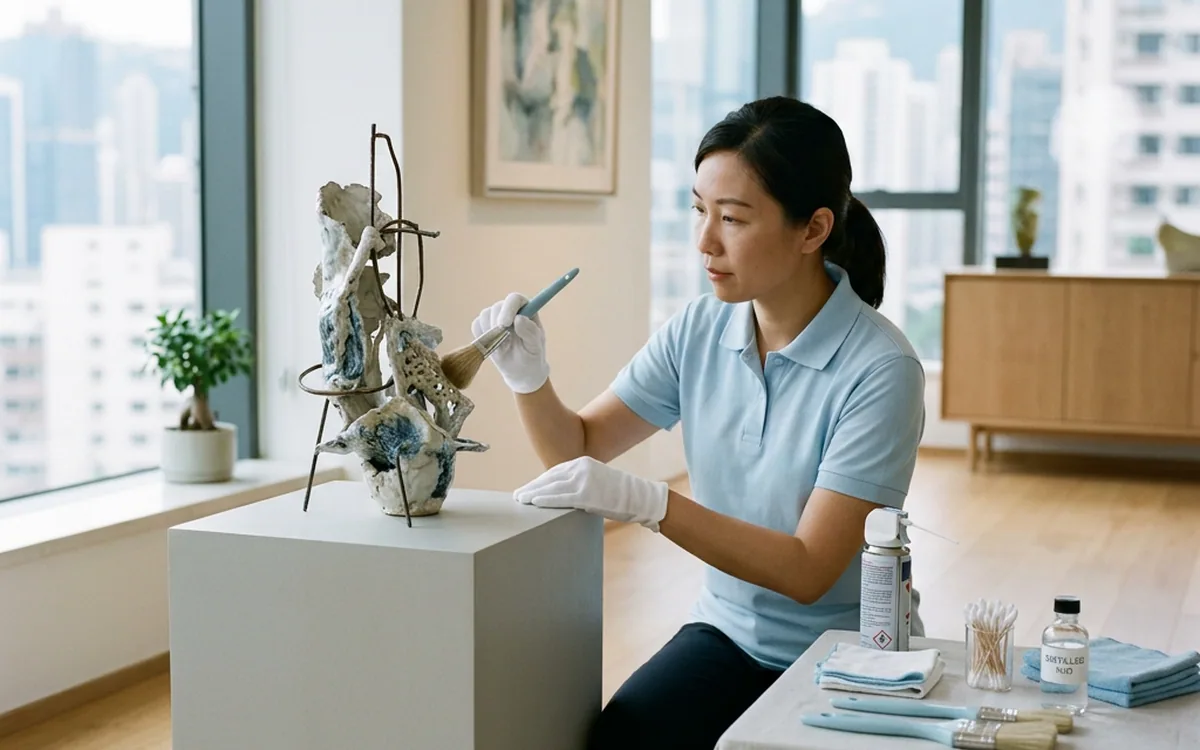
Cleaning art should be based on the principle of being 'extremely gentle.' Oil paintings, paper works, or sculptures are extremely sensitive to light and humidity; strictly forbid the casual use of chemical cleaners. Daily maintenance requires only light sweeping of dust with a clean soft cloth or paintbrush. If there are special stains or the material is aged, please immediately seek a professional team for assessment; do not force-clean it yourself.
Art material identification and protection
Before cleaning, you must clarify the material of the artwork, as the cleaning needs for oil paintings, watercolors, and sculptures vary. For the vast majority of artwork, contact with water or cleaning agents is not recommended because moisture easily leads to canvas deformation, pigment peeling, or material corrosion. It is recommended to perform a slight test on the bottom edge of the artwork before cleaning.
Correct daily maintenance techniques
Regular cleaning should be done once every three months, limited only to light surface dusting. Use a soft, lint-free brush or dry cloth for operation. When cleaning frames, ensure that glass cleaner does not penetrate to the inner layer. The storage environment needs to avoid direct sunlight and high humidity; it is recommended to use frames with UV protection functions.
- Use a soft brush or microfiber cloth for gentle dusting
- Check if environmental humidity and temperature are stable
- Avoid direct sunlight on the artwork
- Regularly check hooks and backing structures
When to seek professional help
If the artwork shows signs of cracking, mold, discoloration, or oil accumulation, please stop all DIY cleaning attempts. 壹家壹清潔專家 can provide professional assessment and advice. For valuable pieces, we recommend referring to restoration specialists to protect the art's value.