
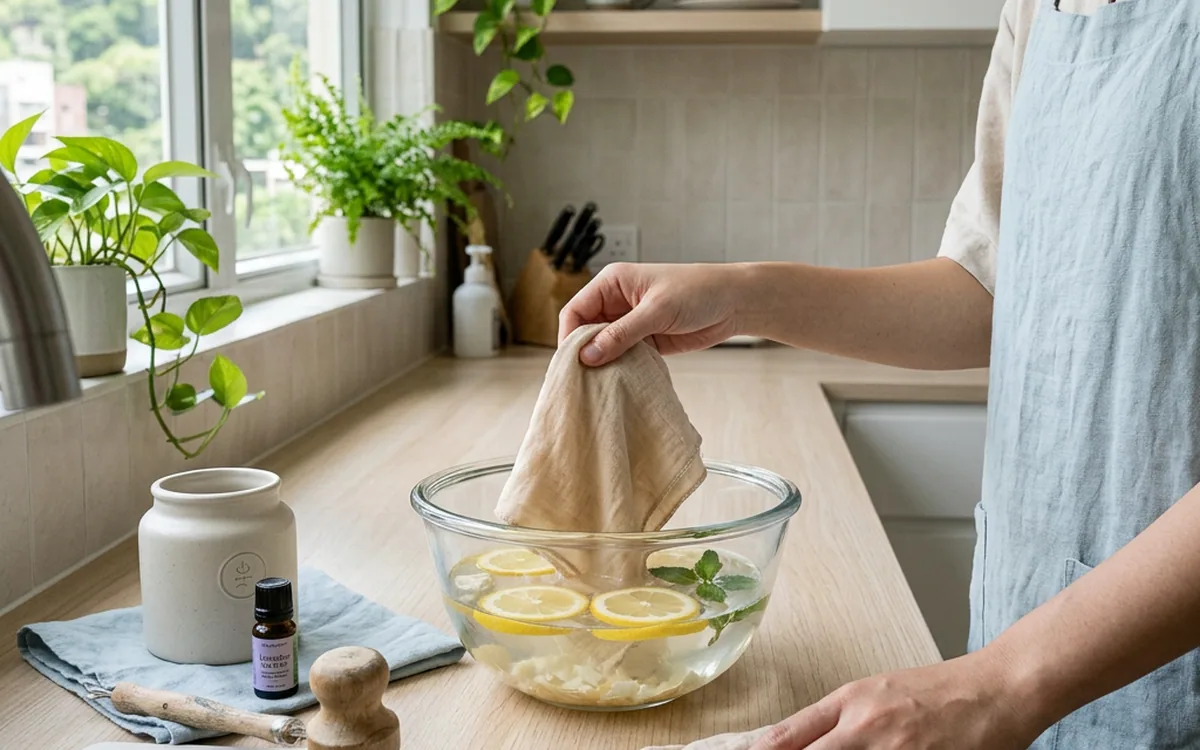
Eco-friendly cleaning should prioritize products with environmental labels, or use natural materials like lemon, vinegar, and baking soda. The key lies in reducing single-use plastics and water usage, and correctly storing and disposing of chemical cleaning agents, avoiding discharge into sewers at will. By regularly maintaining appliances to improve energy efficiency, you can achieve environmental goals.
Make good use of natural cleaning agents
Using natural materials for cleaning is the first choice for environmental protection; it is not only non-toxic but also easy to obtain.
- Lemon: Has natural bleaching and oil-removing effects; applicable to removing limescale from faucets.
- Vinegar: Has sterilization and odor-removing functions, but it must be noted that it should not be used on stone surfaces sensitive to acid, such as marble.
- Baking soda: A powerful stain remover that can effectively handle grease accumulation in the kitchen.
Resource conservation and plastic reduction operations
Reducing resource consumption during the cleaning process is an important part of practicing a green home.
- Optimize water usage: Switch to using a spray bottle instead of a full bucket of water to reduce unnecessary waste of water resources.
- Tool selection: Switch to using washable microfiber cloths or pure cotton cloths; refuse to use disposable paper towels or wet wipes.
- Avoid excessive packaging: When purchasing cleaning agents, prioritize large packaging or refill packs to reduce plastic waste.
Chemical safety and waste disposal
Do not underestimate the impact of cleaning products on the environment and family members; correct handling of chemicals is crucial.
Before using bleach, please first understand Method for using bleach from the Centre for Health Protection(opens in a new window), and operate according to the product label.
- Strictly forbid mixing agents: For example, mixing bleach with acidic cleaning agents will produce lethal toxic gas and should be absolutely avoided.
- Correct storage: Cleaning agents should be stored in a cool place out of reach of children, and the bottle labels should be kept clear.
- Proper disposal: Expired or no longer needed chemical cleaning agents should be taken to appropriate chemical waste recycling channels; never pour them directly into the drain.
- Judgment: If you cannot confirm the safety of a chemical, you should prioritize using clear water or neutral cleaning agents for treatment.
- Check: Ensure all cleaning agent bottles are capped tightly to avoid leaks, and check if there is any chemical residue in the drain.