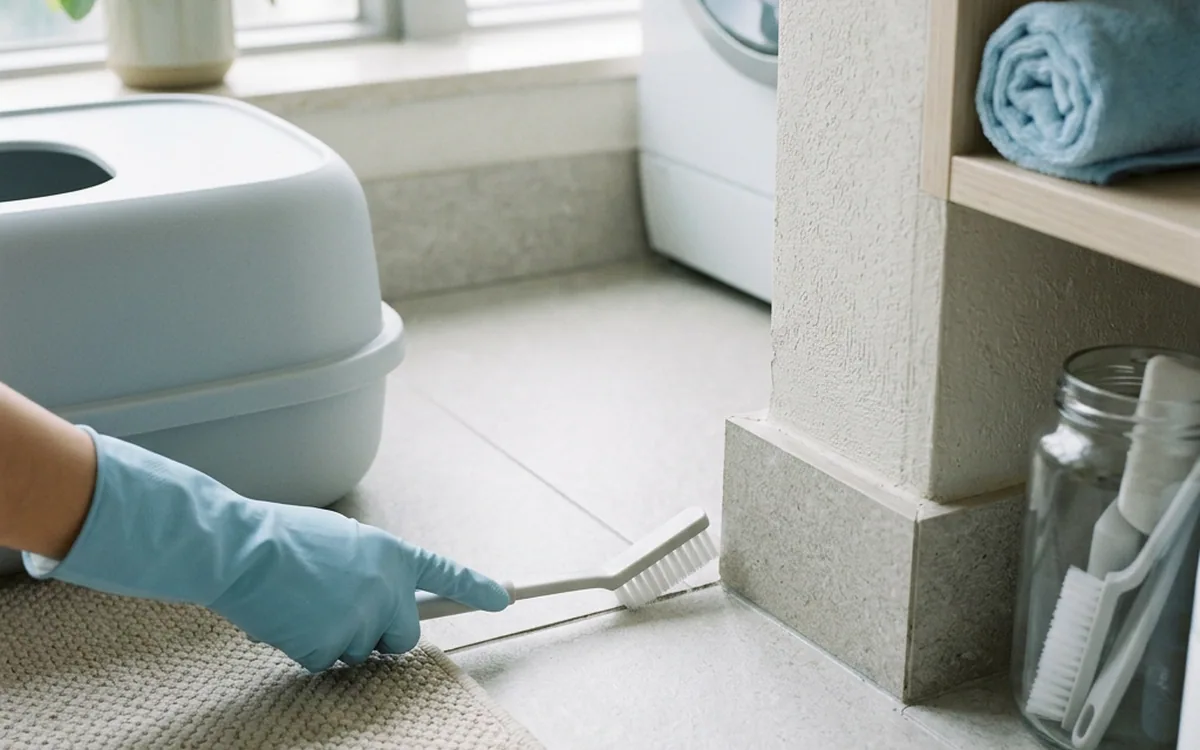
Remove litter and loose dirt, then treat locally according to the floor and cleaner instructions without flooding joints. Check enzyme products for material compatibility and pet-use restrictions, do not mix cleaners, and wipe dry and ventilate afterwards.
Formation of crack contamination
When cats enter and exit the litter box, waste and particles stuck between their paw pads are pressed into the floor cracks. In humid environments, these organic substances become perfect nutrients for bacterial growth. Household vacuum cleaners struggle to reach deep into small cracks, leading to long-term dirt accumulation and the release of odors.
- Observe the condition of the floor cracks
- Identify the locations of waste residue
- Regularly clean the area around the litter box
Safe disinfection steps
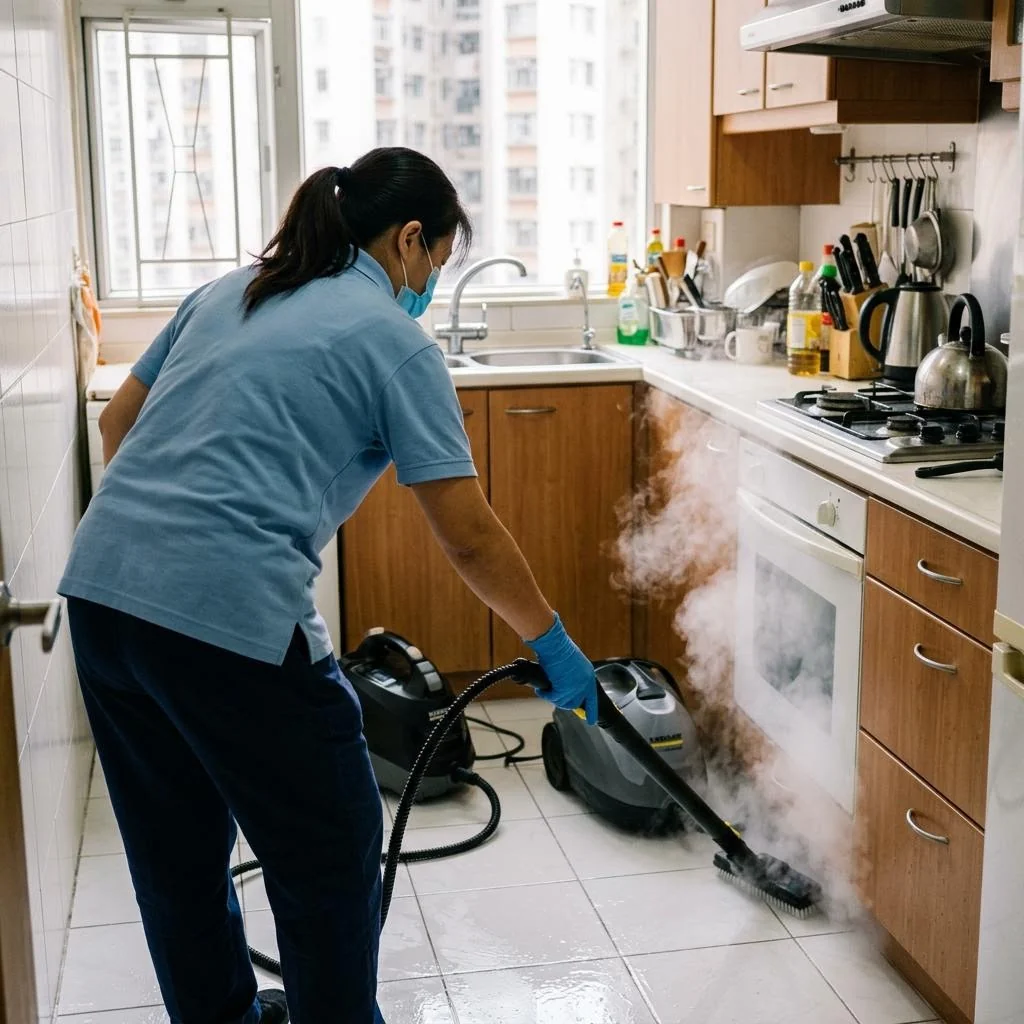
Keep pets, food and pet items away from the work area. Select a compatible method according to the product label and test discreetly. Do not describe steam equipment as cleaning through vibration or force open floor joints.
- Use pet-safe cleaners
- Enzyme penetration and decomposition
- High-temperature steam vibration for dirt removal
Environmental maintenance advice
After thorough cleaning, be sure to ensure that the moisture in the cracks has been completely wiped dry. Maintaining good indoor ventilation can reduce the speed at which bacteria and odors form again. If you find that the floor material around the cat litter box is already damaged or moldy, consider repairs promptly to prevent mold growth from harming the family's health.
When handling moldy materials, you can follow US Environmental Protection Agency's home mold prevention recommendations(opens in a new window)treatment and note the on-site and material restrictions.
- Ensure the floor is wiped thoroughly dry
- Strengthen indoor ventilation
- Consider repairs for damaged materials
Professional team assistance
For dirt in cracks that is difficult to clean over a long period, entrusting an experienced professional team is most ideal. Experts can accurately judge the floor material and adopt appropriate eco-friendly cleaning methods, ensuring that while disinfecting, home safety and the pet's sensitive constitution are not affected.
- Confirm the qualifications of the professional team
- Assess the cleaning scope and environment
- Regularly schedule deep maintenance