
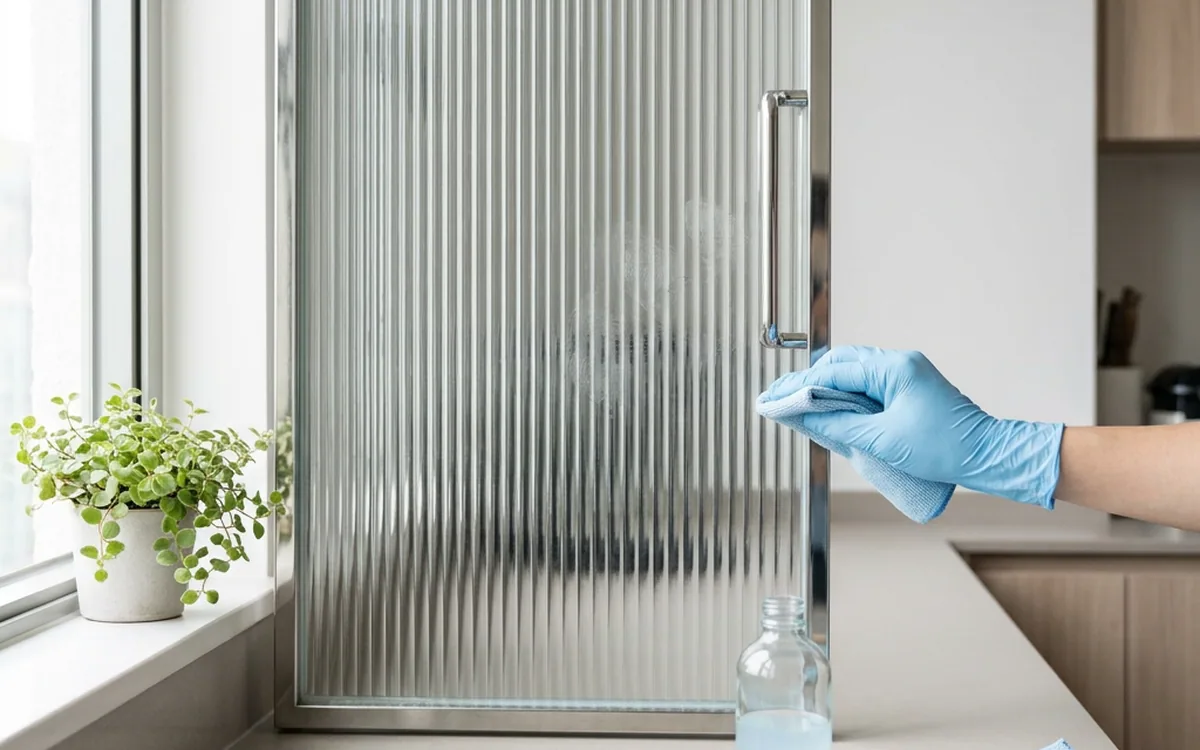
For fluted glass cleaning, you should check if there is a coating or film, and it is recommended to perform a small area test with water and a soft cloth first. After removing surface dust, gently wipe using cleaning products suitable for the material. You do not need to use strong chemicals or hard brushes at the start to avoid damaging the surface.
First check which side it is on and whether there is any surface treatment
One side of fluted glass may be flatter, while the other has concave/convex stripes, so tools will make contact differently. Check the supplier's maintenance instructions first to confirm if there is any film, coating, or decorative finish. When unsure, test a small amount of water and a soft cloth on an inconspicuous area.
Remove dust first, then handle fingerprint oil films
If dry sand particles are trapped between the cloth and glass, repeated wiping can scratch the surface. First use a soft cloth or suitable soft-bristled tool to remove loose dust particles, then choose cleaning products labeled as suitable for that glass surface, using them according to the label; do not assume strong degreaser is necessary.
- Test on a small, inconspicuous area to confirm there is no discoloration or hazing after drying.
- Apply a small amount of cleaning fluid onto a cloth or a soft tool suitable for the grooves, avoiding soaking the frames, hardware, and the edges of any films.
- Wipe lightly along the grooves in small sections, changing the cloth surface if it gets dirty to avoid spreading oil film back to already cleaned areas.
- Remove residue according to product instructions, then wipe dry with a clean, soft cloth and check under oblique light for water spots.
Hard-to-clean grooves do not mean you should scrub hard
If the cloth cannot reach the bottom of the grooves, try using a soft brush of a suitable size; do not use steel wool, abrasive scouring pads, or sharp objects to scrape the grooves. Squeegees for flat glass may not fit the entire uneven surface, so check for uniform contact before use.
When to stop doing it yourself
If there is color loss, white hazing, or coating change after a small area test, stop using the product immediately and contact the supplier. For large-area high glass, fixed frame leakage, or areas difficult to contact safely, arrange for suitable personnel to evaluate first; do not climb out of windows or stand on unstable furniture.
How to check after completion
Once the surface is dry, inspect under both normal and oblique light for oil film, water spots, and stains at the bottom of the grooves, while also checking for water accumulation in the frames. If only a certain area has residue, redo locally; there is no need to constantly add chemical or re-scrub the entire surface.