
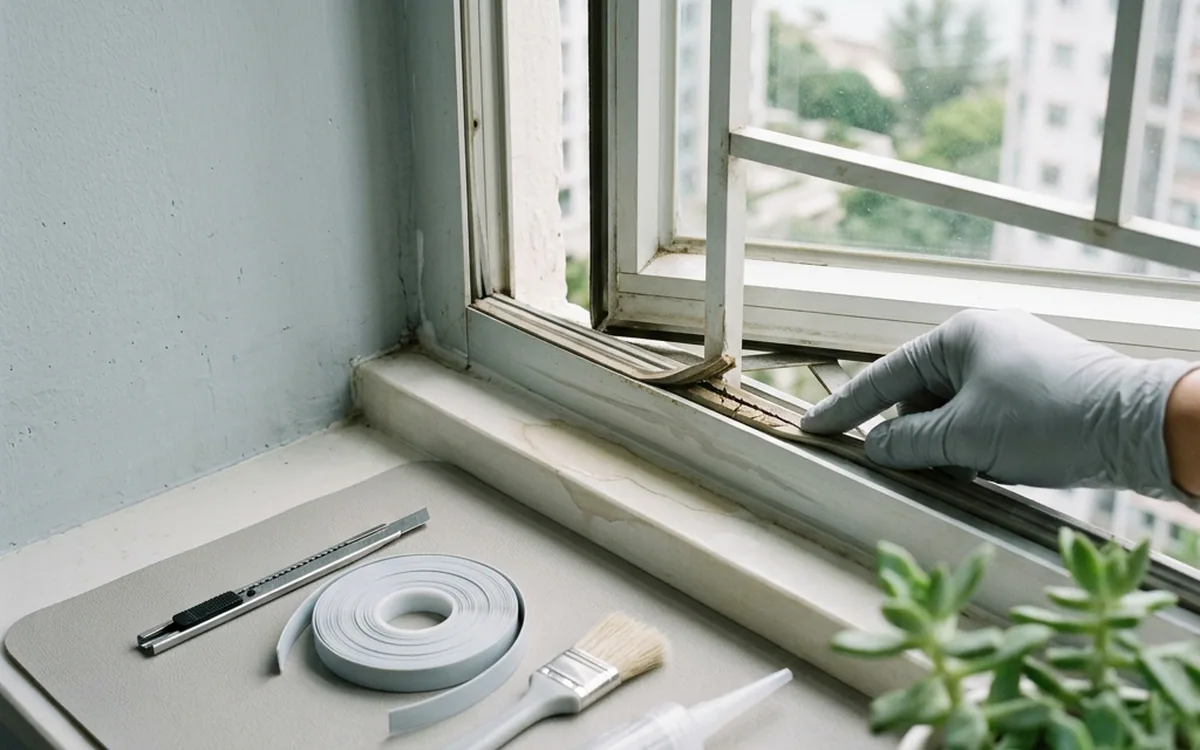
After a typhoon, you should immediately clear window groove drainage holes and check if seals have hardened or window sealant has cracked. Please pay attention to safety during cleaning and avoid working in dangerous positions. If you find that seepage has already damaged the wall, it is suggested to have a professional team handle it.
Physical causes of typhoon seepage
Strong winds cause a sudden rise in outdoor water pressure. If window groove drainage holes are blocked, accumulated water will backflow into the room. Therefore, clearing residual sand and fallen leaves from the grooves is the primary task.
Window groove cleaning steps
Keeping the window groove drainage system unblocked can significantly reduce the risk of seepage during rainstorms.
- After sand and dust are dry, use a small brush to loosen the mud.
- Use a vacuum cleaner with a slender nozzle to remove debris.
- Use a mild cleaning agent to wipe the window groove and check if drainage holes are clear.
Sealing structure inspection
Seals and window sealant are the core of wind and rain protection and require regular inspection.
When handling moldy materials, you can follow US Environmental Protection Agency's home mold prevention recommendations(opens in a new window)treatment and note the on-site and material restrictions.
- Check if seals are deformed, hardened, or cracked; if they lose elasticity, consider replacement.
- Check if there are gaps or moldy decay in the sealant between the glass and aluminum frame.
- After cleaning, ensure wall surfaces and wooden window casings are thoroughly dry to prevent mold.
Precautions and professional services
Please do not perform dangerous high-altitude cleaning. If you find large-scale seal aging or structural seepage, it is recommended to entrust 壹家壹清潔專家 to provide professional inspection and mold removal services.
