
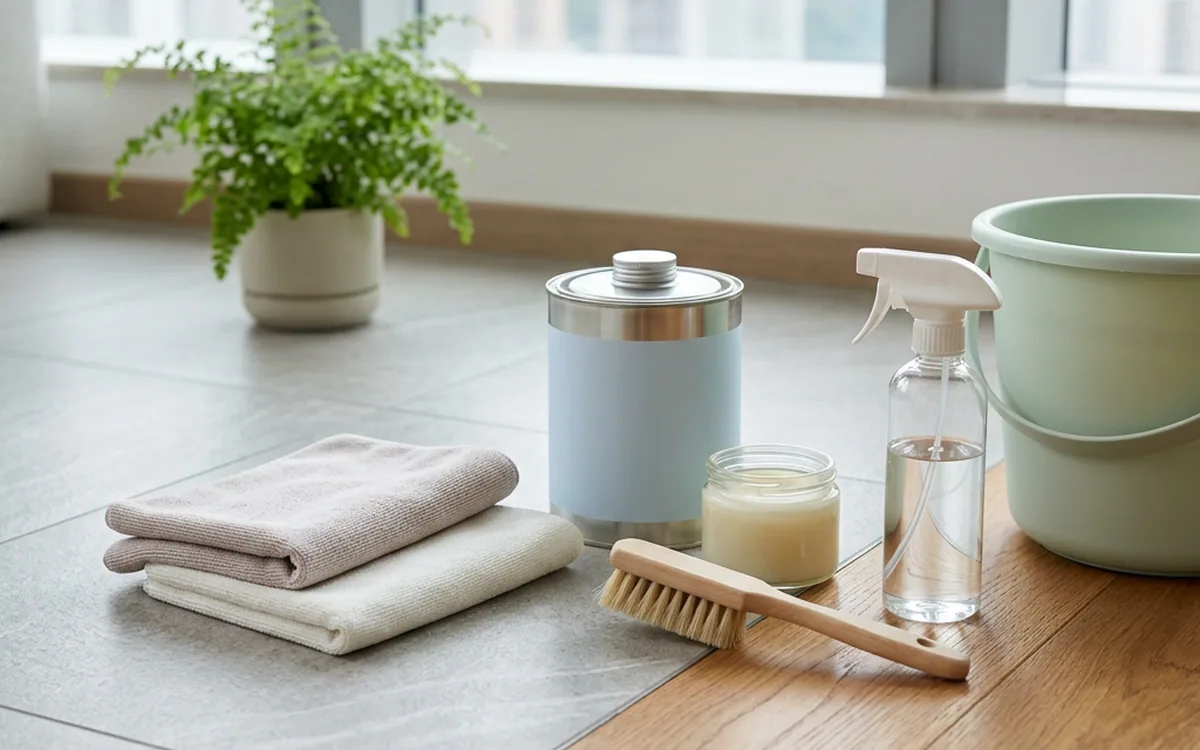
Waxing tiles and wood floors requires deep cleaning and ensuring dryness first. Use specialized wax for tiles, and select wax agents suitable for the specific wood type for wood floors. The key is to apply in sections, ensure layers are completely dry, and polish appropriately. It is recommended to perform maintenance every 3 to 6 months, and you can also consult 壹家壹清潔專家 to provide a professional assessment.
Floor waxing preparation and material testing
Before waxing, you must ensure the floor surface is completely free of dirt and grease, otherwise, it will affect the adhesion of the wax layer. For all types of floors, be sure to perform a small-scale material test in an inconspicuous area to ensure the wax agent will not cause discoloration or damage the surface.
It is strictly forbidden to use wax agents on unsealed or damaged floors; if the wood is damp and rotting or there are severe cracks in tiles, they should be repaired before waxing.
- Thoroughly clean dust and stains from the floor and let it dry naturally.
- Choose factory-certified floor-specific waxing agents.
- Perform a localized test and confirm there are no adverse reactions before applying it to a large area.
Tile floor waxing process
For tile waxing, use high-gloss or matte tile-specific wax. When applying, it is recommended to move from the corner of the room towards the exit to avoid stepping on the treated area during the waxing process.
If you encounter tile gaps that are too large or signs of mold, please prioritize cleaning and treating the mold instead of directly covering it with a wax layer.
- Apply the wax agent evenly onto the dry tiles.
- Wait for the first layer to dry completely (according to product instructions, not a universal time) before applying a second layer to enhance the gloss.
- Use a soft cloth or a specialized polishing tool to buff the surface.
Wood floor waxing precautions
Wood floors are extremely sensitive to moisture; clean only with a damp cloth, and do not spray water liberally. When choosing wood floor wax, refer to the floor manufacturer's recommended care products; do not use wax water containing strong acids or alkalis.
If there are deep scratches on the wood floor, you should consult a professional wood floor refurbishment service rather than waxing it yourself to cover the damage.
- Use a specialized wood floor cleaner to remove grease and dust.
- Apply the wax agent evenly along the wood grain, avoiding excessive amounts which could lead to a slippery surface.
- Ensure the wax layer has completely cured before stepping on the floor.
When to stop DIY and request support
If you notice the floor surface remains cloudy, bubbles, shows uneven spots, or the floor material has obviously warped, stop DIY immediately. It is recommended to contact 壹家壹清潔專家; we have professional floor cleaning and polishing equipment to accurately judge the condition of the floor and avoid permanent damage due to incorrect handling.
