
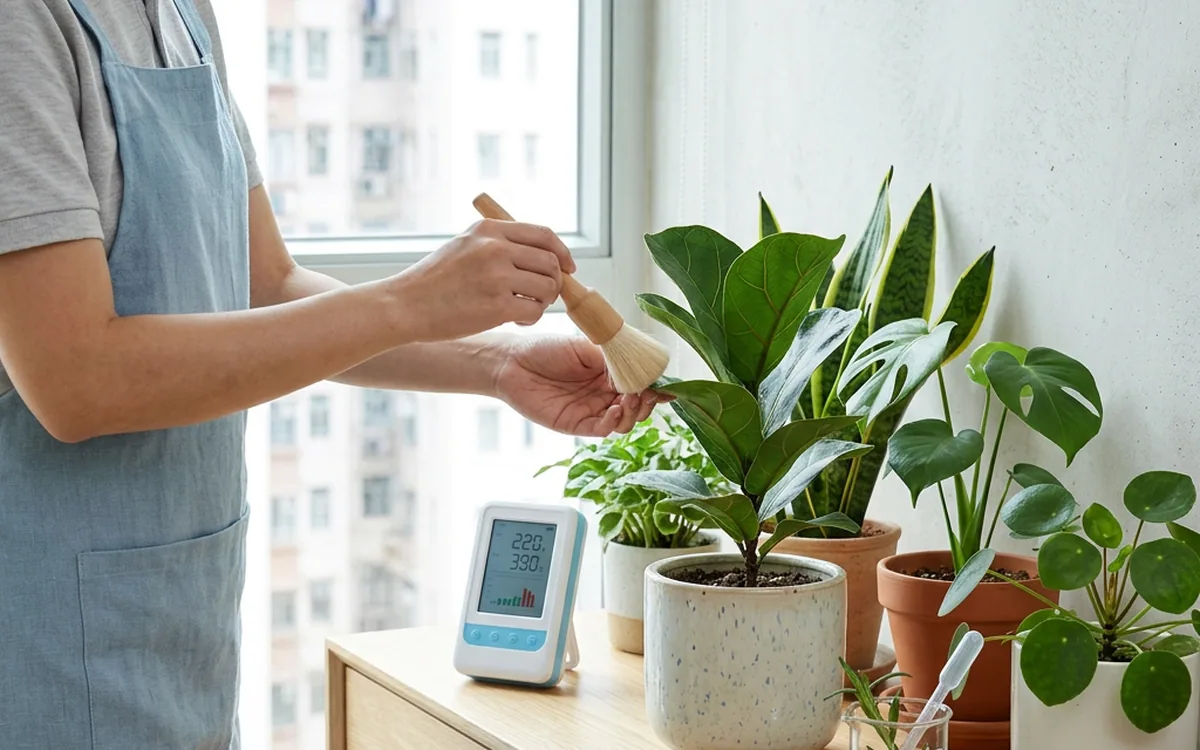
Plants metabolize small amounts of formaldehyde through pores and soil microorganisms, but in real living environments, the purification speed is far lower than the release speed of formaldehyde. To achieve formaldehyde removal, it must be combined with strong ventilation and professional formaldehyde removal treatment.
Physical mechanisms of plant formaldehyde removal
Plants do indeed have the ability to adsorb organic pollutants. The principle is that gases are absorbed through leaf pores and converted through metabolism, or processed by root soil microorganisms. Experimental species such as Boston ferns and snake plants all possess this mechanism.
The gap between experimental data and real-world applications
Common myths about formaldehyde removal stem from the differences between laboratory conditions and real home environments. Laboratories are mostly sealed, while real homes have continuous release sources (such as furniture panels).
- Difference in quantity for purification: To achieve the purification effect of mechanical ventilation, a large number of plants must be placed at the same time; it is not something a few pots can solve.
- Survival threat: High concentrations of formaldehyde actually cause plant leaves to yellow, wither, and even die.
Scientific and effective countermeasures for formaldehyde removal
Formaldehyde removal should prioritize physical and active treatment; plants can only be used for psychological healing.
- Powerful ventilation: Use industrial fans or appropriate ventilation equipment to accelerate indoor and outdoor air convection, which helps dilute the formaldehyde concentration in indoor air.
- Environmental control: Maintain appropriate temperature and humidity, and use air conditioning and dehumidifiers to reduce the volatilization speed inside the panels.
- Professional treatment: For high-concentration pollution, it is recommended to seek professional teams to perform degradation treatment, avoiding sole reliance on plants.
Completion of inspection and recommendations
Plant purification efficiency is limited and should not be used as the only standard for formaldehyde removal. If you have concerns about indoor air quality, you should perform professional scientific testing first and maintain continuous indoor air circulation.
