
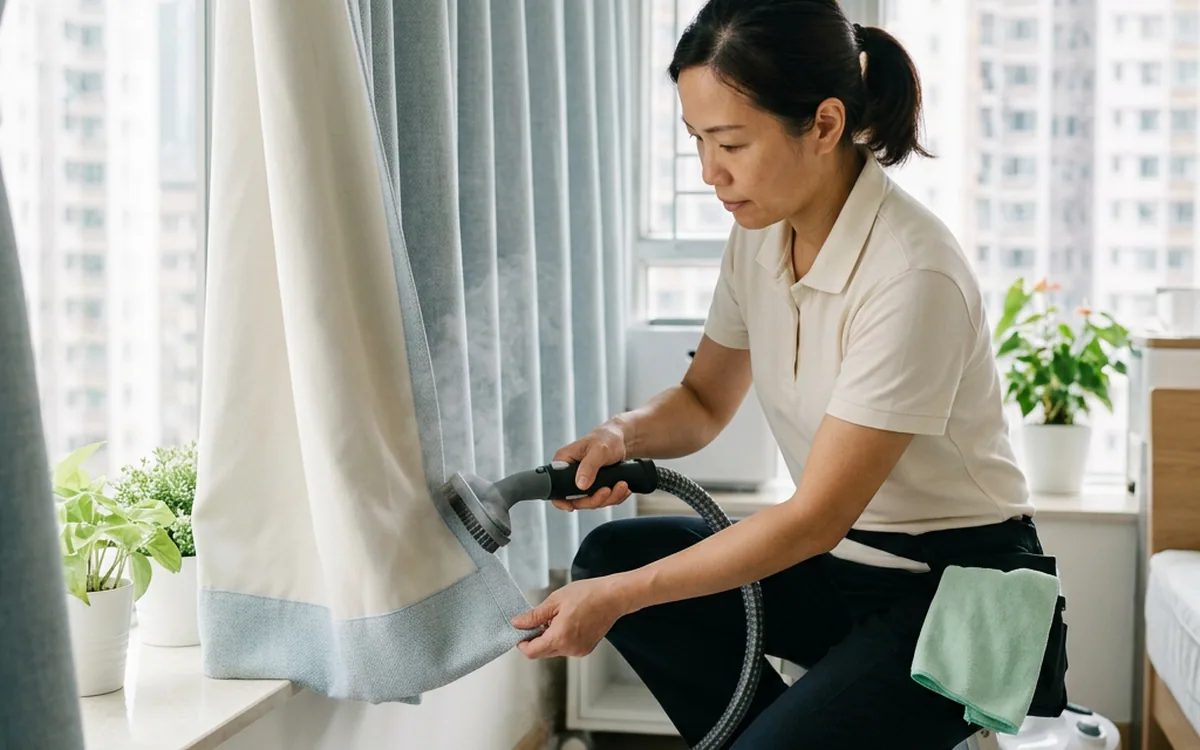
Whether curtains are suitable for on-site cleaning depends on fabric material, whether there is a blackout coating, and care label instructions. Aging coatings and special fibers should not be forced into wet washing. On-site services require reserved drying space and clearing surrounding electrical appliances; do not ignore fabric aging and directly use high heat or strong cleaning agents.
Should I shoot the front or the care label first?
Both are important. Panoramas convey height, number of panels, and nearby furniture; close-ups of labels, back layers, and seams help understand materials and conditions. When there is no label, do not guess it can be wet-washed.
Observe if the blackout layer is chalking, peeling, or sticking; these may be aging and cannot be guaranteed to be restored by cleaning.
What is the difference between on-site handling and removal for cleaning?
Different methods have different reachable locations, drying arrangements, and limitations; choose according to fabric requirements.
| Method | Key confirmation points |
|---|---|
| Surface dust removal | Reachable locations and equipment suitability |
| On-site cleaning | Fabric, back layer, drying, and protection |
| Removal for processing | Care requirements, tracks, and installation |
| Specialized care | Silk or other special materials |
Which situations should trigger a stop and assessment?
Easy to fade, back layer chalking, seams loosening, mold spots penetrating deep, or unstable hanging rails are not suitable for direct start of powerful extraction cleaning. Excessive moisture or heat may also cause shrinkage, deformation, or water stains.
Cannot apply the method for sofas or mattresses just because they are also fabric.
How to arrange the room before cleaning?
Clear away electrical appliances, documents, and moisture-sensitive items near the window, explain if there are wooden floors or window sills that cannot take water. High positions should not be dismantled by yourself at risk.
- Provide size, number of panels, and label photos
- Confirm methods and possible limitations
- Clear nearby areas and protect the floor
- Arrange for children and pets to leave the work area
- Reserve ventilation and drying time
What to look for in acceptance and maintenance?
Compare dust accumulation, treatable stains, and fabric condition, watch out for color differences and old fading, do not use smell as a sign of being dry through.
Perform daily dust removal according to manufacturer's care instructions, and check for window leaks and sources of dampness; repeated dampness cannot be solved just by increasing cleaning frequency.