
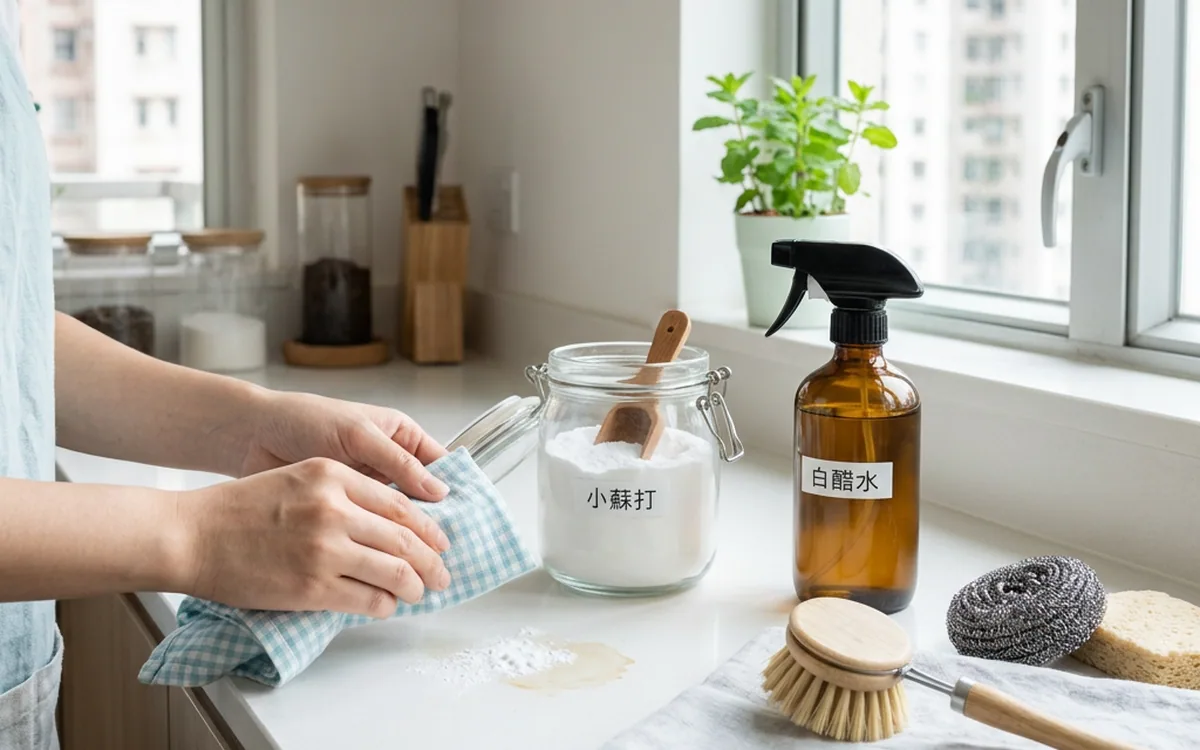
Using acid-base neutralization and physical friction principles, white vinegar (descaling), baking soda (degreasing), lemon (odor removal), and toothpaste (polishing) can solve the vast majority of daily stains. Note that acids cannot be used on stone, and different agents must never be mixed.
Core logic of natural cleaning
Most commercial cleaners contain artificial fragrances and volatile organic compounds (VOCs), which are unfriendly to those with respiratory sensitivities. Making good use of household materials is not only safe but also significantly reduces chemical residue.
You must strictly follow cleaning safety principles: bleach and other cleaning chemicals must never be mixed, otherwise they will generate toxic gases.
Before using bleach, please first understand Method for using bleach from the Centre for Health Protection(opens in a new window), and operate according to the product label.
Application of 4 major cleaning tools
Correctly utilizing the acid-base properties of materials is the key to efficient cleaning.
- Baking soda (weakly alkaline): Mix with water into a paste for stove grease or absorbing odors in carpets.
- White vinegar, a weak acid: test a small amount only on acid-resistant surfaces permitted by the care instructions. It is unsuitable for natural stone and some metal finishes, and is not a general-purpose disinfectant.
- Lemon (citric acid): Use the steam principle to soften grease inside the microwave.
- Toothpaste contains abrasive ingredients that may damage glossy surfaces or coatings. Do not use it as a general polish for metals, glass or appliances; check the care instructions and test discreetly.
Material and cleaning taboos
Always perform a material test (use in an inconspicuous place) before using natural materials.
Natural stone like marble, granite, and wooden furniture must not touch acidic substances (such as white vinegar, lemon), otherwise permanent fogging or corrosion will occur.
Additionally, do not store pre-mixed baking soda and white vinegar in a sealed bottle, as the reaction will cause them to lose their cleaning power.
Implementing daily light maintenance
Cleaning should be simplified and integrated into daily movements.
- Wipe as you go: Scrub the sink with baking soda after washing dishes to avoid yellow stain accumulation.
- Squeegee shower glass and dry joints after use, with ventilation to reduce standing moisture. Persistent mould requires checks for leaks and affected silicone.
- Choose products by surface: vinegar water is not a universal household spray. Identify stone, metal finishes and electrical surfaces before selecting a product allowed by their care instructions.
