
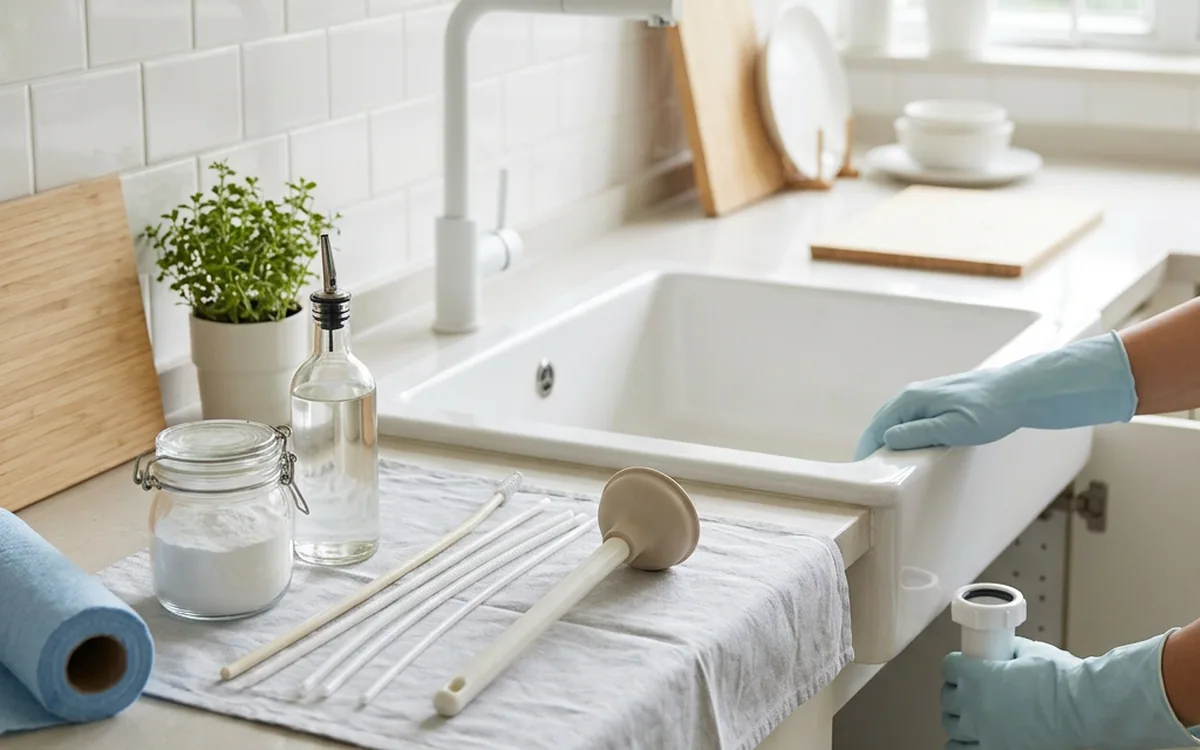
Home drain cleaning should prioritize physical unblocking, such as flushing with hot water or using a plunger. If the minor clog is still not resolved, check and clean the drain trap. Unauthorized dismantling of electrical circuits or involvement in sewage treatment is strictly prohibited. If the clog is serious, please seek a professional.
Preparation before dealing with clogs
Before dealing with sewer clogs, please observe the drainage situation. If the drainage is completely stalled or there is a foul odor, it is recommended to wear gloves to prevent bacterial infection. Never mix strong acids and strong alkalis, as this could cause chemical reactions and damage the pipes.
Physical unblocking methods
Physical methods are the first choice for dealing with clogs; they are both environmentally friendly and safe.
- Hot water flushing: Suitable for kitchen drainage. Pour warm water to dissolve accumulated grease, avoiding boiling water to prevent scalding or damage to PVC pipes.
- Plunger: Suitable for toilets or washbasins, using air pressure to push the obstruction away.
- Check drain trap: Dismantle the trap located below the drain, manually remove accumulated hair or debris, and be prepared with a plastic bag to collect sewage.
When to stop DIY and seek help
If you encounter the following, please stop your own operations immediately: trying various methods does not resolve it, the sewer emits abnormal noises, sewage overflows and affects neighbors, or the clog involves structural drain pipes inside the building. At this point, you should stop using the facility and hire a professionally licensed drain cleaner for inspection.
壹家壹清潔專家
We provide professional hygiene advice for domestic and commercial spaces. For inquiries about the latest professional cleaning and maintenance price lists, please contact us.